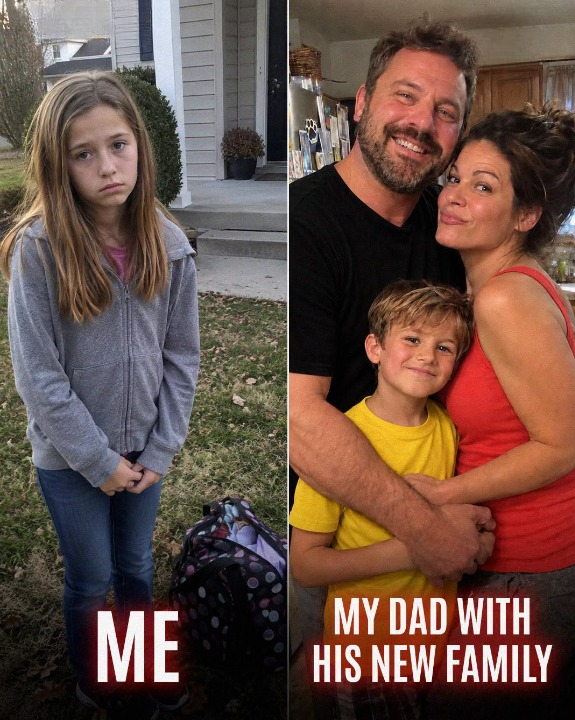
My father sent me away when I was ten years old.
For most of my childhood, I believed he had chosen someone else over me.
That belief stayed with me for twenty years.
Then, one afternoon, he called me from a hospital bed and said the words I never expected to hear.
“You need to know why I really did it.”
I wish I could say I immediately forgave him.
I didn’t.
But before I tell you what he revealed, you need to understand how everything began.
My mother died when I was eight.
It happened suddenly, and I remember very little about the day itself.
What I remember is the silence afterward.
Our house seemed completely different without her.
Her favorite chair remained in the living room.
Her books were still on the shelf.
A small photograph of her sat beside my father’s bed.
I kept expecting her to walk through the front door.
She never did.
My father was devastated.
But he tried to be strong for me.
For a while, it was just the two of us.
He learned how to make the meals Mom used to prepare.
He helped me with homework.
He attended school events whenever his job allowed.
At night, when I was afraid, he would sit beside my bed.
“You’ve still got me, sweetheart,” he’d say.
I believed him.
He was my entire world.
Then, when I was ten, Dad met Linda.
She was kind at first.
She had a son named Ben, who was eight.
Dad told me that our family was going to grow.
“I think you’ll like him,” he said.
I wanted to.
I really did.
I thought having another child in the house might make things more cheerful.
At first, everything seemed fine.
But gradually, things changed.
Dad began spending more time with Ben.
He attended Ben’s sports practices.
He helped him with school projects.
He bought him things I couldn’t remember ever asking for.
Whenever Ben had an event, Dad made sure he was there.
Whenever I had something important, there always seemed to be a reason Dad couldn’t come.
One afternoon, I waited outside school long after most of the other children had gone home.
The school secretary sat beside me.
She tried to make conversation.
“Your father is probably just running late.”
I nodded.
I didn’t tell her that this was becoming normal.
Eventually, Linda arrived.
She apologized and took me home.
When we arrived, she told me that Ben needed more space.
Then she moved my things out of my bedroom.
“This room would work better for Ben,” she said.
I stared at her.
“Where will I sleep?”
She pointed toward a small sewing room.
My new bed barely fit.
One side was against the wall.
The closet door couldn’t open completely.
I tried not to complain.
I told myself it was temporary.
I told myself families sometimes had to make sacrifices.
But deep down, I knew something had changed.
I no longer felt like I belonged in my own home.
The hardest moment came one afternoon when Ben found the small locket I had received from my mother.
Inside was her photograph.
It was one of the few things I had left that felt completely mine.
Ben took it.
I asked him to give it back.
He refused.
During the argument, the photograph came loose from the locket and was damaged.
I was heartbroken.
I went straight to Dad.
“Dad, he ruined Mom’s picture.”
Dad barely looked up from what he was doing.
“He’s younger than you. Let it go.”
I couldn’t believe what I was hearing.
“But it’s Mom.”
“I know.”
“Then why don’t you care?”
Dad sighed.
“I said let it go.”
That night, I cried quietly in the sewing room.
I began wondering whether my father still saw me as his daughter.
Then came the Saturday that changed everything.
Dad woke me early.
“Get dressed.”
I smiled.
“Where are we going?”
“It’s a surprise.”
For the first time in months, I felt hopeful.
Maybe he was finally going to spend time with me.
Maybe we were going to the park.
Maybe we’d get lunch afterward.
Maybe things were going to be okay again.
I packed a small bag.
Dad helped me into the car.
I watched the familiar streets disappear behind us.
After a while, I noticed we weren’t going toward the park.
We were driving in a completely different direction.
“Where are we going?”
“You’ll see.”
Eventually, we stopped outside a large building.
I looked at the sign.
It was a residential children’s home.
I didn’t understand.
“Why are we here?”
Dad got out.
I followed him.
Inside, a woman greeted us.
She spoke to my father quietly.
I remember hearing words like “arrangements” and “placement.”
My stomach tightened.
“Dad?”
He didn’t answer.
I looked at him.
“Is Ben coming too?”
Dad shook his head.
“No.”
“Why not?”
“Ben is staying home.”
I suddenly understood.
“You mean I’m staying here?”
Dad looked away.
I grabbed his coat.
“I can be good.”
He closed his eyes.
“Please, Daddy.”
“I think this is what we need to do.”
“No.”
I remember crying.
I remember asking him not to leave.
I remember holding onto his coat because I believed that if I could keep him from walking away, he would change his mind.
Eventually, a staff member gently separated us.
Dad walked toward the door.
I watched him leave.
I thought he’d come back the next day.
Then the next week.
Then the next month.
For months, I kept my clothes in the same grocery bag.
I believed that if Dad returned, I needed to be ready.
He never did.
Eventually, I stopped asking whether there were letters for me.
I stopped expecting phone calls.
I stopped talking about him.
I learned how to take care of myself.
I finished school.
I found work.
I built friendships.
Eventually, I created a life that didn’t depend on him.
But I never completely forgot.
Twenty years passed.
Then my phone rang.
I almost didn’t recognize the number.
“Hello?”
There was silence.
Then I heard a familiar voice.
“It’s Dad.”
My heart seemed to stop.
He sounded older.
Tired.
“I know I have no right to call,” he said.
I didn’t respond.
“I’m in the hospital.”
Still nothing.
“I’m very sick.”
I finally managed to speak.
“Why are you calling me?”
He took a breath.
“I need you to come.”
“I don’t think that’s a good idea.”
“I understand.”
He paused.
“But there’s something you need to know.”
“What?”
“Why I sent you away.”
My hands began to shake.
“You have twenty years to explain.”
“I know.”
“I waited for you.”
His voice broke.
“I know.”
“Then why didn’t you come?”
“I was afraid.”
“Afraid of what?”
He didn’t answer immediately.
“Please come,” he said. “Then I’ll tell you everything.”
I didn’t know why I agreed.
Maybe part of me still wanted the answer.
Maybe the little girl who had waited with that grocery bag had never completely disappeared.
The next day, I went to the hospital.
When I entered the room, I saw Linda.
Ben was sitting nearby.
They both looked at me.
Dad noticed me immediately.
“Everyone out.”
Linda stepped closer.
“We agreed you wouldn’t—”
“Please.”
His voice was weak but firm.
“Both of you.”
They left.
The room became quiet.
I stood near the door.
Dad looked at me.
For several seconds, neither of us spoke.
Then he reached out his hand.
I didn’t take it.
“You kept her son,” I said.
His eyes filled with tears.
“You raised Ben.”
“I know.”
“You watched him grow up.”
“I know.”
“But you didn’t raise me.”
He looked down.
“I know.”
“And now you’re dying, and suddenly you want to explain?”
His mouth trembled.
“I do.”
“Why?”
He took a long breath.
Then he finally told me the truth.
After marrying Linda, my father had realized that she had been struggling to care for Ben on her own.
But that wasn’t the whole story.
There had been serious financial problems.
My father’s job had become unstable.
Their home was at risk.
Linda had also been dealing with personal difficulties that made caring for two children increasingly complicated.
My father had convinced himself that sending me to a children’s home would give me access to resources he believed he couldn’t provide.
He told himself it would be temporary.
He told himself that I would receive better schooling, counseling, and stability.
But there was something else.
He had been ashamed.
He didn’t want to admit that he couldn’t manage everything.
So instead of asking for help from family, friends, or social services, he made a decision on his own.
A terrible decision.
“I thought I was protecting you,” he whispered.
I stared at him.
“You abandoned me.”
“I know.”
“You didn’t explain anything.”
“I was ashamed.”
“You could have come back.”
“I should have.”
“Why didn’t you?”
His eyes filled with tears.
“Because every day that passed made it harder.”
I understood what he meant.
The longer he stayed away, the more impossible returning became.
But understanding wasn’t the same as forgiveness.
I sat down.
“Did you ever think about me?”
“Every day.”
“Then why didn’t you call?”
“I was afraid you’d hate me.”
I laughed bitterly.
“You were afraid I’d hate you, so you gave me twenty years to hate you?”
He closed his eyes.
“Yes.”
The honesty of that answer hurt.
But it was the first honest answer he’d given me in years.
He told me that he had eventually wanted to bring me home.
But by then, I had already built a life elsewhere.
He had received reports about me.
He knew I was doing well.
He convinced himself that staying away was better than disrupting my life again.
I shook my head.
“You don’t get to decide that for me.”
“I know.”
That sentence was all he could say.
I looked at the man who had once been my entire world.
He was no longer the strong father I remembered.
He was old.
Fragile.
Human.
And suddenly, I understood that the person I had spent twenty years being angry with was also someone who had spent twenty years living with regret.
I wasn’t ready to forgive him.
But I wasn’t sure I wanted to leave with hatred either.
So I did something for myself.
I told him the truth.
“You hurt me.”
“I know.”
“I needed you.”
“I know.”
“I deserved an explanation.”
“You did.”
“And what you did wasn’t okay.”
He nodded.
“I know.”
Then I reached across the bed.
I took his hand.
Not because everything was forgiven.
Not because the past had disappeared.
But because I didn’t want his final memory of me to be another goodbye filled with anger.
We talked for hours.
He told me about Mom.
He told me stories from when I was little that I had forgotten.
He apologized more than once.
And for the first time in twenty years, I called him Dad.
He cried.
So did I.
I don’t know whether forgiveness has to happen all at once.
Maybe it doesn’t.
Maybe sometimes forgiveness begins simply by allowing yourself to hear the truth.
I left that hospital room without forgetting what had happened.
I didn’t suddenly erase twenty years of pain.
But I finally had answers.
And those answers gave me something I hadn’t had since childhood:
The ability to stop wondering why.
My father made a terrible decision.
He convinced himself it was the right one.
It wasn’t.
But people are capable of making choices they later deeply regret.
The most important lesson I learned was that love isn’t enough when it isn’t accompanied by honesty, responsibility, and courage.
My father loved me.
I believe that now.
But he also failed me.
Both things can be true.
And perhaps accepting that complicated truth was the beginning of healing.
I never got my childhood back.
No explanation could give me those twenty years.
But I finally stopped carrying the question that had followed me for most of my life.
Why did he leave?
Now I knew.
And sometimes, knowing the truth doesn’t erase the pain.
It simply gives you the freedom to decide what you want to do with it.