My name is Margaret, and for most of my adult life, I believed that family meant doing whatever you could to help the people you loved.
That belief shaped almost every decision I made.
When my husband left us, our son David was only three years old.
One morning, he simply walked away.
There was no dramatic goodbye.
No promise that he would return.
He took what money he could from our joint savings and disappeared from our lives.
From that day forward, it was just David and me.
I was young enough to believe that if I worked hard enough, I could give my son the childhood he deserved.
So I worked.
Sometimes I worked one job during the day and another in the evening.
There were years when I rarely took a full weekend off.
I learned how to stretch a grocery budget.
I learned how to repair things instead of replacing them.
I learned that a secondhand winter coat could be just as warm as an expensive one.
Most importantly, I learned that happiness didn’t require having everything.
David grew up knowing that we didn’t have much, but he never seemed embarrassed by it.
He was a kind child.
He helped me carry groceries.
He made me cards for Mother’s Day.
When he was older, he promised that one day he would take care of me.
I always told him he didn’t have to.
“Just grow up to be a good man,” I would say.
“That’s all I need.”
Years passed.
David became an adult.
He found a good job and eventually met Emma.
At first, I was happy for him.
She was confident, outgoing, and ambitious.
I thought she might be exactly the kind of person who would encourage David to pursue his goals.
They eventually married.
Then came the grandchildren.
That changed everything.
The first time I held my grandson, I cried.
When my granddaughter was born, I cried again.
Those two children became the brightest part of my life.
I babysat whenever I could.
I attended school events.
I baked cookies with them.
I kept a drawer in my house filled with little things they had given me over the years.
A drawing.
A bracelet made from colorful beads.
A card with crooked handwriting.
To me, those things were priceless.
I tolerated a lot because I never wanted my grandchildren caught in the middle of family disagreements.
Emma and I were very different.
She enjoyed expensive clothing, fashionable restaurants, and newer cars.
There was nothing wrong with that.
People have different priorities.
But sometimes, I worried about how much pressure she placed on David.
He worked extremely long hours.
More than once, I asked him whether he was getting enough rest.
“I’m fine, Mom,” he’d say.
“I can handle it.”
I believed him because I had to.
Over the years, I noticed that Emma became increasingly interested in money.
She talked about larger houses.
Better vacations.
New furniture.
New cars.
I never commented.
David was an adult.
His financial decisions were his own.
Then came the afternoon that changed the way I saw our relationship.
I was sitting in my kitchen drinking tea when someone knocked on the door.
I opened it.
Emma was standing there.
She wasn’t carrying the children.
She wasn’t smiling.
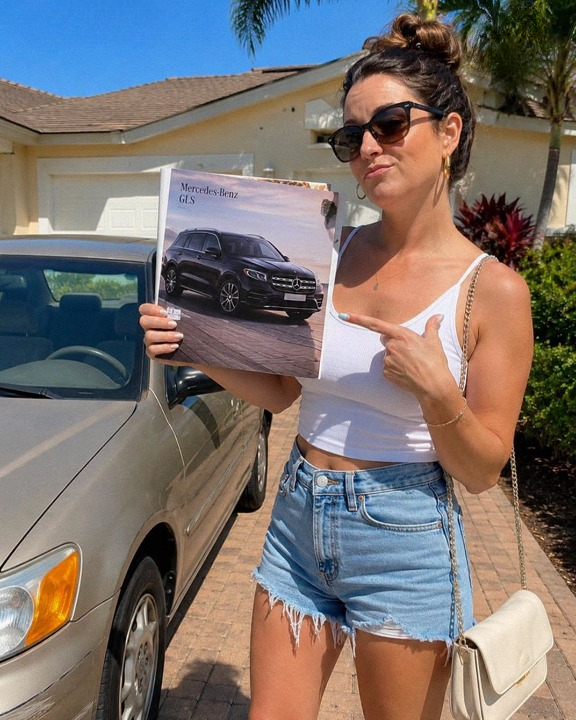
In one hand, she held a glossy brochure.
“Can I come in?”
“Of course.”
She walked into the kitchen and placed the brochure on the table.
I looked at it.
It was for a luxury SUV.
The price was around $60,000.
I looked at her.
“That’s an expensive vehicle.”
“Our current car needs to be replaced,” she said.
“I see.”
“David’s finances are stretched right now.”
I waited.
Then she said something I never expected.
“I need you to help with the down payment.”
I stared at her.
“How much?”
“Forty thousand.”
For a moment, I thought I had misunderstood her.
“Forty thousand dollars?”
She nodded.
“Yes.”
I slowly put down my cup.
“Emma, that’s a substantial amount of money.”
“I know.”
“I’m retired.”
“I know.”
“That money is my retirement savings.”
She leaned back in her chair.
“You’re not using all of it right now.”
“That’s not the point.”
“I don’t understand why you’re making this difficult.”
I looked at her.
“I worked for decades to put that money aside.”
She sighed.
“I’m not asking you to give us everything.”
“You’re asking for forty thousand dollars.”
“Because we need a reliable vehicle.”
I tried to remain calm.
“If you need a different vehicle, perhaps you could consider something less expensive.”
Her expression changed.
“We don’t want something less expensive.”
There it was.
Not a necessity.
A preference.
I had nothing against wanting a nice car.
But I couldn’t understand why my retirement savings had suddenly become part of the plan.
Then Emma said something that hurt far more than the request itself.
“If you aren’t willing to help, we may have to rethink how often the children come over.”
I looked at her.
“What does that mean?”
She shrugged.
“If transportation becomes difficult, we might not be able to make the trip as often.”
I knew what she was implying.
She wasn’t asking me to consider a financial decision.
She was putting pressure on me by bringing my grandchildren into the conversation.
For a moment, I felt an old anger rising inside me.
I remembered working late shifts when David was little.
I remembered coming home exhausted and still making dinner.
I remembered saving small amounts of money because I wanted to make sure I would never again be completely dependent on someone else.
And now, someone was asking me to risk that security so they could buy a luxury vehicle.
I could have argued.
I could have shouted.
Instead, I took a breath.
“You’ve given me a lot to think about.”
Emma smiled.
“I knew you’d understand.”
She picked up her purse.
“I’ll send you the dealership information.”
Then she left.
I watched her car disappear down the street.
For several minutes, I simply sat at the kitchen table.
Then I did something I should have done much earlier.
I called my financial adviser.
I told him exactly what had happened.
He listened carefully.
Then he asked me a question.
“Do you actually want to give this money away?”
“No.”
“Then don’t.”
His answer was simple.
But it was exactly what I needed to hear.
He helped me review my retirement plan.
We discussed my savings, my expected expenses, and the amount I would need to maintain my independence.
Then he reminded me of something I had forgotten.
I had spent decades building that financial security.
It wasn’t selfish to protect it.
It was responsible.
That evening, I also called David.
I didn’t tell him everything immediately.
I asked him whether he knew about the conversation.
There was a long silence.
Then he sighed.
“Mom, I’m sorry.”
“Did Emma talk to you about the car?”
“Yes.”
“Did she ask you to get money from me?”
Another pause.
“She said you might be willing to help.”
I closed my eyes.
“David, I’m not willing to give forty thousand dollars.”
“I understand.”
“I love you.”
“I know.”
“And I love the children.”
“I know.”
“But I can’t sacrifice my retirement security for a vehicle.”
He was quiet.
Then he said something I wasn’t expecting.
“You’re right.”
I opened my eyes.
“What?”
“I said you’re right.”
David explained that he had been struggling with the financial pressure at home.
He admitted that he had taken on extra work to keep up with expenses.
He had been embarrassed to tell me.
“I thought I could handle everything,” he said.
“You don’t have to handle everything alone.”
He took a long breath.
“I think we need to make some changes.”
That conversation was the beginning of something important.
The next morning, I contacted a lawyer.
Not because I wanted revenge.
Not because I wanted to punish Emma.
I simply wanted to make sure my financial affairs were organized.
I updated my estate documents.
I reviewed my beneficiaries.
I made sure my medical and financial arrangements were clear.
And I created a plan for the future that didn’t depend on anyone else.
One part of that plan involved the grandchildren.
I wanted to make sure that any money I eventually left them would be protected for their education and future needs rather than being treated as household spending money.
My attorney prepared the documents.
A courier delivered copies to the appropriate parties.
One of those copies went to Emma.
That’s what happened the next morning.
At exactly eight o’clock, someone knocked on Emma’s door.
She opened it and received an envelope.
Inside were copies of the updated documents.
There was also a letter.
It explained that I would not be contributing to the purchase of the luxury SUV.
My retirement savings would remain under my control.
I had also established a separate plan for my grandchildren’s future.
The money would not be available for cars, vacations, or household purchases.
Instead, it would be reserved for education and other qualifying needs.
Five minutes later, my phone rang.
It was Emma.
She sounded shocked.
“How did you do this?”
I remained calm.
“Do what?”
“You changed everything.”
“I organized my finances.”
“You didn’t tell me.”
“It’s my retirement plan, Emma.”
She was silent.
Then she asked, “Are you trying to punish me?”
“No.”
“Then why would you do this?”
“Because I realized something.”
“What?”
“I spent years believing that loving my family meant saying yes whenever someone asked for something.”
She didn’t respond.
“I was wrong.”
There was another long pause.
“I love you and David,” I continued. “I love the children. But helping my family should never require me to put my own future at risk.”
Emma eventually apologized.
Not immediately.
Not dramatically.
But sincerely enough that I knew she had understood what I was saying.
A few weeks later, she and David visited me.
Emma sat across from me at the kitchen table.
“I’m sorry,” she said.
I nodded.
“I shouldn’t have brought the children into the conversation.”
“That hurt more than the money.”
“I know.”
She looked down.
“I was thinking about what I wanted instead of what was fair.”
I appreciated her honesty.
The SUV never happened.
Instead, David and Emma eventually chose a reliable vehicle that fit within their budget.
It wasn’t the most expensive model.
It didn’t have every luxury feature.
But it worked.
And more importantly, they paid for it themselves.
Our family relationship wasn’t perfect afterward.
It didn’t need to be.
Families disagree.
People make mistakes.
Sometimes people need to learn where boundaries are.
What mattered was that we finally had an honest conversation about money, expectations, and respect.
I also learned something about myself.
For years, I had been afraid that saying no would make people stop loving me.
That fear had made me vulnerable to pressure.
But protecting my future wasn’t an act of rejection.
It was an act of responsibility.
My retirement savings represented decades of work.
They represented the nights I spent exhausted after double shifts.
The vacations I skipped.
The things I didn’t buy.
The sacrifices I made so my son could have opportunities I never had.
I didn’t owe anyone an explanation for wanting to preserve that security.
And I certainly didn’t need to choose between my financial independence and my grandchildren.
Today, my grandchildren still visit.
We bake cookies.
We play board games.
We watch movies together.
They still have their drawer at my house.
And whenever they leave, I hear the same words:
“See you next weekend, Grandma.”
That’s worth more to me than any luxury vehicle could ever be.
I used to think the most important thing I could give my family was money.
Now I know better.
Sometimes the greatest gift you can give your family is a healthy boundary.
It teaches people how to respect you.
It protects relationships from resentment.
And it reminds everyone that love should never be measured by how much money one person is willing to sacrifice for another.
My daughter-in-law once asked me for $40,000.
What she received instead was something far more valuable:
A clear boundary, an honest conversation, and a family that finally learned that love and financial responsibility can exist side by side.