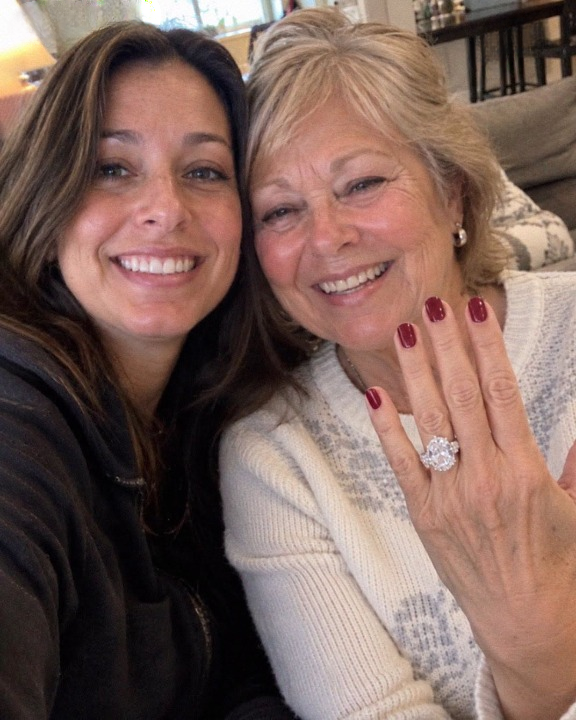
My mother had been gone for less than a week when my sister-in-law began asking about her diamond ring.
Not asking gently.
Not wondering whether Mom had left any instructions.
She spoke as though the ring had already been promised to her.
“It should come to me,” my sister-in-law, Claire, said while we were sorting through some of Mom’s photographs.
I looked up from the box in my hands.
“Why would it?”
Claire seemed surprised by the question.
“Because your mother always liked me.”
I didn’t know what to say.
Of course Mom had liked Claire.
She had been part of our family for more than fifteen years.
But liking someone and leaving them a valuable piece of jewelry were two very different things.
The ring had always been special in our family.
My father had commissioned it many years ago.
It had a large diamond in the center surrounded by smaller stones, and Mom wore it almost everywhere.
Family dinners.
Birthday celebrations.
Holiday gatherings.
Weddings.
Even ordinary Sunday afternoons.
She rarely took it off.
Whenever someone complimented the ring, Mom would smile and tell the same story.
“Your father picked the stone himself.”
Dad had passed away years earlier, so the ring had become even more meaningful to her.
Mom sometimes joked that she would never part with it.
“I suppose I’ll have to take this thing with me someday,” she’d say.
We always laughed.
Nobody imagined that one day we’d actually have to decide what happened to it.
After Mom’s funeral, the family gathered at her house to organize her belongings.
It was emotional.
Every drawer seemed to contain another memory.
Old photographs.
Handwritten recipes.
Letters from Dad.
Holiday decorations.
The little ceramic bird she had kept on the kitchen windowsill for decades.
I found myself stopping every few minutes because something ordinary would suddenly remind me of her.
Claire, however, kept returning to one subject.
“The ring.”
I tried to ignore it at first.
Then she asked again.
“Did your mother ever tell you where she wanted the ring to go?”
“I don’t know.”
She frowned.
“She must have told someone.”
“Maybe.”
“She always said she trusted me.”
I looked at her.
“Did she actually tell you she was leaving it to you?”
Claire hesitated.
“Well… not exactly.”
That was the problem.
There was a lot of “Mom said” and “Mom hinted,” but no actual statement that I had ever heard.
Over the next few days, the subject came up repeatedly.
Claire asked my brother whether he’d heard anything.
She asked one of our cousins.
She even asked Mom’s longtime neighbor.
Everyone gave essentially the same answer.
Nobody knew.
A few days later, we found out that Mom had left detailed instructions with her attorney.
That meant there was no reason for us to argue about anything.
The will would make everything clear.
We were scheduled to meet at the lawyer’s office the following week.
Claire seemed particularly interested in the appointment.
On the morning of the meeting, she called me.
“Do you think they’ll tell us about the ring?”
“I assume so.”
“I just don’t want anyone trying to take advantage of the situation.”
I almost laughed.
“You mean you don’t want anyone taking the ring?”
She became quiet.
Then she said,
“I just think your mother wanted me to have it.”
“Then we’ll see what the documents say.”
She didn’t respond.
The meeting was held in a quiet conference room.
My brother sat beside me.
Two cousins were there as well.
Claire sat across from us.
The attorney, Mr. Harris, placed several folders on the table.
He explained that Mom had prepared her estate documents carefully and had included specific instructions about several sentimental possessions.
He began reading.
Some money went to family members.
Some personal belongings were divided among us.
Mom had also made a donation to an organization that supported the local animal shelter.
That didn’t surprise me.
She had always loved animals.
Then Mr. Harris reached a section concerning jewelry.
Claire leaned forward.
I noticed her fingers tighten around the edge of the table.
The lawyer read several lines.
A bracelet went to one cousin.
A watch went to my brother.
A necklace went to me.
Then he paused.
“And regarding Mrs. Wilson’s diamond ring…”
The room became completely quiet.
Claire sat up straighter.
Mr. Harris continued.
“She left additional instructions.”
Claire glanced around the room.
Then the lawyer reached beneath the table and brought out a small wooden box.
It wasn’t large.
It looked handmade.
The wood was dark and polished.
There was a small brass clasp on the front.
Mr. Harris placed it in the center of the table.
“I was instructed not to open this box myself.”
Claire stared at it.
“Why?”
“She left specific instructions regarding its contents.”
“What instructions?”
Mr. Harris looked at Claire.
“She asked that you be the one to open it.”
Everyone became silent.
Claire’s expression changed.
“Me?”
“Yes.”
She looked at my brother.
Then at me.
“Why me?”
“I don’t know,” the attorney said. “Your mother did not provide an explanation in the letter.”
Claire reached for the box.
Her confidence from earlier had disappeared.
She carefully opened the clasp.
The lid lifted.
She looked inside.
For several seconds, nobody spoke.
Then Claire’s expression changed completely.
Her eyes widened.
She stopped breathing for a moment.
The color seemed to leave her face.
“What is it?” my brother asked.
Claire didn’t answer.
I leaned forward.
Inside the box was not the diamond ring.
Instead, there was a handwritten letter.
Beside it was a small envelope.
And underneath both was a photograph.
Claire picked up the photograph first.
It was an old picture of Mom and Claire together.
They were standing in the backyard at a family barbecue.
Claire was laughing.
Mom had one arm around her.
On the back, Mom had written a date.
Claire stared at the picture.
Then she picked up the letter.
Her hands were shaking.
“Do I have to read this out loud?” she asked.
Mr. Harris nodded.
“That was your mother’s instruction.”
Claire unfolded the paper.
Her eyes moved across the first few lines.
Then she stopped.
“Go ahead,” my brother said gently.
Claire swallowed.
“Dear Claire…”
Her voice trembled.
“Over the years, I have heard you speak about the ring many times.”
She stopped again.
Nobody interrupted.
She continued.
“I know you admire it. I also know you believe it represents a certain place in our family.”
Claire lowered the letter.
Her eyes were wet.
Then she continued reading.
“But I hope you understand that a family heirloom is not valuable because of its price. It is valuable because of the memories attached to it.”
Claire looked at the ring mentioned in the letter.
“The ring belonged to your father. He gave it to me because he wanted me to have something that would remind me of our life together.”
She paused.
“Therefore, I do not want it to become a prize that people compete for.”
Nobody moved.
Then Claire read the next paragraph.
“I have chosen someone else to receive it.”
She stopped.
My heart began beating faster.
The lawyer remained silent.
Claire looked toward him.
“Who?”
“You need to finish the letter,” he said.
She looked back down.
“The person receiving the ring is the one I believe will understand why it mattered to me.”
Claire’s hands trembled.
Then she reached into the box and opened the small envelope.
Inside was a second note.
She read it silently.
Her expression changed again.
Then she looked at me.
“I don’t understand.”
“What does it say?”
Claire hesitated.
Finally, she handed the note to me.
It was written in Mom’s handwriting.
The note said:
“Please give this ring to my daughter, Emily. I want her to have something that reminds her of both of us whenever she needs to feel close to home.”
I stared at the words.
I couldn’t speak.
Mom had chosen me.
Not because I was more deserving than anyone else.
Not because Claire was less important.
But because Mom had wanted the ring to remain with someone who would treasure its history.
Claire sat quietly.
For the first time since Mom’s funeral, she didn’t argue.
She simply looked down at her hands.
“I thought she was going to leave it to me,” she whispered.
“I know.”
“She told me once that she loved how much I admired it.”
“She probably did.”
Claire looked at me.
“Did she ever tell you what she wanted?”
“No.”
“Why didn’t she tell me?”
I thought about that.
“Maybe she wanted the decision to be private.”
The lawyer nodded.
“She made these instructions several months before her death.”
Claire looked surprised.
“Months?”
“Yes.”
She sat back.
The room became quiet again.
Then Claire noticed something else inside the wooden box.
“What is this?”
She pulled out a folded piece of paper.
Mr. Harris smiled.
“That was also intended for you.”
Claire opened it.
This time, she read silently.
Her eyes filled with tears.
“What does it say?” my brother asked.
She shook her head.
“It’s personal.”
Nobody pushed her.
She folded the note and placed it carefully back inside the box.
Then she looked at me.
“I was wrong.”
I didn’t respond immediately.
“You were grieving,” I said.
“So were you.”
“Yes.”
“I shouldn’t have made everything about the ring.”
I nodded.
“No.”
She took a deep breath.
“I think I was trying to hold on to something.”
That sentence changed the atmosphere in the room.
Because suddenly, the ring wasn’t the important thing anymore.
Mom had died.
Dad had been gone for years.
And we were all trying to figure out how to move forward without the people who had once held our family together.
Claire wasn’t really fighting over a diamond.
She was grieving too.
She just hadn’t known how to express it.
Before we left the lawyer’s office, she approached me.
“Will you let me see the ring sometime?”
“Of course.”
“Maybe you could tell me some of the stories your mom told you about it.”
I smiled.
“I’d like that.”
A few weeks later, I wore Mom’s ring for the first time.
It felt strange.
It was beautiful, but it was also heavy with memories.
I remembered Mom wearing it while cooking dinner.
I remembered her holding her hand up whenever someone complimented it.
I remembered Dad teasing her about how carefully she protected it.
But I also remembered the lesson she had left behind.
An inheritance isn’t always about money.
Sometimes it’s about memory.
Sometimes it’s about trust.
And sometimes the most valuable thing someone leaves behind isn’t an object at all.
It’s the message attached to it.
Mom had spent years wearing that ring.
In the end, she gave it to me not because it was worth thousands of dollars, but because she wanted its story to continue.
And that made it worth far more than its price.
As for Claire, our relationship eventually became easier.
We talked about Mom.
We laughed about old family stories.
And one afternoon, while we were looking through photographs, Claire pointed to a picture of Mom wearing the ring.
She smiled.
“She really loved that thing.”
I laughed.
“She really did.”
Claire looked at me.
“I’m glad you got it.”
I squeezed her hand.
“I’m glad too.”
And for the first time since Mom’s passing, neither of us felt like we were fighting over what she had left behind.
We were simply remembering what she had given us while she was still here.