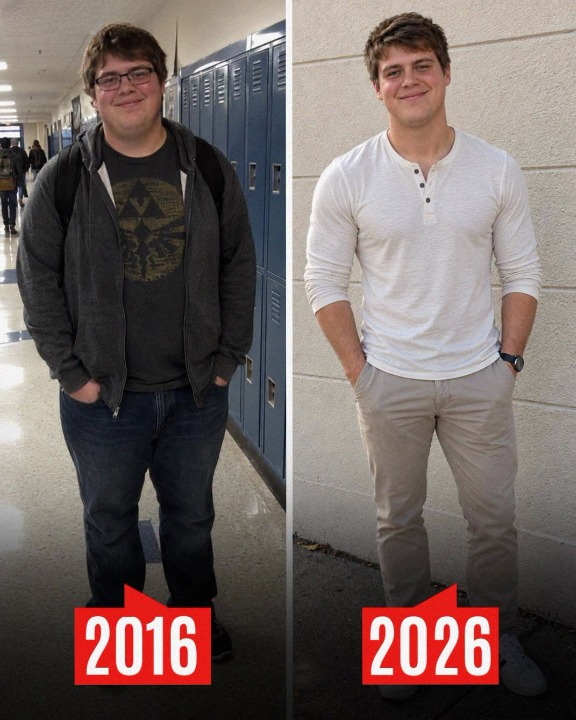
I never imagined that the person who had made some of my hardest teenage years even more difficult would one day stand in front of me holding a paper cup and asking strangers for help.
Life has a strange way of bringing people back into our lives when we least expect it.
Sometimes, the person you once wanted to impress becomes a reminder of how much you’ve grown.
And sometimes, the most important thing you can do with that second meeting isn’t prove that you succeeded.
It’s choose what kind of person you want to be.
My story began when I was fourteen.
My father died unexpectedly during a military training accident.
One day, he was part of our family.
The next, our entire world had changed.
My mother struggled with the loss, and eventually she decided we needed a fresh start somewhere else.
We moved to a town where I knew absolutely nobody.
I entered a new school halfway through the year.
I was already dealing with grief, homesickness, and the awkwardness that comes with being a teenager.
To make matters worse, stress had caused me to gain a significant amount of weight.
I became painfully aware of how different I looked from the other students.
At lunch, I often sat alone.
During group activities, I was usually the person nobody chose.
I tried to pretend it didn’t bother me.
It did.
There was one girl, however, whom I couldn’t stop noticing.
Her name was Lindsey.
She was confident, outgoing, and seemed to know everyone.
People gathered around her wherever she went.
I developed a quiet crush on her.
I knew she probably didn’t feel the same way.
Still, being fourteen meant believing that maybe things could somehow work out.
One afternoon, I saved some money and bought her a small gift.
Nothing expensive.
Just something I thought she might like.
I rehearsed what I was going to say several times before approaching her.
But when I finally did, she laughed.
“Are you serious?”
A few people nearby turned around.
I felt my face become hot.
She made a comment about my appearance that I still remember years later.
Then she walked away with her friends.
I went home that afternoon and put the gift in a drawer.
I never gave it to her.
I wish that had been the end of it.
It wasn’t.
The following day, I was called into the principal’s office.
My mother was there.
Lindsey had apparently told the school that I had been making her uncomfortable and repeatedly trying to get her attention.
I was stunned.
That wasn’t what had happened.
I tried to explain.
My mother tried to explain.
But the situation had already become a story that seemed to have a life of its own.
The principal told me that I needed to respect other people’s boundaries.
I agreed.
Of course I did.
But I also wished someone had asked me what actually happened before making assumptions about me.
After that, school became even more difficult.
Whispers followed me through the hallways.
Some students made jokes.
Others repeated things they had heard.
I stopped trying to defend myself.
I simply wanted to get through the school year.
I counted the days until graduation.
When I finally left, I promised myself that I would never allow other people’s opinions to determine the rest of my life.
I moved away for college.
At first, I struggled.
But gradually, things changed.
I met people who didn’t know anything about my past.
They judged me by how I treated them, not by rumors from high school.
I also began taking better care of myself.
I started exercising.
I learned how to cook.
I developed healthier routines.
Over several years, I lost a significant amount of weight.
But something else changed too.
I became more confident.
Not because I looked different.
Because I stopped believing that my value depended on how other people saw me.
I graduated and found a good job.
I built a life that I was proud of.
Eventually, high school became a distant memory.
Then my mother passed away.
Losing her brought back emotions I hadn’t expected.
She had been the person who stayed beside me through everything.
After the funeral, I decided to transfer to my company’s office in the town where she had lived.
I needed time to organize her belongings and prepare the house for sale.
Returning to that town was strange.
Every street seemed familiar.
The school was still there.
The grocery store was still there.
Even the small café near our old neighborhood looked almost exactly the same.
But I was different.
One morning, as I walked toward my office, I noticed a woman sitting near the entrance of a small shopping center.
She was holding a paper cup.
Her clothes were worn.
One of her shoes was damaged.
She looked tired.
I almost walked past.
Then she looked up.
I recognized her immediately.
Lindsey.
For a moment, I couldn’t move.
Ten years disappeared in an instant.
She stared at me.
Her eyes widened.
Then she looked at my company badge.
“Evan?”
I nodded.
“Lindsey.”
She looked away.
“I didn’t recognize you.”
“I understand.”
There was an awkward silence.
She lowered her eyes.
“You probably don’t want to talk to me.”
I didn’t know what to say.
The truth was that I had imagined this moment many times.
When I was younger, I had imagined myself becoming successful and meeting her again.
I imagined her being surprised.
I imagined telling her everything she had done wrong.
I imagined walking away while she realized how badly she had underestimated me.
But standing there in real life, none of those things felt important anymore.
She was struggling.
Whatever had happened during the years between high school and that morning, life had clearly become difficult for her.
I sat down nearby.
“What happened?” I asked.
She hesitated.
“You don’t owe me an explanation,” I added.
She looked at me.
“My life didn’t turn out the way I expected.”
I nodded.
“Mine didn’t either.”
She gave a small, sad laugh.
“That’s hard to believe.”
“Why?”
“Because you look like you have everything together.”
I smiled.
“I don’t.”
She looked surprised.
“Nobody does.”
For the first time, she smiled.
Then she became serious again.
“I remember high school.”
“So do I.”
“I wasn’t very kind to you.”
I didn’t answer immediately.
She continued.
“I thought being popular meant I was better than everyone else.”
She looked down at the paper cup in her hands.
“I was wrong.”
I could have reminded her of everything.
I could have told her how many nights I had cried.
I could have told her how much those years had affected my confidence.
I could have listed every cruel comment I remembered.
Instead, I said,
“You were young.”
“So were you.”
“Yes.”
She looked at me.
“Do you hate me?”
That question caught me off guard.
“No.”
“Why not?”
“Because I’ve spent too much of my life trying to move forward.”
She wiped her eyes.
“I don’t deserve your kindness.”
“Maybe not,” I said. “But kindness isn’t always about what someone deserves.”
She was quiet.
Then I remembered something.
The company I worked for had a community assistance program.
It helped local residents find temporary housing, employment resources, food assistance, and professional support.
I had volunteered with the program several times.
I reached into my wallet and pulled out one of the information cards.
“There’s a community center nearby,” I said. “They can help you with food and temporary accommodation. They also have employment counselors.”
She stared at the card.
“You’re giving this to me?”
“I’m showing you where to start.”
She took it carefully.
“Why?”
“Because you need help.”
She looked at me for a long moment.
“I don’t know what to say.”
“You don’t have to say anything.”
She began crying.
“I thought you’d laugh at me.”
I shook my head.
“I know what it feels like to be judged by someone who doesn’t know your whole story.”
That sentence seemed to stay with her.
She folded the card and placed it carefully inside her bag.
Before I left, she stopped me.
“Evan?”
“Yes?”
“I’m sorry.”
This time, I believed she meant it.
Not because she was asking for forgiveness.
Not because she expected anything from me.
But because she had finally acknowledged the person she had once failed to see.
I wished her well and continued toward work.
I didn’t feel victorious.
I didn’t feel like I had won.
I simply felt lighter.
For years, I had carried a version of that teenage boy inside me.
The boy who believed that being rejected meant he wasn’t good enough.
The boy who thought changing his appearance would finally make people respect him.
The boy who believed success would somehow erase the past.
But that morning taught me something I hadn’t understood before.
Success doesn’t erase painful memories.
Healing changes the way you carry them.
I had spent years thinking my transformation was about losing weight, getting a better job, and becoming confident.
Those things mattered.
But they weren’t the real transformation.
The real transformation was learning that I didn’t need revenge.
I didn’t need Lindsey to regret what happened.
I didn’t need her to be impressed by my life.
And I didn’t need to prove that the boy she once overlooked had become someone important.
I already knew my worth.
That was enough.
A few weeks later, I received a message from the community center.
They told me Lindsey had visited.
She had started working with a counselor and was applying for several jobs.
I didn’t ask for details.
I was simply glad she had taken the first step.
Months passed.
One afternoon, I received a short handwritten note.
It said:
“Thank you for choosing to help me when you had every reason to walk away. I don’t know where my life will lead from here, but I’m trying to build something better. You reminded me that one bad chapter doesn’t have to become the whole story.”
I kept that note.
Not because I needed recognition.
Because it reminded me of something my mother used to say.
People can make mistakes.
People can change.
And sometimes the greatest evidence that you’ve healed isn’t that you can forget what happened.
It’s that you can remember it without allowing it to control who you become.
Ten years earlier, I had wanted Lindsey to see me differently.
That day, she finally did.
But more importantly, I realized that I no longer needed her approval.
The boy who once walked away from school feeling invisible had grown into a man who could look at his past without being trapped by it.