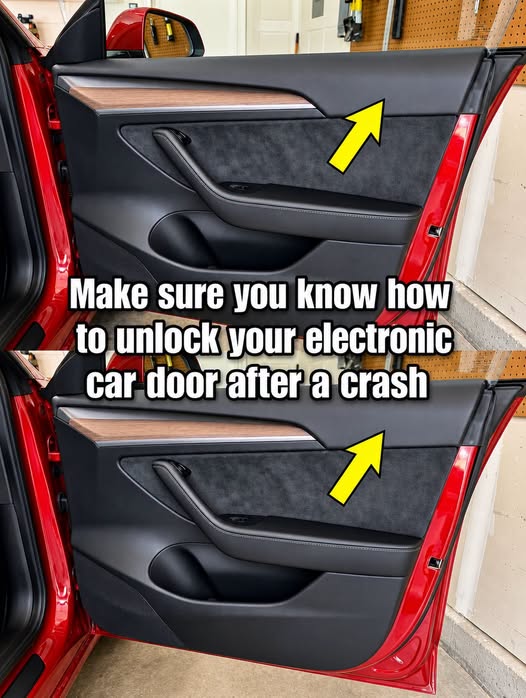
How to Open an Electronic Car Door After a Crash: What Drivers Should Know
Getting into a car accident is stressful enough without having to wonder whether the doors will open afterward.
Modern vehicles increasingly use electronic locks, power-assisted handles, keyless entry systems, and other technologies designed to make driving more convenient. These systems generally work reliably, but a serious collision can affect electrical components, the vehicle’s battery, wiring, or door mechanisms.
That raises an important practical question:
What should you do if your car’s electronic door system doesn’t work after a crash?
The answer depends heavily on the vehicle.
Different manufacturers use different emergency-release systems, and some models have mechanical backup mechanisms that aren’t immediately obvious. Knowing where those mechanisms are before an emergency occurs can make a difficult situation easier to manage.
First: Stay Calm and Assess the Situation
Immediately after a collision, the most important priority is personal safety.
Before trying repeatedly to open a door, take a moment to assess your surroundings.
Check yourself and other occupants for injuries.
If anyone is seriously injured, contact emergency services as soon as possible.
If the vehicle is in an unsafe location, such as an active roadway, focus on getting professional assistance rather than spending unnecessary time trying to troubleshoot the vehicle.
A damaged car can contain hazards that aren’t obvious from inside the cabin.
For example, airbags may have deployed, broken glass may be present, fluids may be leaking, or the vehicle could have electrical damage.
If you smell smoke, see flames, or believe the vehicle is in immediate danger, call emergency services and follow the instructions of trained responders.
Electronic Handles Don’t Always Mean There Is No Manual Release
One of the most important things to understand about modern vehicles is that an electronic exterior or interior handle does not necessarily mean the door has no mechanical backup.
Many vehicles include a manual emergency release.
The difficulty is that its location and operation vary considerably.
Depending on the vehicle, a manual release may be:
- Behind a small cover
- Near the interior door handle
- Beneath a removable trim panel
- Integrated into the handle mechanism
- Located near the door pocket
- Identified with a symbol or emergency-release marking
Some systems require a specific sequence of actions.
Others may operate simply by pulling or activating the mechanical release.
Because these designs vary, there is no universal procedure that applies to every car.
Check the Owner’s Manual
The owner’s manual is one of the most useful sources of information for your specific vehicle.
Look for sections describing:
- Emergency door opening
- Manual door release
- Mechanical door release
- Door lock failure
- Vehicle power loss
- Emergency procedures
- Accident or collision procedures
If you don’t have a printed manual, many manufacturers provide digital versions through their official websites or vehicle apps.
It’s worth checking this information before you actually need it.
A few minutes spent learning how your car’s emergency-release system works can be much easier than trying to figure it out while dealing with the aftermath of a collision.
Why a Crash Can Affect Electronic Door Systems
Electronic door systems depend on electrical power and electronic components.
A collision can damage wiring, connectors, control modules, batteries, or other components involved in the locking system.
In some vehicles, the crash itself may also trigger automatic safety functions.
Depending on the design, the vehicle may unlock certain doors automatically after a collision, while other systems may behave differently.
This is why drivers shouldn’t assume that every electronic door will respond in exactly the same way.
A car that operates normally every day can behave differently after a significant impact.
Check Other Doors If It Is Safe to Do So
If your usual door doesn’t open, don’t automatically assume that every door is locked.
If you can safely check another door, try the other available exits.
Depending on the vehicle and the circumstances of the crash, one door may be damaged while another remains functional.
However, don’t force a door if it appears damaged or blocked.
A door frame can become distorted during a collision, making it difficult or impossible to open normally.
Trying to force it may also create additional hazards.
Consider the Windows
Some vehicles have windows that continue operating for a limited period after certain electrical systems are affected, while others may lose power.
If the windows are functioning and there is a safe way to exit through one, this may provide another option.
However, a window should not automatically be treated as an emergency exit.
Glass can be damaged after a collision, and sharp fragments may be present.
If you have a vehicle-specific emergency procedure, follow it.
Emergency responders also have specialized equipment and training for situations in which normal exits are unavailable.
Don’t Rely on Internet Advice for a Specific Vehicle
General advice can be useful, but vehicle-specific instructions are much more reliable.
A procedure that works on one model may not work on another.
Even two vehicles from the same manufacturer can have different door-release systems depending on the model year and trim level.
That’s why searching for your exact vehicle’s emergency-release procedure is preferable to following a generic trick.
Use the manufacturer’s documentation whenever possible.
You can also ask a dealership or qualified automotive professional to demonstrate the emergency release before an emergency occurs.
What About Electric Vehicles?
Electric vehicles can have additional considerations because they use high-voltage electrical systems.
This doesn’t mean that an electric vehicle is inherently unsafe after a collision, but it does mean drivers should follow the manufacturer’s emergency procedures.
If an electric vehicle has been involved in a significant crash, don’t attempt to access or repair high-voltage components yourself.
Emergency responders and trained technicians have procedures for dealing with damaged electric vehicles.
If there is smoke, unusual heat, sparks, or another indication of a serious electrical problem, move to a safe location when possible and contact emergency services.
What If the Battery Is Dead?
A completely discharged 12-volt battery can create another challenge for vehicles that rely heavily on electronic systems.
Many modern vehicles still provide mechanical backup methods for opening doors.
However, the procedure differs from one vehicle to another.
Some vehicles also provide a method for accessing the vehicle’s low-voltage system from outside so that certain functions can be restored.
This is another reason to learn your vehicle’s emergency procedures ahead of time.
Don’t assume that because your car has a traditional-looking door handle, the mechanism behind it works exactly like the one in an older vehicle.
Keep Emergency Information Accessible
It’s useful to keep certain information available before an accident happens.
Consider knowing:
- Your vehicle’s exact model and model year
- Where the manual emergency door releases are located
- How the locks operate without electrical power
- How to contact roadside assistance
- Your insurance company’s emergency number
- The location of the vehicle identification number
- Basic emergency procedures listed by the manufacturer
You don’t need to memorize every technical detail.
The goal is simply to know where to find the correct information.
What Not to Do
After a collision, frustration can make people try increasingly forceful solutions.
Avoid using excessive force against a door that appears jammed.
Don’t remove interior panels unless the manufacturer’s procedure specifically calls for it and the situation is safe.
Don’t tamper with wiring or high-voltage components.
Don’t crawl beneath a damaged vehicle to try to repair something from underneath.
And don’t remain inside a vehicle that presents an obvious immediate hazard simply because you’re trying to solve an electronic-door problem.
If you’re trapped and unable to safely exit, contact emergency services and clearly explain your situation.
If You’re Unable to Get Out
If the vehicle is damaged and you cannot open any normal exit, call emergency services if you have access to a phone.
Tell the dispatcher:
- Your location
- That you are inside a vehicle
- Whether anyone is injured
- Whether there is smoke, fire, leaking fluid, or another immediate hazard
- Whether you can access any exit
Stay as calm as possible and follow the dispatcher’s instructions.
If you are traveling with children, elderly passengers, or someone who is