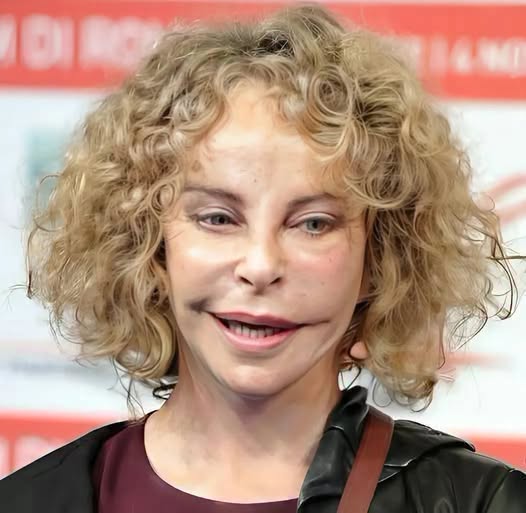
The Hollywood Beauty Ideal: Fame, Aging, Plastic Surgery, and the Pressure to Look Young
There was a time when she seemed to belong to a different category of celebrity entirely.
She wasn’t simply described as beautiful. She had the kind of screen presence that made people stop and pay attention. Cameras seemed to find her naturally, audiences remembered her immediately, and her appearance became part of the image that helped define her career.
For years, she represented a particular version of Hollywood glamour: polished, youthful, confident, and seemingly untouched by the ordinary passage of time.
But fame has a complicated relationship with aging.
For actors, models, musicians, and other public figures, appearance can become closely connected to professional identity. The pressure to remain youthful can be intense, particularly in an entertainment industry where new faces are constantly emerging.
Over time, cosmetic procedures and plastic surgery have become increasingly visible parts of celebrity culture.
For some people, these procedures are personal choices made for confidence or individual preference. For others, they reflect the enormous expectations placed on public figures to maintain a particular appearance.
The conversation becomes even more complicated when a celebrity’s appearance changes noticeably over the course of a long career.
Instead of simply asking what procedures may or may not have been performed, a larger question emerges:
Why has looking young become such an important part of success?
The Era of the Hollywood Ideal
For much of modern entertainment history, Hollywood has promoted highly specific ideas about beauty.
Women in particular have often been expected to appear youthful, polished, slim, and camera-ready. Men have faced appearance pressures as well, but the expectations have historically been especially intense for women.
An actress could spend decades building a successful career and still find herself facing questions about whether she looked “too old” for certain roles.
That reality created an unusual contradiction.
Experience was valuable.
Longevity was valuable.
Talent was valuable.
But physical aging could sometimes be treated as a professional disadvantage.
As television, magazines, advertising, and eventually social media expanded the reach of celebrity culture, the pressure became even more visible.
A public figure could be photographed from hundreds of angles and have those images analyzed by millions of people.
A small change in facial appearance could become a topic of discussion.
A different hairstyle could generate headlines.
Weight fluctuations could attract commentary.
And cosmetic procedures could become part of a public narrative whether the celebrity wanted that conversation or not.
Why Cosmetic Procedures Became So Common
Plastic surgery and cosmetic treatments are not new.
People have sought ways to alter or improve aspects of their appearance for generations. What changed was the accessibility, sophistication, and visibility of modern cosmetic procedures.
Today, people may consider a wide range of options, from minimally invasive treatments to surgical procedures.
Some want to soften features they have always disliked.
Others may want to restore changes associated with aging.
Some seek reconstructive procedures after injury, illness, or other life events.
And some simply want to experiment with their appearance.
There isn’t one universal reason.
That is important because discussions about celebrity plastic surgery often reduce complicated personal decisions to a single explanation.
The reality is usually more nuanced.
When Appearance Becomes Part of a Brand
For an ordinary person, changing one’s appearance can remain a private decision.
For a celebrity, it may become part of a public image.
Actors are photographed constantly. Their faces appear on posters, television screens, magazine covers, interviews, social media accounts, and promotional campaigns.
A celebrity’s appearance can become closely associated with the roles they played during a particular period.
When that appearance changes, audiences notice.
Sometimes the reaction is positive.
Sometimes it is critical.
And sometimes the public discussion becomes much larger than the change itself.
This creates a difficult situation for celebrities.
If they choose cosmetic procedures, people may criticize them for altering their appearance.
If they don’t, people may criticize them for visibly aging.
In other words, the expectations can become contradictory.
The Myth of Staying Young Forever
One of the strongest themes surrounding celebrity culture is the idea that aging should somehow be preventable.
Modern technology has made it possible to alter many aspects of appearance, but no procedure can completely stop the aging process.
Yet entertainment culture has sometimes encouraged the illusion that celebrities should remain visually unchanged for decades.
This expectation can be particularly powerful when an actor became famous at a young age.
Audiences may remember the person as they appeared in their most successful period and subconsciously compare every later photograph with that earlier image.
The celebrity may have changed naturally over twenty or thirty years, but the public memory has not.
That difference can create unrealistic expectations.
The Internet Changed the Conversation
The rise of the internet transformed celebrity appearance discussions.
In the past, a magazine editor or television producer could influence how a public figure was presented.
Today, photographs can circulate globally within minutes.
Social media has made celebrity images more immediate and continuous.
A public figure can be photographed leaving a restaurant, attending an event, appearing on television, or simply spending time with family.
These images can then be compared with older photographs.
Online discussions may focus on differences in facial features, skin texture, hairstyle, weight, or makeup.
Sometimes the observations are harmless.
Other times, they can become invasive.
The internet has also created an environment where people feel comfortable making assumptions about procedures they cannot actually confirm.
A change in appearance does not automatically prove that someone has undergone a specific operation.
Lighting, makeup, photography, filters, facial expressions, weight changes, natural aging, and countless other factors can affect how someone looks.
That is why responsible discussion requires caution.
The Difference Between Observation and Speculation
Celebrity appearance stories often blur the line between what is known and what is assumed.
There is an important difference between saying that someone’s appearance changed and claiming to know exactly why.
A photograph can show that someone looks different.
It cannot necessarily tell us whether the change resulted from surgery, cosmetic treatment, makeup, aging, weight fluctuation, photography, or another factor.
Even when a person has publicly discussed cosmetic procedures, that does not mean every visible change can be attributed to them.
This distinction matters because celebrities are still individuals with personal boundaries.
A public career does not automatically make every personal decision public information.
The Psychological Side of Beauty Standards
The celebrity conversation also reflects a much broader issue.
People who have never appeared on a red carpet can experience similar pressures.
Social media platforms expose users to carefully selected images every day. Filters and editing tools can create appearances that are difficult or impossible to reproduce naturally.
Someone may begin comparing their ordinary appearance with images that have been professionally styled, photographed, edited, and digitally enhanced.
That comparison can influence how people perceive themselves.
Beauty standards have always existed, but technology has increased the frequency with which people encounter them.
The result is a culture in which appearance can feel like something that constantly needs to be improved.
Why Women Often Face Greater Scrutiny
Although appearance expectations affect everyone, women in entertainment have historically faced particularly strong pressure surrounding age.
A male actor may continue playing romantic, powerful, or leading roles as he grows older.
Women have often encountered different expectations.
This has led to long-running discussions about representation, ageism, and the limited range of roles available to older actresses.
The issue is bigger than plastic surgery.
Cosmetic procedures may be one response to an environment in which youth is heavily rewarded.
But changing an individual’s appearance does not necessarily solve the underlying problem.
If the industry continues to place greater value on youth than experience, the pressure remains.
The Price of Perfection
The phrase “the price of perfection” can mean more than financial cost.
There can be emotional costs as well.
Constant public attention can make a person unusually aware of small changes in appearance.
Imagine having millions of strangers discussing your face.
For most people, a difficult photograph might be seen by a few friends.
For a celebrity, the same photograph can potentially be viewed by millions.
That level of scrutiny can be difficult to separate from everyday life.
It may also explain why some public figures choose to invest heavily in maintaining a particular appearance.
The decision may not simply be about vanity.
It can be connected to career expectations, personal confidence, professional opportunities, or the desire to remain recognizable to an audience.
When Cosmetic Work Becomes Part of the Public Story
For some celebrities, cosmetic procedures remain a private matter.
For others, they become part of their public identity.
A celebrity may openly discuss having surgery, explain why they chose it, or even advocate for cosmetic treatments.
Others may refuse to discuss the subject.
Both approaches are personal choices.
The public fascination often comes from the contrast between a celebrity’s earlier and later appearances.
People may look at old photographs and ask how much has changed.
But the more useful conversation may be about why society feels such a strong need to analyze those changes.
Beauty, Identity, and Personal Choice
Appearance is closely connected to identity.
People use clothing, hairstyles, makeup, tattoos, fitness, cosmetic treatments, and countless other choices to express themselves.
There is no single correct way to age.
Some people embrace visible signs of aging.
Others prefer cosmetic treatments.
Many people fall somewhere between those extremes.
Neither choice necessarily tells us everything about a person’s confidence, values, or personality.
A person’s appearance should not become a substitute for understanding who they are.
This is particularly important when discussing celebrities.
The public may know their films, music, interviews, or performances, but that does not mean the public knows their private motivations.
What Hollywood Can Learn From Aging
The entertainment industry has gradually begun having broader conversations about age and representation.
Older actors and actresses continue to demonstrate that audiences can connect with stories centered on people at every stage of life.
Experience can create opportunities for different kinds of storytelling.
Characters do not have to be permanently young to be interesting.
In fact, some of the most compelling performances come from people portraying characters with decades of life experience.
That suggests an important shift in how aging can be viewed.
Instead of treating age as something that must always be hidden, entertainment can recognize it as part of a person’s story.
A Larger Conversation Than Plastic Surgery
The story of any celebrity who undergoes visible changes in appearance is ultimately about more than cosmetic procedures.
It raises questions about fame.
It raises questions about identity.
It raises questions about how society treats aging.
And it raises questions about whether perfection is even a realistic goal.
Plastic surgery can change certain physical features, but it cannot eliminate every aspect of aging or guarantee happiness.
At the same time, criticizing someone for choosing cosmetic treatment can be just as simplistic as assuming everyone should want it.
The more meaningful conversation lies somewhere between those extremes.
People should have room to make personal decisions about their appearance without those decisions becoming the entire story of who they are.
The Changing Definition of Beauty
Perhaps the most important change is happening in the definition of beauty itself.
For decades, Hollywood often promoted a narrow image of what was considered attractive.
Today, audiences are increasingly exposed to different ages, body types, backgrounds, styles, and personal identities.
That doesn’t mean appearance pressure has disappeared.
Far from it.
But the conversation is becoming more complicated.
Beauty can be youthful, mature, natural, glamorous, understated, conventional, or unconventional.
There is no single formula.
And perhaps that is the lesson hidden beneath decades of celebrity fascination with appearance.
The pursuit of perfection can become exhausting because perfection itself is constantly changing.
What one generation considers ideal may look completely different to another.
Fame Beyond Appearance
A long Hollywood career is ultimately built on more than a face.
Talent matters.
Discipline matters.
Professionalism matters.
Adaptability matters.
The ability to connect with audiences matters.
And time can give performers something that youth alone cannot provide: experience.
A celebrity’s most important contribution may not be how they looked at twenty, thirty, or fifty.
It may be the work they created, the performances they gave, and the cultural conversations they helped inspire.
That perspective allows people to appreciate beauty without making appearance the only measure of value.
The fascination with celebrity transformations is unlikely to disappear. People will continue comparing photographs, discussing fashion, and debating changing beauty standards.
But the conversation can become more thoughtful.
Instead of asking only what someone may have done to their face, we can ask why appearance carries so much weight in the first place.
Instead of treating aging as a failure, we can recognize it as a natural part of life.
And instead of expecting public figures to remain frozen in the appearance that first made them famous, we can allow them to change.
Because the most lasting form of beauty may not be the ability to look exactly the same forever.
It may be the freedom to grow, change, and remain fully yourself along the way.