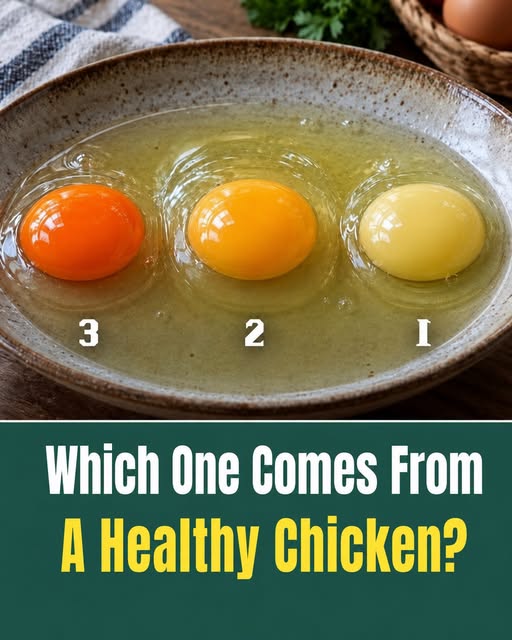
Which Egg Comes From a Healthy Chicken? Understanding What Yolk Color Really Means
Have you ever stood in the grocery store looking at different cartons of eggs and noticed that the yolks can vary dramatically in color?
Some are pale yellow.
Others are bright golden.
Some can even have a deep orange appearance.
It is easy to look at those differences and assume that the darker yolk must automatically mean the egg is better.
After all, many of us have grown up with the idea that richer color means richer nutrition, better quality, or a healthier chicken.
But the reality is more interesting.
Yolk color can tell us something about what a hen has been eating, but it does not, by itself, provide a reliable measurement of the chicken’s overall health or the nutritional quality of the egg.
That distinction is important because egg yolks can naturally vary in appearance even when the eggs are perfectly normal.
Why Do Egg Yolks Have Different Colors?
The primary reason for differences in yolk color is diet.
A hen’s feed can contain naturally occurring pigments called carotenoids and xanthophylls. These compounds are found in various plants and other feed ingredients.
When hens consume feed containing more of these pigments, some of them can accumulate in the yolk.
As a result, the yolk may become more intensely yellow or orange.
For example, feed containing ingredients such as corn, marigold-derived pigments, leafy plants, or other sources of carotenoids can influence the final appearance of the yolk.
This means that two hens can produce eggs with noticeably different yolk colors simply because their diets are different.
The difference does not necessarily mean that one hen is healthier than the other.
It is also possible for hens living under different feeding systems to produce eggs with different yolk colors.
That’s why yolk color should be viewed primarily as a reflection of dietary pigments rather than a simple health score.
Does a Dark Orange Yolk Mean a Healthier Chicken?
Not necessarily.
This is one of the most common assumptions about eggs.
A dark orange yolk can certainly look appealing, and many people associate that color with freshness or superior quality.
However, color alone cannot tell you whether the hen was healthy.
It also cannot reliably tell you how nutritious the egg will be.
A hen’s overall health depends on many factors, including nutrition, living conditions, genetics, age, disease prevention, and general care.
None of these factors can be accurately judged simply by looking at the color of an egg yolk.
The same principle applies to the egg itself.
A darker yolk isn’t automatically a “better” egg, just as a lighter yolk isn’t automatically an inferior one.
What Actually Determines Yolk Color?
Diet is the biggest factor.
Imagine two groups of hens.
The first group receives feed containing ingredients that are relatively low in yellow-orange pigments.
The second group receives feed containing higher levels of pigment-producing ingredients.
The eggs from those two groups may look noticeably different when cracked open.
The first yolks could appear pale yellow.
The second could look much more golden or orange.
Yet the color difference itself does not prove that one group of hens is healthier.
Genetics can also play a role.
Different breeds and individual hens can respond differently to their diets, meaning that yolk color isn’t determined by a single factor.
This is why using color as a simple quality test can be misleading.
What About Free-Range or Pasture-Raised Eggs?
Many shoppers also assume that eggs from hens raised outdoors must always have darker yolks.
That isn’t necessarily the case.
Hens with access to pasture may consume a wider variety of plants, insects, and other natural food sources. Depending on what they eat, this can influence yolk pigmentation.
However, the color can still vary considerably.
A free-range egg may have a relatively light yolk.
Another egg from a similar production system may have a darker yolk.
That doesn’t automatically mean there is a major difference in the health or quality of the hens.
The exact diet and feed composition matter more than the label alone when trying to understand why a yolk has a particular color.
Can Farmers Influence Yolk Color?
Yes.
Feed can be formulated to influence yolk pigmentation.
Certain ingredients naturally contain pigments that can make yolks appear more intensely yellow or orange.
Some commercial feeds may also include approved pigment sources for this purpose.
This is one reason why yolk color should not be treated as a guaranteed indicator of how a hen was raised.
A very colorful yolk can result from the bird’s diet.
It doesn’t necessarily mean the hen spent more time outdoors, received better care, or was healthier.
Likewise, a pale yolk doesn’t prove that the hen was poorly cared for.
Is a Pale Yolk a Sign of Poor Nutrition?
Again, not necessarily.
A pale yolk may simply reflect the ingredients in the hen’s diet.
Certain feeds naturally produce lighter yolks than others.
The hen can still be receiving adequate nutrition.
This is an important point because shoppers sometimes reject eggs solely because the yolk doesn’t have the deep color they expected.
But appearance isn’t a complete nutritional analysis.
If two eggs have different yolk colors, you cannot determine their overall nutritional value simply by comparing the shades.
What About Egg Nutrition?
Eggs are widely valued as a source of protein and other nutrients.
They also contain fats, vitamins, minerals, and other naturally occurring compounds.
However, the nutritional composition of eggs can be influenced by several factors, including the hen’s diet.
This is where things become more complicated than simply saying “orange is better.”
The feed provided to hens can affect certain nutrients in the eggs.
For example, the fatty-acid profile of an egg can be influenced by the hen’s diet.
Certain feed ingredients can also affect the levels of particular nutrients.
So while yolk color itself isn’t a dependable health indicator, the hen’s diet can matter for other nutritional characteristics.
In other words, the diet may matter without the color being a reliable measurement of that diet’s overall benefits.
Why Do People Prefer Darker Yolks?
There is also a psychological component.
Food appearance strongly influences how we perceive quality.
A bright orange yolk can look richer, fresher, and more appealing.
It may remind people of eggs they ate growing up or eggs from backyard chickens.
For some consumers, that appearance is associated with traditional farming or outdoor-raised hens.
Those associations are understandable, but they don’t turn yolk color into a scientific test.
Taste preferences can also vary.
Some people believe darker-yolk eggs taste richer, while others don’t notice much difference.
Taste can depend on numerous factors, including freshness, cooking method, feed, and personal preference.
Does Yolk Color Tell You Whether an Egg Is Fresh?
Not reliably.
Freshness is affected by factors such as how the egg has been stored and how much time has passed since it was laid.
Yolk color is primarily associated with pigments in the hen’s diet.
Therefore, a bright orange yolk isn’t automatically fresher than a pale yellow yolk.
If freshness matters to you, pay attention to proper storage, package information, and food-safety guidance rather than relying on color alone.
When an egg is cracked open, other characteristics may also provide clues about freshness, although none should replace proper food-safety practices.
What Should You Look for When Buying Eggs?
Instead of focusing entirely on yolk color, consider the information that actually matters to you.
Look at the carton.
Check the expiration or sell-by information where applicable.
Consider how the eggs were produced if that is important to you.
Pay attention to storage conditions.
Make sure the shells are clean and intact.
And choose eggs from a source you trust.
If you’re interested in a particular nutritional characteristic, look for information about the hens’ feed or any specific nutrition claim on the packaging rather than assuming that a darker yolk tells the entire story.
The Role of Hen Health
A chicken’s health is influenced by much more than the appearance of the eggs she produces.
Hens need appropriate nutrition, clean water, suitable living conditions, protection from disease, and proper care.
Their age and genetics can also influence egg characteristics.
A hen that produces a pale-yolked egg isn’t necessarily unhealthy.
Likewise, a hen producing strongly colored yolks isn’t automatically healthier.
This is why scientists and poultry professionals don’t use yolk color as a simple pass-or-fail test for chicken health.
It can provide information about pigmentation in the diet, but that’s different from evaluating the animal’s overall condition.
What the Color Can Tell You
While yolk color isn’t a complete health indicator, it isn’t meaningless either.
It can provide a clue about the pigments present in the hen’s diet.
If a hen consumes more pigment-rich feed, the yolk may become more intensely colored.
If her diet contains fewer of those pigments, the yolk may be lighter.
So when you crack open an egg and see a particular shade, you are seeing the result of biology, nutrition, genetics, and pigmentation.
You’re not looking at a simple health certificate.
That distinction can help shoppers make more informed decisions.
Why the Myth Continues
The idea that darker yolks are always better has probably survived because it seems intuitive.
A richer color looks more substantial.
Many traditional farm eggs do have noticeably colorful yolks.
People may remember those eggs and associate their appearance with freshness and quality.
Food marketing can reinforce those expectations.
But an appealing visual characteristic doesn’t necessarily tell us everything about the food.
This is true of many foods.
Color, size, shape, and appearance can provide useful information, but they rarely tell the entire story.
Eggs are no different.
So, Which Egg Comes From a Healthy Chicken?
The honest answer is that you cannot determine a chicken’s overall health simply by looking at the color of the yolk.
A pale yellow yolk doesn’t automatically indicate an unhealthy hen.
A deep orange yolk doesn’t automatically indicate a healthier one.
Yolk color is primarily influenced by the pigments in the hen’s diet, along with other biological factors.
If you want to understand how a particular egg was produced, the more useful information comes from the producer, the labeling, the hen’s feeding system, and the production practices behind the product.
In other words, don’t judge the entire egg—or the health of the chicken—by one shade of yellow.
The next time you open an egg carton and see yolks ranging from pale yellow to deep orange, you can look at the difference with a little more understanding.
That color varia