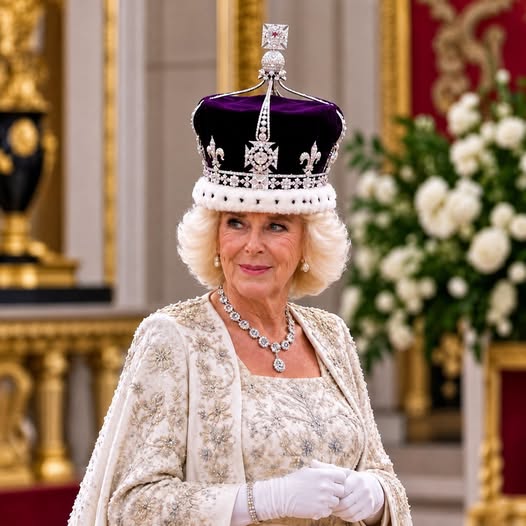
Camilla Parker Bowles: Her Journey From Controversial Figure to Queen
For decades, Camilla Parker Bowles occupied one of the most complicated positions in modern British royal history.
Her name became closely associated with King Charles III, Princess Diana, and one of the most discussed chapters in the history of the British monarchy. For many years, public discussion surrounding Camilla was dominated by the breakdown of Charles and Diana’s marriage and the circumstances surrounding their relationship.
Today, however, Camilla’s public role is very different.
She is Queen Camilla, the wife of King Charles III, and she has spent years carrying out official duties on behalf of the monarchy.
Her journey from a relatively private aristocratic background to one of the most recognizable women in Britain has been long and closely followed.
Recent royal coverage has once again brought attention to the history surrounding Charles, Diana, Camilla, and the Spencer family. On September 21, 2026, reporting about comments from Diana’s brother, Earl Spencer, renewed discussion about events surrounding the royal family in the years following Diana’s death. Buckingham Palace has also been drawn into the discussion, demonstrating how strongly the history of that period continues to attract public interest.
Yet Camilla’s story cannot be understood only through the events of the 1980s and 1990s.
Her life has continued for decades since then, eventually leading to her becoming Queen Consort and later Queen alongside Charles.
From Camilla Shand to a Member of the Royal Family
Camilla Rosemary Shand was born in 1947 and grew up in a well-connected British family.
She later married Andrew Parker Bowles, with whom she had two children.
Long before she became queen, however, Camilla’s name was connected with Charles, then the Prince of Wales.
Their relationship developed over many years and became one of the most discussed aspects of Charles’s personal life.
Charles eventually married Lady Diana Spencer in 1981.
The wedding was watched by millions around the world and was presented as a major royal occasion.
Charles and Diana went on to have two sons, Prince William and Prince Harry.
But behind the public image of a successful royal marriage, the relationship became increasingly complicated.
Charles and Diana eventually separated in 1992, and their divorce was finalized in 1996.
The breakdown of the marriage received enormous attention from the British and international press.
Camilla became an important part of that public discussion.
A Relationship Under Extraordinary Public Attention
The relationship between Charles and Camilla was not simply a private matter.
The people involved were among the most famous figures in Britain.
Diana was one of the world’s most recognizable women, while Charles was heir to the British throne.
As a result, personal developments were treated as matters of enormous public interest.
Television programs, newspapers, biographies, interviews, documentaries, and books examined the relationship from many different perspectives.
Different people involved in the story have also offered their own accounts over the years.
Because of this, separating established facts from interpretations has often been difficult.
One thing is clear: the story became part of the history of the British monarchy.
Diana’s Legacy Remains Important
Princess Diana died in a car crash in Paris in August 1997.
Her death profoundly affected the British royal family and millions of people around the world.
Her two sons, William and Harry, were still young at the time.
Diana’s public image continued to grow after her death, and her charitable work remained an important part of her legacy.
Her life and death have also continued to generate books, documentaries, interviews, and public discussion.
That means Camilla’s name has remained connected to Diana even decades later.
The connection is especially visible whenever new material about Charles, Diana, or the Spencer family becomes public.
The current renewed discussion surrounding Earl Spencer in September 2026 is another example. His recent memoir and comments have prompted reporting about his relationship with Charles and his recollections of events surrounding Diana. Buckingham Palace has disputed aspects of his account, while Spencer has stood by his version.
These disagreements illustrate why historical accounts of the royal family should be treated carefully.
Different participants may remember or interpret events differently.
Camilla’s Public Role Gradually Changed
After years of controversy, Camilla’s relationship with Charles gradually became more publicly accepted within the royal institution.
Charles and Camilla married in 2005.
Camilla became the Duchess of Cornwall and began taking on a growing number of official responsibilities.
Her public work included supporting charities and organizations connected with literacy, reading, health, the arts, animals, and other causes.
Her role was very different from that of a private individual.
As the wife of the heir to the throne, she was increasingly visible at official events.
This meant attending ceremonies, meeting members of the public, visiting charities, and representing the royal family.
Over time, her public identity became less centered on her relationship with Charles and more connected with the work she performed.
Becoming Queen
When Queen Elizabeth II died in September 2022, Charles became King.
Camilla consequently became Queen Consort.
The change represented a major moment in her long public journey.
For someone whose relationship with Charles had once been one of the most controversial subjects surrounding the monarchy, reaching the position of queen marked a remarkable transformation in her public life.
The coronation of Charles and Camilla took place at Westminster Abbey in May 2023.
The ceremony was watched around the world and represented a new chapter for the British monarchy.
Camilla was formally crowned alongside Charles.
Her title and responsibilities changed, but so did the way many people encountered her.
Instead of being primarily discussed in relation to Charles’s past, she was increasingly presented through her own official activities.
The Work Behind the Title
Being queen involves much more than attending major ceremonies.
Members of the royal family carry out hundreds of engagements each year.
These can involve charities, schools, hospitals, community organizations, cultural institutions, military organizations, businesses, and public events.
Camilla has developed particular interests in literacy and reading.
She has also supported organizations dealing with issues including domestic violence, osteoporosis, animal welfare, and other social causes.
The official royal diary records engagements and activities undertaken by members of the royal family. Official records show that Camilla has continued participating in public duties alongside King Charles during his reign.
The nature of these responsibilities means that much of her modern public life consists of meetings and appearances that receive relatively little attention compared with the dramatic events of the past.
Her Relationship With the Public Image of the Monarchy
The British monarchy has changed considerably over the decades.
Public expectations are different from those that existed when Charles and Diana married.
The royal family now operates in an environment where traditional newspapers compete with television, online publications, social media, podcasts, documentaries, and independent commentators.
A royal event can generate thousands of photographs within minutes.
A short comment can become a headline.
An old photograph can suddenly circulate again.
And a decades-old story can return to public attention whenever a new book or interview introduces another perspective.
Camilla’s life demonstrates how difficult it can be for a public figure to move beyond an old narrative.
Why Her Past Continues to Attract Attention
The story involving Charles, Diana, and Camilla contains many elements that naturally attract historical interest.
There was a royal marriage.
There were questions about relationships.
There was a highly publicized separation.
There was a divorce.
There was Diana’s tragic death.
There was the eventual marriage of Charles and Camilla.
And decades later, Charles became king and Camilla became queen.
Because these events involve some of the most recognizable people in Britain, they have been examined repeatedly.
New books can bring old questions back into the spotlight.
That does not necessarily mean that something new has been proven.
Sometimes renewed attention simply reflects the release of a new account or a public figure offering a different perspective on events that happened many years earlier.
That distinction is important when reading modern royal coverage.
The Importance of Separating History From Speculation
Royal stories often generate strong reactions.
A photograph can inspire theories.
A brief statement can be interpreted in multiple ways.
An old event can be presented differently depending on who is telling the story.
For that reason, readers should distinguish between confirmed events and interpretations.
For example, it is an established fact that Charles and Diana married in 1981, separated in 1992, and divorced in 1996.
It is also established that Charles married Camilla in 2005 and became king in 2022.
What is more difficult to establish are claims about what individual people privately thought or intended unless they have directly documented those feelings.
That is particularly important when discussing historical royal relationships.
A dramatic interpretation may attract attention, but it is not necessarily the same thing as evidence.
Camilla’s Life Beyond the Old Headlines
The modern Queen Camilla has spent many years building a public identity around her official work.
She has appeared at schools and libraries.
She has met volunteers.
She has supported literary programs.
She has attended cultural events.
She has represented the monarchy during overseas visits.
She has accompanied King Charles on state visits and other important occasions.
For example, the official royal website documented the king and queen’s four-day state visit to the United States in April 2026, marking the 250th anniversary of the Declaration of Independence and highlighting the relationship between Britain and the United States.
These duties illustrate the difference between Camilla’s present position and the one she occupied decades ago.
Her role is now institutional.
She represents the Crown.
The Monarchy’s Changing Generations
Camilla’s position also exists within a royal family that is changing from one generation to another.
King Charles inherited the throne from Queen Elizabeth II after her seven-decade reign.
Prince William is now next in line to the throne.
The younger generation of royals has grown up in a world where social media plays an enormous role in public life.
This has changed how members of the royal family communicate with the public.
At the same time, historical stories remain part of the monarchy’s modern identity.
William and Harry’s childhood, their mother’s death, Charles’s second marriage, and the changing structure of the royal family are all connected to the history of the institution.
That is one reason why stories involving Camilla continue to receive attention.
The Spencer Family and Continuing Interest
The Spencer family remains an important part of the story because of Diana’s background.
Her brother, Charles Spencer, has continued writing and speaking about aspects of his family’s history.
His 2026 memoir has generated renewed discussion about Diana, the royal family, and his own experiences.
Recent reporting shows that Buckingham Palace has challenged aspects of Spencer’s account, while Spencer has defended his recollections.
That disagreement demonstrates something important about historical storytelling.
A memoir represents the author’s perspective.
An official response represents the institution’s position.
Neither should automatically be treated as a complete account of every event.
Readers benefit from looking at multiple documented sources and distinguishing direct evidence from interpretation.
A Different Chapter for Camilla
Whatever views people may have held about Camilla decades ago, her public role has undeniably changed.
She was once known primarily as the woman involved in one of the most closely examined royal relationships of the late twentieth century.
Today she is Queen Camilla.
She participates in official engagements, accompanies the king at major events, supports charitable causes, and represents the monarchy.
The transformation did not happen overnight.
It developed over many years.
Her marriage to Charles was followed by a gradual expansion of public duties, eventually leading to her becoming queen.
Why Her Story Remains Interesting
Camilla’s story is unusual because it spans several different eras of British royal history.
She lived through the final decades of Queen Elizabeth II’s reign.
She experienced the intense media attention surrounding Charles and Diana.
She became Duchess of Cornwall.
She married Charles.
She became Queen Consort.
And now she serves as queen during the reign of Charles III.
Few members of the modern British royal family have experienced such a dramatic change in public circumstances.
Her story therefore provides an interesting example of how public roles can evolve over time.
Looking Beyond the Controversy
The history surrounding Charles, Diana, and Camilla will probably continue to be discussed.
Books will be published.
Documentaries will revisit old events.
People who witnessed parts of the story may offer new recollections.
And the public will continue debating how different events should be understood.
But Camilla’s present role is also part of the historical record.
She is no longer simply a figure associated with the royal marriage of the 1980s and 1990s.
She has spent more than two decades performing official duties as part of the royal family.
Since Charles became king, those responsibilities have become even more prominent.
The official royal records show a continuing schedule of engagements for the king and queen and other members of the family.
A Life That Took an Unexpected Path
Camilla Parker Bowles could hardly have predicted the position she would eventually occupy.
Her early life was far removed from the image of a future queen.
Yet decades of personal, family, and historical events eventually brought her to the center of the British monarchy.
Her journey has included intense public scrutiny, difficult periods, major changes, and ultimately a constitutional role few people could have imagined for her when she was younger.
That makes her story more complicated than any single headline.
It cannot be reduced to a simple description of a relationship or a decades-old controversy.
It is the story of a woman whose public identity changed dramatically over time.
The Story Continues
In September 2026, renewed discussion of Princess Diana’s family and the history surrounding Charles has once again brought Camilla’s name into the news.
That attention shows how strongly the public remains interested in one of the most discussed chapters of modern royal history.
But the present-day Queen Camilla exists within a very different chapter.
The woman who was once discussed almost entirely through the lens of Charles and Diana now has a formal role at the heart of the British monarchy.
Her story remains connected to the past, but it is no longer limited to it.
For royal watchers, historians, and members of the public, that evolution is perhaps the most interesting part of all.
A relationship that once dominated headlines eventually became part of a much larger story about the changing British monarchy.
And as the royal family continues into another generation, Camilla’s decades-long journey—from Camilla Shand to Duchess of Cornwall, Queen Consort, and ultimately Queen—has become an established part of that history.