My Family Ignored My Daughter During Her Surgery—Then Asked Me for Money
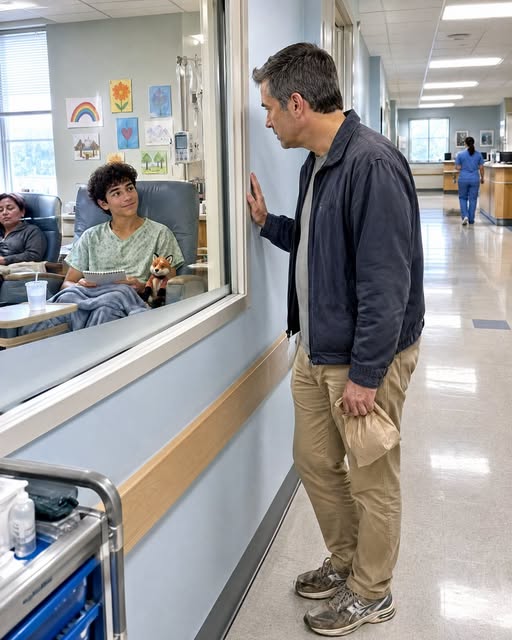
Not one person from my family came to the hospital while my fourteen-year-old daughter, Lily, was undergoing a thirteen-hour surgery.
There was no visit.
No phone call.
No message asking how she was doing.
Nothing.
I spent those thirteen hours sitting beneath the harsh hospital lights, watching the doors to the operating area and trying to remain calm for my daughter.
Three days later, my father finally contacted me.
For one brief moment, I thought he was calling to ask about Lily.
I was wrong.
He wanted $3,500.
Not for Lily.
Not for a medical bill.
Not for an emergency.
He wanted the money to help pay for my younger brother Austin’s destination engagement celebration in the Bahamas.
I stared at the message for several seconds.
Then I opened my banking app.
I sent my father exactly one cent.
In the transfer note, I wrote:
“Put it toward his future.”
Then I began making changes I should have made years earlier.
I canceled subscriptions.
I removed family members from accounts I was paying for.
I changed shared passwords.
I froze a credit card that had been intended for genuine emergencies but had gradually become another source of convenience for my family.
I canceled my brother’s gym membership.
I disconnected several services that my parents and brother had been using without thinking twice about who was paying for them.
I didn’t send a family announcement.
I didn’t make a social media post.
I didn’t threaten anyone.
I simply stopped paying for people who had repeatedly treated my support as an obligation rather than a kindness.
The following morning, my phone showed seventeen missed calls.
Every one of them was from my mother.
The Longest Thirteen Hours
Three days earlier, my world had been completely different.
Lily had been taken into surgery early that morning.
The doctors had explained what they could to us beforehand, but knowing what was going to happen didn’t make the waiting any easier.
At fourteen, Lily was old enough to understand that the procedure was serious, but young enough to still look at me for reassurance whenever she became frightened.
I told her I would be there when she woke up.
I promised her that I wasn’t going anywhere.
Then the medical team took her through the doors.
And I waited.
The first few hours passed slowly.
I drank coffee I barely tasted.
I checked my phone repeatedly.
I watched nurses move through the hallway.
Every time the operating-room doors opened, I looked up.
My parents knew about the surgery.
They knew the date.
They knew the hospital.
They knew how long the procedure was expected to take.
They lived close enough that coming to the hospital would not have been difficult.
Austin knew too.
Yet nobody appeared.
At first, I tried to make excuses for them.
Maybe Mom was nervous.
Maybe Dad didn’t know what to say.
Maybe Austin was busy.
Maybe they thought I wanted privacy.
But as the hours passed, those explanations became harder to believe.
A simple text would have taken less than a minute.
“Thinking of you.”
“Is Lily okay?”
“Do you need anything?”
Anything would have mattered.
Nothing came.
When the surgeon finally walked toward me after thirteen hours, I stood so quickly that my chair nearly fell backward.
The news was reassuring.
The procedure had been completed, and Lily was being moved to recovery.
I thanked the surgeon several times.
Then I went to see my daughter.
She looked exhausted.
But she was awake.
I held her hand.
That was all I cared about.
The Message From My Father
For the next three days, my attention stayed entirely on Lily.
She needed rest.
She needed help moving around.
She needed medication according to the medical team’s instructions.
Most importantly, she needed to know that her father was there.
My phone remained mostly forgotten.
Then, on the third day, I saw a message from my father.
I opened it expecting something like:
“How is Lily doing?”
Instead, he asked whether I could send him $3,500.
Austin and his fiancée, Jyn, were planning an engagement celebration in the Bahamas, and apparently they had gone over their budget.
My father explained that the family was trying to help them cover the additional expenses.
Then he asked whether I could contribute.
I reread the message.
There was no mention of Lily.
No question about her recovery.
No acknowledgment that she had just spent thirteen hours in surgery.
Just a request for money.
I looked over at my daughter.
She was asleep.
For years, I had been the person my family called whenever something needed to be paid, organized, repaired, scheduled, or rescued.
I had accepted that role because I thought that’s what families did for one another.
But that day, something changed.
I sent my father one cent.
The note said:
“Put it toward his future.”
Then I put my phone down.
The Financial Connections
Once I started looking at everything I was paying for, I realized how much of my family’s daily convenience depended on me.
Some things had started innocently.
Years earlier, Mom had asked if I could put one streaming service on my account because she was having trouble setting hers up.
Dad needed help with another subscription.
Austin asked whether I could add him to a membership temporarily.
A credit card was supposed to be available to Mom for emergencies.
A gym membership was supposed to be a short-term favor for Austin.
But temporary arrangements have a way of becoming permanent when nobody is asked to reconsider them.
And because I rarely complained, my family apparently stopped seeing them as favors.
They became expectations.
That night, I went through everything.
I canceled the services I no longer wanted to pay for.
I removed people from accounts where they had no reason to remain.
I changed passwords that had been shared for years.
I reviewed automatic payments.
I froze the card that had been used far too casually.
I didn’t do it because I wanted revenge.
I did it because I finally understood something:
Helping someone is a choice.
It isn’t an obligation simply because you have helped them before.
Seventeen Missed Calls
The next morning, my phone started vibrating at 6:03 a.m.
Mom.
I ignored the first call.
Then another came.
Then another.
By the time I looked again, there were seventeen missed calls.
Eventually, I answered.
“What happened?” I asked.
“What did you do?” Mom demanded.
I knew immediately that she wasn’t calling about Lily.
She was calling about the accounts.
“Hulu isn’t working,” she said. “And Austin says his gym membership was canceled.”
I stayed quiet.
Then she asked, “Did you really send your father one cent?”
“Yes.”
There was a long pause.
“Why would you do something like that?”
I looked through the doorway toward Lily’s room.
“Did you forget that she had surgery?”
Mom sighed.
“We knew you had everything under control.”
That sentence stayed with me.
Everything under control.
As though being the parent sitting alone outside an operating room meant I didn’t need anyone.
As though being capable meant I couldn’t be scared.
As though needing emotional support was somehow a weakness.
I reminded her that nobody had called.
Nobody had visited.
Nobody had even asked whether Lily was okay.
Mom responded that I was being dramatic.
That word wasn’t new.
I’d heard it many times throughout my life.
Whenever I objected to something unfair, I was dramatic.
Whenever I asked for appreciation, I was sensitive.
Whenever I said no, I was selfish.
And whenever Austin needed something, everyone seemed to expect me to help.
The Family Pattern
Growing up, Austin was always treated differently.
He wasn’t necessarily a bad person.
But he was used to receiving help.
If he needed money, someone found it.
If he needed transportation, someone arranged it.
If he made a mistake, someone helped fix it.
I learned early that I couldn’t rely on the same kind of assistance.
I worked two jobs through college.
At twenty-four, I became a single father.
There were years when every dollar had a purpose.
Rent.
Food.
School expenses.
Medical bills.
Clothing.
Everything.
I didn’t resent my daughter for any of it.
Being her father was never the problem.
What hurt was realizing that my family had watched me carry all of those responsibilities while continuing to assume I would somehow have extra resources available whenever Austin needed something.
Over time, I became the dependable one.
And being dependable became a trap.
People stopped asking whether I could help.
They simply assumed I would.
Lily Never Asked
As Lily slowly recovered, she made progress.
First, she was able to move with assistance.
Then she began using a walker.
Eventually, she was able to take short steps with a crutch.
Every small improvement felt enormous to me.
I celebrated each one.
Lily, however, never asked why her grandparents hadn’t visited.
She never asked why Austin hadn’t come.
Maybe she hadn’t noticed.
Maybe she didn’t want to ask.
Or perhaps she was simply more focused on getting better.
But there was one moment I will never forget.
We were sitting together after one of her appointments when she casually asked:
“Grandma still busy?”
I hesitated.
“She’s been busy.”
Lily nodded.
She didn’t complain.
She didn’t demand an explanation.
She simply went back to watching television.
Somehow, that hurt more than anger would have.
Children often understand more than adults realize.
They notice who shows up.
They notice who calls.
They notice who remembers.
And they notice who doesn’t.
The Invitation
A few days later, an invitation arrived.
It was for Austin and Jyn’s engagement celebration in the Bahamas.
The envelope included both my name and Lily’s.
For a moment, I stared at it.
My daughter was still recovering from a major operation, and my family was planning an expensive celebration thousands of miles away.
I didn’t feel angry anymore.
Mostly, I felt tired.
Lily saw the invitation.
“Are we going?”
“No, sweetheart.”
She looked at me.
“Why?”
“We have other things to focus on right now.”
She accepted that answer.
She didn’t ask again.