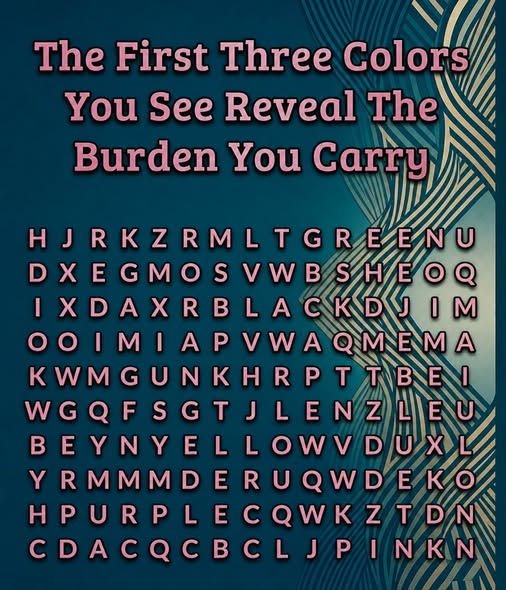
What the First Three Colors You Notice Might Reveal About Your Preferences and Personality
Have you ever looked at a colorful image and noticed that certain colors immediately caught your attention while others seemed to fade into the background?
Perhaps your eyes went straight to a bright red, a peaceful blue, or a refreshing shade of green. Maybe you noticed yellow before anything else, or perhaps a softer color, such as lavender or pink, stood out to you.
The interesting thing about color is that people do not always notice or respond to it in the same way.
Two people can look at the exact same picture and describe completely different details as their favorites. One might be drawn to bold, vibrant shades, while another might prefer subtle, calming tones.
These differences can make color-based personality activities enjoyable opportunities for self-reflection.
The idea behind this simple exercise is straightforward: look at a group of colors, identify the first three that naturally catch your attention, and consider what those preferences might mean to you.
It is important to understand that this is not a scientifically validated personality test. The first three colors you notice cannot reliably determine your character, predict your future, diagnose your emotional state, or explain every aspect of your behavior.
Color preferences are influenced by many factors, including personal experiences, culture, surroundings, lighting, and individual taste.
Still, exploring the colors that appeal to you can be an interesting way to think about your preferences, memories, and everyday habits.
Sometimes, the value of an activity like this is not in discovering a definitive answer about yourself. It is in asking questions you might not ordinarily consider.
So, before reading the interpretations below, take a moment to think about the first three colors that come to mind.
Which ones do you notice first?
Which one feels most familiar?
And which color would you naturally choose if you were decorating your room, selecting clothing, or creating a personal space?
Your answers may offer an enjoyable starting point for reflection.
How This Color Personality Activity Works
This activity is designed to be simple, relaxing, and easy to complete.
Imagine looking at a picture containing several different colors. Instead of carefully analyzing every shade, allow yourself to notice which colors attract your attention first.
You might immediately notice red, blue, and green.
Someone else might identify purple, yellow, and orange.
There is no correct or incorrect combination.
The purpose is not to achieve a particular result but to explore what your preferences mean to you personally.
For this exercise, think about the following three things:
Your first color: Which shade immediately attracted your attention?
Your second color: Which color did you notice next, without deliberately searching for it?
Your third color: Which additional shade stood out before you began analyzing the image?
Once you have identified your three colors, read their general associations below.
Keep in mind that the interpretations are reflective prompts rather than proven descriptions of your personality.
You may find that one description feels familiar while another does not fit you at all.
That is perfectly normal.
A color preference can be meaningful to one person for personal reasons while having an entirely different significance for someone else.
With that in mind, let’s explore some common color associations and the questions they may inspire.
1. Red: Energy, Confidence, and Strong Impressions
Red is one of the most visually noticeable colors.
It appears in nature, clothing, advertising, sports uniforms, and countless everyday objects.
Because red is often associated with energy, warmth, passion, and intensity, it can create a strong visual impression.
If red was one of the first three colors you noticed, consider whether you are naturally attracted to things that feel bold, expressive, or full of energy.
Perhaps you enjoy environments with lively conversations, exciting activities, or a strong sense of movement.
Or maybe red simply reminds you of something meaningful.
For one person, red might bring back memories of a favorite sports team. For another, it might represent a meaningful celebration, a familiar flower, or a favorite piece of clothing.
What red might mean in your personal life
People who enjoy red may appreciate its ability to stand out.
A red accessory can add character to an otherwise simple outfit. A red wall decoration can create a focal point in a room. A red flower can immediately draw attention in a garden.
If you frequently choose red, you might enjoy its expressive quality.
However, noticing red first does not automatically mean you are outgoing, confident, competitive, or emotionally intense.
A person’s behavior is influenced by many factors beyond color preference.
Instead, ask yourself:
- Do I enjoy bold colors in my everyday surroundings?
- Does red remind me of an important person, place, or memory?
- Do I associate red with excitement, warmth, or something else entirely?
Your personal associations may be more revealing than a general description.
2. Blue: Calmness, Familiarity, and Reflection
Blue is a common favorite color across many cultures.
It appears in the sky, oceans, clothing, interior design, and everyday objects.
Different shades of blue can create very different impressions.
A pale blue may remind someone of a clear morning sky, while a deep navy might suggest formality, tradition, or sophistication.
Blue is also frequently associated with calmness, stability, and reflection.
If blue was among the first colors you noticed, you might enjoy its familiar and versatile appearance.
Perhaps you find blue appealing because it reminds you of peaceful places, relaxing experiences, or something you have enjoyed for years.
Exploring your connection to blue
Think about the settings where you feel most comfortable.
Do you prefer quiet evenings, open spaces, or familiar surroundings?
Do you enjoy spending time near water?
Do you often choose blue clothing because it matches easily with other colors?
These questions can help you understand your own preferences without assuming that the color reveals a fixed personality trait.
For example, someone who prefers blue may be highly outgoing, while another person who loves the same color may prefer a quieter lifestyle.
The shared preference does not mean their personalities are identical.
If blue was your first choice, consider what makes it appealing to you.
Is it the color itself, the memories connected to it, or the feeling you associate with seeing it?
3. Green: Nature, Freshness, and Balance
Green is strongly connected with the natural world.
It appears in forests, gardens, fields, houseplants, and landscapes.
For many people, green brings to mind freshness, growth, and the outdoors.
Different shades can create different impressions.
A soft sage green may feel understated and comfortable, while a vivid emerald green may appear rich and energetic.
If green caught your attention early in the exercise, you may simply enjoy natural colors or find green especially attractive in your surroundings.
Perhaps you enjoy gardening, walking outdoors, or decorating your home with plants.
Maybe green reminds you of a place where you spent time growing up.
What your interest in green might inspire you to consider
Green can be a useful starting point for thinking about your relationship with your surroundings.
Ask yourself whether you feel more comfortable in natural environments.
Do you enjoy visiting parks or spending time outside?
Do you prefer earthy colors when choosing furniture or clothing?
Are there particular green landscapes that hold special memories for you?
Your answers may reveal more about your preferences than the color itself.
For example, a person who enjoys green because it reminds them of childhood summers may have a very different personal connection to the color than someone who appreciates it for interior design.
Both interpretations are equally valid as personal experiences.
Noticing green first does not prove that you are balanced, patient, environmentally conscious, or naturally peaceful.
It simply gives you an opportunity to explore what the color represents in your own life.
4. Yellow: Brightness, Warmth, and Optimism
Yellow is often associated with sunlight, warmth, and brightness.
It can create a cheerful visual impression, particularly when used in vibrant shades.
Yellow appears in flowers, clothing, artwork, signs, and decorative objects.
Some people enjoy its energetic appearance, while others prefer softer shades such as cream, butter yellow, or pale gold.
If yellow was one of the first colors you noticed, you might be drawn to its bright and lively character.
Perhaps you enjoy sunny environments, colorful decorations, or objects that add a little brightness to your surroundings.
Looking beyond the general association
Yellow is frequently connected with optimism, but noticing it first does not necessarily mean that you are always cheerful or naturally positive.
A person can enjoy yellow while experiencing a wide range of emotions.
Color preference does not determine someone’s emotional state.
Instead, consider whether yellow makes you think of a particular season, celebration, or memory.
Maybe it reminds you of summer vacations.
Perhaps it brings to mind a favorite childhood toy.
Or maybe you simply like how yellow looks alongside other colors.
These personal connections can make the exercise more meaningful without turning it into a personality diagnosis.
5. Purple: Creativity, Imagination, and Individual Taste
Purple has a distinctive appearance that can range from soft lavender to deep violet.
Throughout history, different shades of purple have been associated with artistic expression, luxury, ceremony, and creativity.
Today, purple appears in fashion, interior design, artwork, and personal accessories.
If purple was one of the first colors you noticed, you may enjoy its unusual range of shades and its ability to create a distinctive visual impression.
Perhaps you like creative activities, imaginative designs, or decorative choices that feel different from the ordinary.
Or perhaps purple has a personal meaning that has nothing to do with creativity.
Exploring what purple means to you
Think about whether you prefer light or dark shades.
Do you enjoy lavender because it feels soft and delicate?
Do you prefer deep purple because it creates a dramatic visual effect?
Do you associate purple with a particular flower, person, or place?
Your answers may help you understand why the color attracts you.
It is important not to assume that purple preference automatically indicates artistic talent, unusual thinking, or a particular level of imagination.
People with many different interests and personalities can enjoy purple.
The color itself is simply a starting point for exploring individual taste.
6. Orange: Warmth, Enthusiasm, and Playfulness
Orange combines the visual qualities of red and yellow, creating a color often associated with warmth, movement, and enthusiasm.
It appears in autumn leaves, citrus fruits, sunsets, clothing, and decorative designs.
Some people find orange energetic and inviting.
Others prefer using it in small amounts because of its strong appearance.
If orange was among the first colors you noticed, you might appreciate its warmth or enjoy the way it adds character to a design.
Perhaps you like colorful environments or prefer accessories that stand out.
Maybe orange reminds you of autumn, a favorite fruit, or a memorable vacation.
A simple reflection about orange
Consider whether you enjoy experimenting with colors.
Do you prefer bright decorations over neutral ones?
Are you drawn to warm color combinations?
Do you associate orange with a particular season or experience?
These questions are more useful than assuming that orange reveals a specific personality type.
Someone who loves orange may enjoy quiet activities just as much as someone who prefers blue.
A color can reflect a person’s taste without defining their behavior.
7. Pink: Softness, Warmth, and Personal Expression
Pink includes a wide range of shades, from pale blush to vivid magenta.
Depending on its shade and context, pink can appear gentle, playful, modern, bold, or expressive.
It is frequently used in fashion, home decoration, flowers, and visual design.
If pink was one of the first colors you noticed, you might appreciate its versatility or enjoy the way it creates a particular atmosphere.
Perhaps you prefer softer colors in your personal space.
Or maybe you enjoy bright pink because it adds a distinctive touch to an outfit or design.
Understanding your personal connection to pink
Think about whether pink reminds you of a favorite place, an important person, or a memorable experience.
Do you prefer pale shades or more vibrant ones?
Does pink feel relaxing, cheerful, stylish, or something else to you?
Color meanings can vary significantly between individuals and cultures.
Pink does not automatically indicate sensitivity, kindness, gentleness, or any other specific personality trait.
Those qualities are far too complex to determine from a single color preference.
Instead, consider what makes pink appealing to you and whether that preference has changed over time.
8. Black: Simplicity, Contrast, and Sophisticated Style
Black is a versatile color that appears in clothing, furniture, technology, architecture, and graphic design.
It can create contrast, emphasize other colors, and produce a clean visual appearance.
Some people enjoy black because it is easy to coordinate with other shades.
Others appreciate its understated or formal appearance.
If black was one of the first colors you noticed, you might enjoy simple designs or appreciate strong visual contrast.
Perhaps you frequently choose black clothing because it works well with your wardrobe.
Maybe you prefer uncluttered spaces or enjoy minimalist design.
What black might represent in your preferences
Consider whether you value simplicity in your surroundings.
Do you prefer neutral colors when decorating?
Do you enjoy designs that emphasize shape and texture rather than bright colors?
Or does black simply happen to be your favorite color?
There is no reliable basis for concluding that someone who prefers black is mysterious, emotionally distant, serious, or introverted.
Black is a color choice, not a personality assessment.
Its meaning depends on the individual, the context, and the way it is used.
9. White: Clarity, Openness, and Simplicity
White is often associated with clean design, open spaces, and simplicity.
It is commonly used in home interiors, clothing, artwork, and modern architecture.
A white room can feel bright and spacious, while white clothing may create a classic or understated appearance.
If white was among the first colors you noticed, you may appreciate its clean and versatile look.
Perhaps you enjoy organized surroundings or prefer a simple color palette.
Or maybe white reminds you of a meaningful event, a favorite outfit, or a particular place.
Reflecting on your preference for white
Do you enjoy bright, open spaces?
Are you drawn to simple designs?
Do you prefer decorating with neutral colors?
Does white make you think of a specific memory or experience?
These questions may help you understand the appeal of the color.
However, noticing white first does not establish that you are organized, perfectionistic, peaceful, or detail-oriented.
Those characteristics cannot be reliably determined by color preference alone.
10. Gray: Neutrality, Balance, and Understated Design
Gray is often appreciated for its versatility.
It can be paired with bright colors or used as part of a neutral design.
Depending on its shade, gray can appear modern, understated, formal, or comfortable.
Some people enjoy gray because it does not compete with other colors.
Others appreciate its subtle appearance in clothing, furniture, and architecture.
If gray was one of the first colors you noticed, you might enjoy understated designs or appreciate its ability to complement other shades.
Perhaps you prefer neutral clothing.
Maybe you enjoy modern interiors with simple color combinations.
Or perhaps gray reminds you of a particular landscape, season, or place.
What gray means in your own experience
Think about whether you enjoy neutral colors.
Do you prefer subtle visual details?
Are you drawn to modern or minimalist design?
Do you associate gray with comfort, professionalism, or something entirely different?
Gray does not automatically reveal that a person is cautious, emotionally reserved, practical, or indecisive.
It is simply one of many colors people may find visually appealing.
Your personal experiences and preferences matter more than generalized descriptions.
Why the Order of the Colors May Not Mean What You Think
One of the most appealing parts of this activity is the idea that the first color you notice might have a special meaning.
However, the order in whi