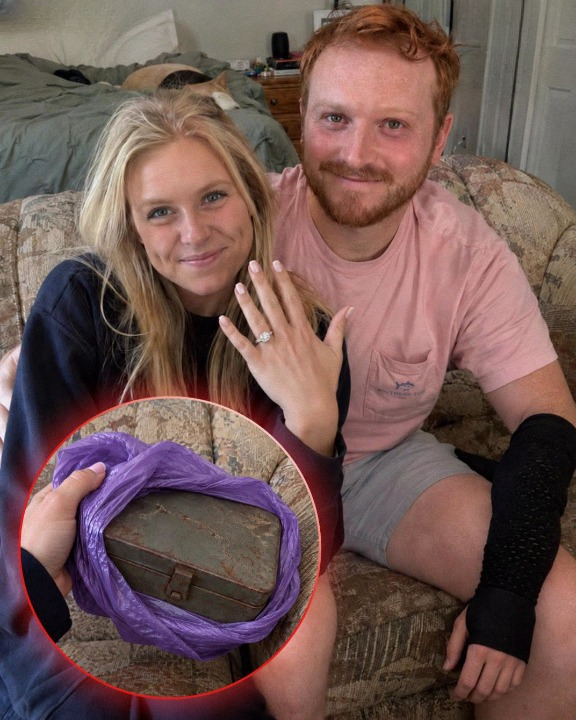
When I first met Peter, I thought I had finally found the kind of person I’d been hoping to meet for years.
I’d almost given up on dating.
After a string of disappointing relationships, I had stopped expecting much from dating apps.
Then Peter appeared on my screen.
We matched on Tinder, exchanged messages for several days, and eventually agreed to meet for dinner.
I remember being nervous that evening.
But within minutes of sitting across from him, I felt surprisingly comfortable.
He listened when I spoke.
He didn’t constantly check his phone.
He remembered small details I’d mentioned in our messages.
He asked questions because he genuinely seemed interested in the answers.
There was no arrogance.
No pressure.
No attempt to impress me with expensive gifts or exaggerated stories.
Peter simply seemed kind.
And after several difficult relationships, kindness felt extraordinary.
We started seeing each other regularly.
Within a few months, I knew his routines, his favorite restaurants, his strange habit of drinking coffee far too late at night, and the songs he always played while driving.
I also learned that he was extremely private about one part of his life.
His left forearm.
Peter always wore a black compression sleeve over it.
At first, I didn’t think much of it.
I assumed it was related to an old injury.
Eventually, I asked.
He told me that years earlier, he’d been involved in a motorcycle accident.
According to him, the accident had left a noticeable scar.
He said he didn’t like people staring at it.
That explanation seemed reasonable.
I never wanted to make him uncomfortable, so I didn’t push.
The sleeve became part of his appearance.
He wore it to dinner.
He wore it around the house.
He wore it when we traveled.
Even when we went to bed, it stayed on.
Once, I gently asked whether he might eventually feel comfortable showing me the injury.
His entire expression changed.
“Please don’t,” he said quietly. “I’m not ready.”
I immediately apologized.
“That’s okay.”
And I meant it.
Everyone has parts of their past they aren’t ready to discuss.
I assumed Peter simply needed time.
What I didn’t know was that I had completely misunderstood the reason for his secrecy.
Four months after we met, Peter proposed.
It happened on an ordinary evening.
There were no cameras.
No elaborate restaurant.
No crowd of strangers watching.
We were walking through a quiet park after dinner when he stopped beside a bench.
He took my hands.
“I know this might seem fast,” he said.
I laughed.
“A little.”
“But I’ve never been more certain about anything.”
Then he asked me to marry him.
I said yes.
I didn’t hesitate.
I was in love.
I believed I knew the man standing in front of me.
A week later, we visited his parents for Sunday dinner.
His family welcomed me warmly.
His mother asked about wedding plans before we’d even finished dessert.
His father kept making jokes about Peter finally settling down.
It felt strangely perfect.
After dinner, Peter asked whether I wanted to see his childhood bedroom.
We went upstairs.
His old room had barely changed.
There were photographs on the shelves, a few childhood trophies, and an old couch near the window.
Peter smiled as he showed me around.
Then his mother called from downstairs.
“Peter, could you help me with something?”
He looked at me.
“I’ll be right back.”
I nodded.
“Take your time.”
He kissed my forehead and left.
I sat down on the old couch.
I was still smiling when I looked at my engagement ring.
I turned it around my finger.
The diamond caught the afternoon light.
I remember thinking about our future.
Our wedding.
Our first home.
Maybe children someday.
I was lost in those thoughts when the ring suddenly slipped from my finger.
It bounced once against the couch cushion.
Then disappeared.
“Oh no.”
I immediately got down on the floor.
The ring had somehow fallen into the narrow space between the cushion and the armrest.
I reached into the gap.
Nothing.
I moved the cushion.
Still nothing.
Then I pushed my hand farther inside.
My fingers brushed against something cold.
I grabbed it.
At first, I assumed I’d found an old piece of hardware.
Instead, I pulled out a small metal box.
It had been wrapped in a plastic grocery bag and pushed deep inside the couch.
I stared at it.
I knew I should put it back.
It wasn’t mine.
Whatever was inside wasn’t my business.
But then I noticed something scratched into the lid.
A date.
The same year Peter had told me the motorcycle accident occurred.
My curiosity got the better of me.
I opened the box.
And everything I thought I knew about Peter suddenly felt uncertain.
Inside were several old documents, photographs, and objects carefully arranged beneath a folded piece of fabric.
Nothing was graphic.
Nothing was immediately obvious.
But there was enough information there to make my stomach turn.
I recognized Peter’s name.
I recognized another name.
And then I noticed an official document that appeared to contradict the story he’d told me about his past.
I read it again.
Then again.
My hands began to shake.
The motorcycle accident wasn’t the explanation I had been given.
At least, not the whole explanation.
There was something else.
Something Peter had deliberately kept from me.
And suddenly, the black sleeve made sense in a completely different way.
It wasn’t simply covering an old injury.
It was hiding something Peter had spent years trying to keep private.
I heard footsteps in the hallway.
My heart jumped.
“Baby?”
Peter’s voice.
I quickly put the documents back into the box.
But I couldn’t put the box back into the couch.
There was no time.
I grabbed my phone.
“Are you okay?” Peter asked.
I heard his footsteps getting closer.
I moved toward the bedroom door.
“Yeah,” I called back.
My voice sounded strange.
Peter reached the doorway.
“Why did you sound nervous?”
“I’m fine.”
He looked at me.
Then his eyes moved toward the couch.
His expression changed.
He knew.
He knew immediately that I’d found something.
“Where’s the box?”
I didn’t answer.
Peter’s face lost its color.
“Where did you get that?”
I stepped backward.
“It was inside the couch.”
He stared at me.
For the first time since I’d met him, I saw something in his expression I’d never seen before.
Fear.
Not anger.
Not frustration.
Fear.
“Please,” he said quietly.
“What is this?”
“It’s complicated.”
“Then explain it.”
He looked toward the hallway.
“No.”
I didn’t understand.
“No what?”
“Not here.”
That answer frightened me even more.
I had spent months believing that Peter’s secret involved something embarrassing from his past.
A scar.
An accident.
Maybe a painful memory.
But the documents suggested something far more complicated.
And I suddenly realized something else.
If Peter was telling the truth about everything, why had he hidden these things?
And if he wasn’t telling the truth, what else had he lied about?
I stepped farther away.
“Peter, I’m calling someone.”
His expression changed again.
“Don’t.”
“Why?”
“Because you don’t understand what you’ve found.”
“Then help me understand.”
He didn’t.
Instead, he stood there silently.
That silence told me more than any explanation could have.
I called the police.
I didn’t know whether I’d uncovered evidence of an actual crime or simply stumbled into a complicated family history.
I only knew that I felt unsafe handling the situation myself.
Peter didn’t try to stop me.
He simply sat down on the edge of the couch.
When the officers arrived, I explained exactly what had happened.
They examined the box and its contents.
One of them asked Peter several questions.
At first, he wouldn’t answer.
Eventually, he admitted that the items inside were connected to a chapter of his life he’d deliberately hidden from almost everyone.
The truth was complicated.
Years earlier, Peter had been involved in a serious legal dispute surrounding someone close to him.
The motorcycle accident had happened during that period, but his description of the circumstances had been deliberately simplified.
He hadn’t wanted people asking questions.
He hadn’t wanted anyone connecting him to the people and events represented by the documents.
Most importantly, he hadn’t told me because he was afraid I would leave.
The police eventually determined that the items in the box did not represent the immediate danger I’d feared.
But that didn’t make the situation feel normal.
Peter had lied to me.
That part couldn’t be ignored.
The next morning, I called off the wedding.
Not because I suddenly hated him.
Not because every part of our relationship had been fake.
I simply realized that marriage requires something we didn’t have anymore.
Trust.
I gave the engagement ring back.
Peter didn’t argue.
He only said, “I understand.”
Months later, I learned more about his past.
Some of what he’d told me was true.
Some of it wasn’t.
There were mistakes he’d made.
There were things he’d regretted.
And there were experiences he’d spent years trying to leave behind.
But none of that changed the most important lesson I’d learned.
Secrets don’t become harmless simply because someone believes they’re protecting you from the truth.
Eventually, hidden things have a way of resurfacing.
Sometimes it’s through a forgotten photograph.
Sometimes it’s an old document.
And sometimes, apparently, it’s an engagement ring falling into the cushions of an old couch.
Looking back, I’m grateful the ring disappeared that afternoon.
Not because of what I found.
Because of what it revealed about the relationship I was about to enter.
I had been planning a wedding.
Instead, I discovered a reason to stop and ask questions.
And while that realization was painful, it may have saved me from spending years wondering whether the person beside me was truly the person I believed him to be.
The strangest part is that the ring was eventually found.
It had slipped even farther into the couch and was lodged beneath the wooden frame.
I got it back.
But I didn’t put it on again.
Some things are worth recovering.
Others are better left behind.