Modern dating often feels like navigating a minefield of hidden agendas, carefully curated social media personas, and unspoken financial expectations. When you swipe right, you hope for good conversation, decent food, and perhaps a spark of genuine connection. What you don’t expect is a masterclass in premeditated exploitation.
I met her through a standard swiping app. Nothing overly dramatic or out of the ordinary. We matched, exchanged messages for a few days, and she came across as lively, confident, and refreshingly straightforward. She laughed at my dry jokes, shared stories about her graphic design job, and seemed eager to meet in person.
Before we even settled on a date or a venue, I established my boundaries upfront. I believe in mutual respect and financial transparency from the very beginning.
“Just so we’re on the same page,” I texted her, “I usually prefer to split the bill on first dates. Keeps things fair and low-pressure.”
She didn’t hesitate for even a second.
“Of course!” she replied instantly. “That’s totally fair. I hate when guys think they have to buy everything anyway.”
So, I figured the ground rules were set and there wouldn’t be any awkward financial surprises at the end of the night.
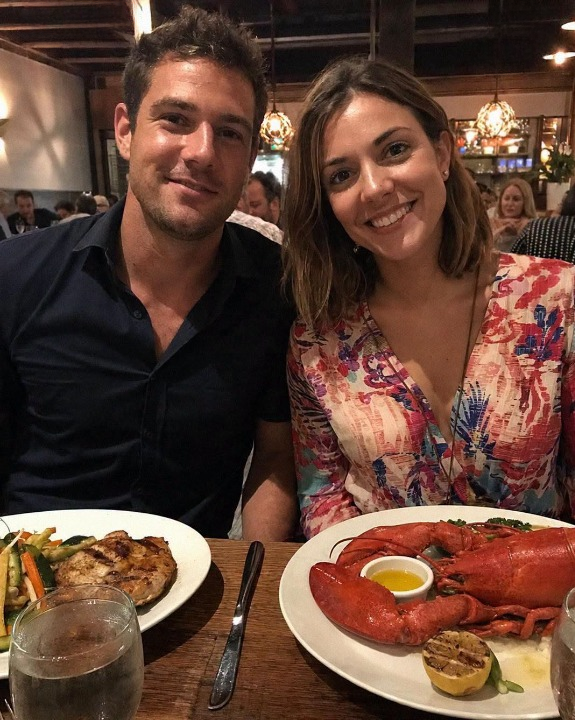
A few days later, we met at an upscale seafood and steak restaurant downtown—a venue she explicitly suggested because she claimed she loved their atmosphere. As I walked inside and looked around at the plush velvet booths, the dim lighting, and the crystal chandeliers, I realized this place was definitely on the expensive side. Still, trusting her word, I assumed we would both be mindful of the menu prices and order normally.
We sat down, ordered drinks, and spent the first thirty minutes making small talk. Then, the waiter arrived to take our food orders.
She barely even glanced at the leather-bound menu.
“I’ll have the jumbo Maine lobster dinner with the truffle butter sides,” she said casually, waving the waiter away as if she were ordering a standard club sandwich.
I glanced down at the menu and felt a sudden cold drop in my stomach. The lobster dinner was easily the most expensive item on the entire menu, hovering right around one hundred and fifty dollars before tax and tip. Swallowing my initial surprise, I closed my menu, kept my cool, and ordered a much simpler, mid-priced pasta dish for myself.
The rest of the date proceeded without a hitch. She talked animatedly, laughed at all the right moments, and acted like everything was completely normal. There was zero indication that she was plotting anything out of the ordinary. She enjoyed every bite of her expensive crustacean, polished off a glass of expensive white wine, and smiled brightly when the plates were cleared away.
Then, the waiter walked back over, dropped the black leather folder containing the check onto the center of the table, and gave us a polite nod.
The Breaking Point
I reached across the table, picked up the folder, and opened it to look at the total. Between her massive lobster dinner, wine, and my modest meal, the bill was substantial.
I pulled out my credit card, laid it on the table, and looked up at her with a calm, friendly smile.
“Alright,” I said, sliding the folder toward the middle. “We’ll just split it right down the middle like we agreed.”
She froze. Her smile vanished. She leaned slowly back against the velvet cushions of the booth, folded her arms across her chest, and stared at me as if I had just spoken to her in a foreign language.
“I’m not paying,” she said flatly.
For a second, I genuinely thought she was joking. I let out a short, bewildered chuckle.
“What?” I asked, looking for the punchline. “You’re joking, right?”
She shrugged, completely unfazed, and rolled her eyes. “I’m not joking. You’re the man. Men are supposed to pay for the first date. That’s how it works. That’s how I’ve always done it with every guy I’ve ever gone out with.”
I stared at her, feeling a hot wave of disbelief wash over me. I calmly reminded her of our text conversation before the date—how we had explicitly agreed to split the bill, and how she had enthusiastically supported the idea.
“Yeah,” she said with a dismissive wave of her manicured hand. “We talked about that. But honestly? I didn’t think you would actually mean it. I thought you were just saying that to sound modern.”
That was the exact moment I stopped feeling amused and started feeling furious.
It wasn’t even strictly about the money, though dropping a hundred and fifty dollars on a stranger who viewed you as a walking ATM is never fun. It was the principle of the matter. It was the sheer, staggering entitlement in her voice—the arrogant assumption that her time was so intrinsically valuable that she could lie, manipulate a pre-date agreement, and order luxury items on someone else’s dime without a shred of remorse. She looked at me like I was the unreasonable one for expecting her to honor her own word.
And just as I opened my mouth to deliver a piece of my mind, karma decided to step in and handle the situation for me.