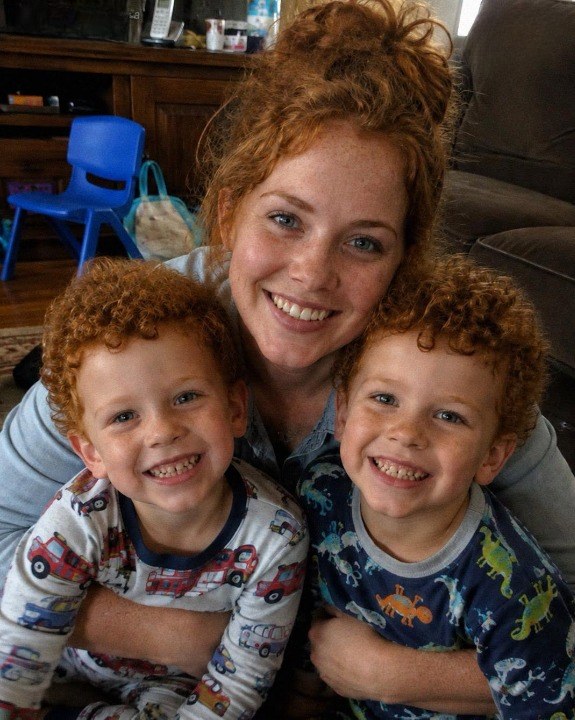
Building a life with someone from your high school days gives you a false sense of security. You believe you know every facet of their soul, every hidden reaction, and every moral boundary they possess. For years, Elliott and I had shared everything. We weathered the grueling late nights of college finals together, landed our first entry-level jobs side by side, and celebrated our engagement with a modest backyard party surrounded by our closest friends. The wedding venue was booked, the deposit was paid, and I walked around with a permanent, contented smile, convinced that my future was safely mapped out.
Then, on a rainy Tuesday evening, the foundation of my entire world cracked right down the middle.
My phone rang at 11:15 PM. The voice on the other end belonged to a weary state trooper who delivered the kind of news that stops time entirely. My parents had been killed instantly in a horrific multi-vehicle crash on the interstate. Worse still, my five-year-old twin brothers, Leo and Liam, had been in the backseat. They were pulled from the wreckage with critical injuries, rushed to the pediatric trauma unit where surgeons fought through the night to keep their tiny hearts beating.
By some divine miracle, they survived. But when they woke up days later asking for Mom and Dad, the crushing weight of their survival fell squarely onto my twenty-two-year-old shoulders.
There was never a single second of hesitation. I didn’t hold a family meeting to debate options; I didn’t look at the financial strain of entering adulthood with two toddlers in tow. I immediately consulted with family services and filed for full legal guardianship. My parents were gone, and my baby brothers were completely alone in the world. Overnight, I transformed from a carefree young bride-to-be into a frantic, protective mother figure, wiping tears, soothing night terrors, and learning how to juggle kindergarten schedules, juice boxes, and profound, suffocating grief.
I naively assumed Elliott would stand by my side. We had pledged to face life together, in sickness and in health, in joy and in sorrow. I figured the grief would be heavy, but that love would anchor us.
I was catastrophically wrong.
The Ultimatum
The true test of a person’s character doesn’t arrive when life is smooth sailing; it hits when the storm finally breaks.
Three weeks after the guardianship papers were officially signed and stamped by the judge, Elliott walked into our small apartment, dropped his briefcase on the floor, and looked around the living room. The space was now a chaotic obstacle course of plastic fire trucks, half-read picture books, and tiny socks. A faint smell of baby powder and dinosaur chicken nuggets hung in the air.
He crossed his arms, his expression hardening into an icy scowl.
“Look,” Elliott said, his voice clipped and devoid of any warmth. “This guardianship thing is only a temporary safety net, right? You’re going to hand the boys over to the state or send them to live with some distant relative eventually, right?”
I froze, holding a damp washcloth mid-air as I wiped down the kitchen counter. I turned slowly, staring at him as though he were speaking a foreign language.
“What are you talking about?” I asked, my voice barely above a whisper. “I became my brothers’ guardian because I love them with all my heart. I am never, ever going to abandon them. They are going to live right here with us until they are grown men.”
His face darkened instantly, flushing with angry color. He threw his hands up in disbelief.
“Are you insane?!” Elliott practically yelled, causing Leo and Liam to stir nervously from their spot watching cartoons in the corner. “I am not raising someone else’s kids! I didn’t sign up to be a suburban father at twenty-two. Put them in the foster care system where they belong, or the wedding is completely off. I am not running a charity home!”
The ground felt as though it had completely vanished from beneath my feet. The man I had loved for five years—the man who had held my hand at my parents’ memorial service—was standing in my kitchen, demanding that I throw my orphaned five-year-old brothers into the cold, unpredictable depths of the foster system just so we could stick to our wedding timeline.
My chest tightened with a searing mix of heartbreak and white-hot fury.
“But they don’t have anyone else in this world,” I pleaded, my voice cracking as tears spilled over my cheeks. “I am not putting my twin brothers in foster care. I know this wasn’t the life plan we expected, but Elliott… my parents are gone! The boys and I only have each other now.”
He stepped closer, sneering down at me without an ounce of empathy in his eyes.
“I’m not going to ruin my life and my career ambitions to raise a pair of toddlers that aren’t mine,” he declared coldly, issuing his final ultimatum. “So you have until tonight to make your choice. Either you send them away where they belong, or we are done for good.”
For a split second, I wanted to scream at him. I wanted to hurl every ceramic plate in the kitchen at his head and throw his belongings out onto the front lawn. But letting him walk away with a bruised ego wouldn’t suffice.
Men like Elliott—selfish, entitled, and utterly devoid of loyalty—needed a lesson they would never, ever forget.
I wiped my tears with the back of my hand, took a deep breath, and let a cold, calm smile spread across my face.
“You know what, Elliott?” I said smoothly, stepping right up to him. “You’re entirely right. I can’t expect you to carry this weight. I’ll do exactly what you said. I’ll get them out of the house. But I have one condition before I do it.”
The Lesson
Elliott blinked, clearly surprised by my sudden compliance. The hard scowl on his face melted away into an arrogant smirk of absolute victory. He assumed he had worn me down, that my fear of losing him had overridden my maternal instincts.
“Name it,” he said eagerly, already mentally checking off his wedding invitations. “What do you need?”
“I want you to prove your commitment to our future first,” I replied, keeping my voice sweet and steady. “Tomorrow is Saturday. I’ve scheduled a meeting with a high-end wedding venue downtown that requires an immediate, non-refundable final balance payment of five thousand dollars to lock in our dream date. Since you’re so worried about our financial security and future, I want you to go down there first thing in the morning, sign the final contract in your name, and pay the fee in full. Prove to me that you’re investing in us before I finalize plans for the boys.”
He scoffed, but the prospect of getting his wedding back made him blind to any logic. Five grand was a steep chunk of change for a twenty-two-year-old, but his ego was massive enough to swallow it whole.
“Fine,” he agreed, puffing out his chest. “I’ll handle it tomorrow morning. Then you call the state caseworker and get those kids out of here.”
“Deal,” I said, holding his gaze without blinking.
That evening, once Elliott was fast asleep in the guest room he had retreated to, I sat down at the kitchen table. I didn’t call the foster care system. Instead, I called my uncle Marcus, a sharp, no-nonsense corporate defense attorney who had been looking for a reason to put Elliott in his place ever since the funeral.
The next morning, true to his word, Elliott drove downtown. He walked into the upscale bridal boutique and event space, proudly swiped his credit card to pay the five-thousand-dollar non-refundable final balance, and signed the binding financial agreement for our wedding in bold, proud cursive.
As soon as the text notification popped up on my phone confirming the charge cleared, I executed phase two of my plan.
I packed up every single one of Elliott’s clothes, his shoes, his video game console, and his framed photographs, tossing them haphazardly into heavy black trash bags and stacking them neatly on the front porch. Then, I forwarded the digital receipt of his five-thousand-dollar wedding payment—alongside a meticulously drafted, legally binding affidavit detailing his explicit demand that I abandon my orphaned brothers—directly to our mutual friends, our families, and yes, even his employer’s HR department for good measure, accompanied by a public social media post tagging every single person we knew.
When Elliott returned to the apartment an hour later, holding the signed wedding venue contract high in the air like a trophy, he stopped dead in his tracks.
He stared at the towering stack of black trash bags lining the porch. Then he looked at me, standing in the doorway with Leo and Liam holding onto my hands, their little faces looking up at him with innocent curiosity.
“What… what is this?” he stammered, his face turning an alarming shade of pale gray.
“This is your luggage, Elliott,” I said, my voice cutting through the morning air like glass. “And congratulations on the wedding venue. Thanks to your signature on that binding financial contract, you just paid five thousand dollars out of pocket for a wedding that is officially canceled.”
He lunged forward, his face twisting in blind panic. “You can’t do that! That was for our wedding!”
“Oh, I can, and I did,” I replied calmly, stepping back and locking the front door behind me. “You didn’t want to run a charity, Elliott? Well, congratulations. You just made a five-thousand-dollar tax-deductible donation to my brothers’ college fund, courtesy of your own staggering selfishness.”
Through the heavy oak door, I heard his frantic pounding, followed by screams of absolute fury that quickly dissolved into desperate whimpering as he realized the full, inescapable depth of the trap he had walked right into.
I looked down at Leo and Liam, who were looking up at me with wide, trusting eyes. I knelt down, pulled them into a tight, fierce embrace, and smiled. Some people learn their lessons the hard way. But as far as I was concerned, it was the best five thousand dollars Elliott had ever spent.