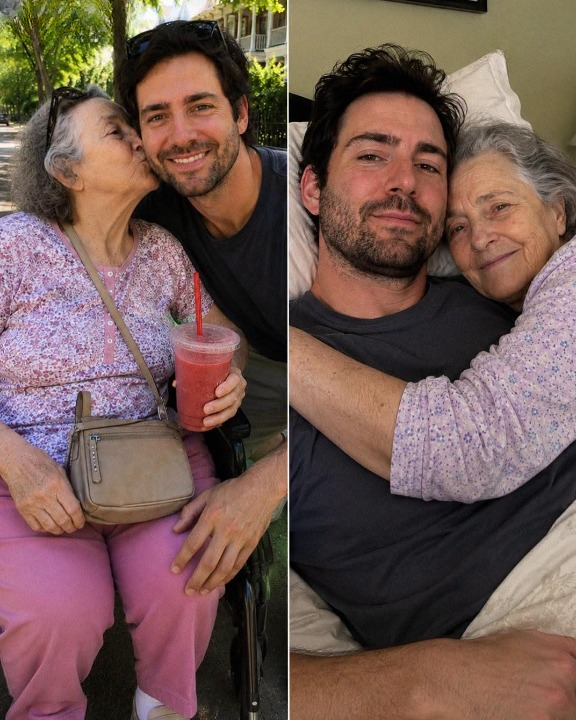
“You want her house!”
Susan’s nephew, Brian, was shouting so loudly that several neighbors had stepped outside to see what was happening.
“You saw a vulnerable woman with savings, and now you’re trying to take everything she owns. We’re calling the police today!”
I stood quietly on my porch and allowed him to finish.
Behind Brian were Susan’s niece and another relative I had never met. They were furious that I had moved their seventy-six-year-old aunt into the spare bedroom of my home.
They accused me of manipulation, financial exploitation, and elder abuse.
What they didn’t mention was that none of them had visited Susan in five years.
I knew because I lived across the street, and I had been the person checking on her all that time.
My name is Alex. I’m thirty-one years old, unmarried, and employed as a software designer. I work from home, which meant I noticed things other neighbors often missed.
I noticed when Susan’s porch light remained on all day.
I noticed when she stopped collecting her newspaper.
I noticed when carrying groceries from her car became too difficult.
Most importantly, I noticed when her health began declining.
Three weeks before her relatives appeared on my porch, Susan’s care team explained that her illness had progressed. Her doctors could keep her comfortable, but she would need regular assistance.
Susan’s home had a steep staircase, narrow hallways, and a bedroom on the second floor. She didn’t want to move into a facility, but remaining alone was no longer practical.
My house had a spare bedroom and bathroom on the ground floor.
“Move in with me,” I told her. “You’ll have privacy, and your nurses can visit whenever they need to.”
Susan initially refused.
“You’re thirty-one,” she said. “You shouldn’t spend your days looking after an old woman.”
“You’re not just an old woman.”
She studied my face for a long moment.
“No,” she said quietly. “I suppose I’m not.”
Her hospice social worker helped us make the arrangement properly. Susan was mentally capable of making her own decisions, and she signed the necessary documents after receiving independent advice.
A nurse visited regularly. Susan’s medications remained supervised by her medical team. Her finances were handled by her bank and attorney, not by me.
I didn’t have access to her accounts, property documents, or credit cards.
My responsibilities were simple.
I prepared meals, made certain she was comfortable, and called the nurse whenever something changed. Most of all, I made sure she was never alone when she felt frightened.
My quiet life quickly became round-the-clock caregiving.
Friends asked why I was doing so much for a neighbor.
“You barely leave the house anymore,” one of them said.
I didn’t explain.
The truth belonged to Susan and me, and she had asked me to keep it private.
Every evening at precisely nine o’clock, we followed the same ritual.
After the nurse’s final check, I made Susan a cup of tea. I adjusted her blankets and placed a wooden chair beside the bed.
Then I sat down.
Susan kept a stethoscope inside the drawer of her bedside table. She would take it out slowly and hand it to me.
I placed the end against the left side of my chest and gave her the earpieces.
Then I leaned close and whispered the secret that no one else in the neighborhood knew.
“He’s still here, Susan. Michael’s heart is still beating.”
Tears would gather in her eyes.
She would listen silently for several minutes before gently patting my hand.
Michael was Susan’s only son.
He was also the reason I was alive.
When I was eighteen, I became seriously ill and needed a heart transplant. My condition worsened while I waited, and my family was warned that time was running short.
Then a donor became available.
The surgery gave me a second chance.
For years, I knew almost nothing about the person whose heart I had received. The transplant organization protected everyone’s privacy, and I respected that.
I wrote an anonymous letter to the donor’s family, thanking them for making a generous decision during the most difficult moment of their lives.
I didn’t receive a response until several years later.
The letter came from Susan.
She explained that her twenty-seven-year-old son, Michael, had been involved in an accident. Michael had registered as an organ donor because he believed that helping others was one of the most meaningful things a person could do.
Susan had struggled for years to answer my letter.
“Every time I tried,” she wrote, “I felt as though responding would make his death real all over again.”
Eventually, through the appropriate organization and with mutual consent, we learned one another’s identities.
Our first meeting was brief and emotional.
Susan brought photographs of Michael. She told me that he loved hiking, old cars, and terrible jokes. I told her about my education, my work, and everything I had been able to experience because of the transplant.
Neither of us expected to become close.
But we did.
When a small house across the street from Susan went up for sale five years later, I happened to be looking for a permanent home. The location was affordable, quiet, and near my work connections.
Living across from Susan felt like an added gift.
I never viewed her as a replacement mother, and she never treated me as a replacement son. We understood that no person could replace Michael.
Our friendship was something separate.
I repaired her porch steps. She brought me soup whenever I was sick. We spent holidays together when neither of us had other plans.
During those five years, her relatives didn’t visit once.
They called occasionally. Birthday cards arrived. But no one came to help when the roof leaked or when Susan needed a ride to an appointment.
Then they learned she had moved into my house.
Suddenly, they were deeply concerned.
Brian continued shouting from my porch.
“We know what people like you do,” he said. “You become indispensable, isolate an elderly person, and convince her to change her will.”
“I haven’t changed Susan’s will.”
“How would you know unless you’ve discussed it?”
“I haven’t. Her attorney handles those matters.”
“We’re requesting emergency custody.”
“Susan is an adult.”
“She’s dying! She doesn’t know what she’s doing.”
The front door opened behind me.
Susan’s nurse stepped onto the porch.
“She is seriously ill,” the nurse said, “but she remains capable of making decisions. Please lower your voices.”
Brian pointed at me.
“He’s controlling her.”
The nurse remained calm.
“Alex is following the care plan approved by Susan and her medical team. You are upsetting her by shouting.”
Brian threatened to call law enforcement and adult protective services.
I didn’t argue.
“You’re free to request an independent welfare check,” I said. “Susan has nothing to hide, and neither do I.”
Then I closed the door.
Inside, Susan was sitting upright in bed.
“I’m sorry,” she whispered.
“You have nothing to apologize for.”
“They aren’t worried about me. They’re worried about what happens to the house.”
“Let the professionals determine that. You don’t need to defend me.”
She reached for my hand.
“At nine tonight, let them come back.”
“Are you sure?”
“Yes. It’s time they learned the truth.”
Later that afternoon, a social worker arrived after receiving a report from Susan’s relatives. She spoke with Susan privately, reviewed the living arrangement, and confirmed that Susan was there by choice.
She also verified that I had no control over Susan’s finances.
By evening, the accusations had lost much of their force.
At nine o’clock, Brian and the others returned. Susan’s attorney came with them at her request.
They entered the spare bedroom and stood near the wall.
Susan looked small beneath the blankets, but her voice remained steady.
“You believe Alex moved me here for my money,” she said.
Brian shifted uncomfortably.
“We’re trying to protect you.”
“Protection generally requires showing up.”
No one answered.
Susan opened the bedside drawer and removed the stethoscope.
“Thirteen years ago, my son Michael died,” she continued. “You all attended his funeral. You also knew he was an organ donor.”
Her niece nodded.
“What does that have to do with Alex?”
Susan handed me the stethoscope.
I placed it against my chest as I had done every night.
She put the earpieces in and listened.
“This man is alive because of Michael,” she said. “Alex received my son’s heart.”
Brian stared at me.
For the first time that day, he had nothing to say.
“Every night,” Susan continued, “Alex lets me listen. Not because I believe Michael somehow lives inside another person, but because the sound reminds me that my son’s final act gave someone else a future.”
Her niece covered her mouth.
I explained how Susan and I had met through the transplant organization. I told them that our friendship had existed for years before her illness became serious.
Susan’s attorney then opened his folder.
“For clarity,” he said, “Alex is not a beneficiary of Susan’s estate. Her will was completed with independent counsel before she moved into his home.”
Brian looked at Susan.
“Then who gets the house?”
“That question,” Susan replied, “is exactly why I didn’t call you.”
Her house was to be sold after her death. Most of the proceeds would support organ-donation education and temporary housing for transplant patients’ families.
A small amount had been reserved for several charities Susan cared about.
She had made those decisions independently.
I would receive no house, no savings, and no inheritance.
The only personal item Susan had left me was Michael’s old wooden chair—the one I sat on beside her bed each night.
Her niece began crying.
“We didn’t know,” she said.
“You didn’t ask,” Susan replied.
Brian looked ashamed.
“I’m sorry, Aunt Susan.”
“You’re sorry you accused an innocent man, or you’re sorry there is no house waiting for you?”
He lowered his head.
“Both, probably.”
Susan appreciated his honesty.
She didn’t immediately forgive them, but she allowed them to visit. Over the following days, her niece returned several times and helped prepare meals. Brian came once with old family photographs and sat beside Susan for an hour.
They couldn’t recover five missing years in a few visits, but at least they stopped pretending those years hadn’t happened.
Susan lived for another three weeks.
On her final evening, I followed our usual routine.
At nine o’clock, I pulled the wooden chair to her bedside and placed the stethoscope against my chest.
Susan shook her head.
“I don’t need it tonight,” she said.
“Are you sure?”
“I know the heart is beating.”
She rested her hand over mine.
“Promise me something, Alex.”
“Anything.”
“Stop treating your life as borrowed time. It belongs to you now. Use it fully.”
I promised.
Susan died peacefully the following morning with her niece, her nurse, and me nearby.
After her memorial service, the house was sold according to her instructions. The money helped establish two small apartments near the transplant center for families who needed temporary accommodation.
I received the wooden chair.
It now sits beside the window in my living room.
At first, sitting in it without Susan felt impossible. Eventually, I began using it while reading in the evenings.
Sometimes, when the clock reaches nine, I place my hand over my chest.
I think about Michael, a man I never met, whose generous decision allowed me to reach adulthood.
I think about Susan, who taught me that grief and gratitude could exist together.
And I think about the relatives who believed caregiving could only be motivated by money.
They saw a young man move an elderly neighbor into his spare bedroom and assumed the worst.
What they didn’t see were the years of friendship, the properly arranged care, or the nightly ritual that connected three lives.
I never wanted Susan’s house.
I wanted her to feel safe.
I wanted her to be warm.
And when darkness made her afraid, I wanted her to hear something that reminded her that her son had left kindness behind.
Every night at nine, I leaned close and repeated the same truth:
Michael’s heart was still beating.
But the love in that room belonged entirely to Susan and me.