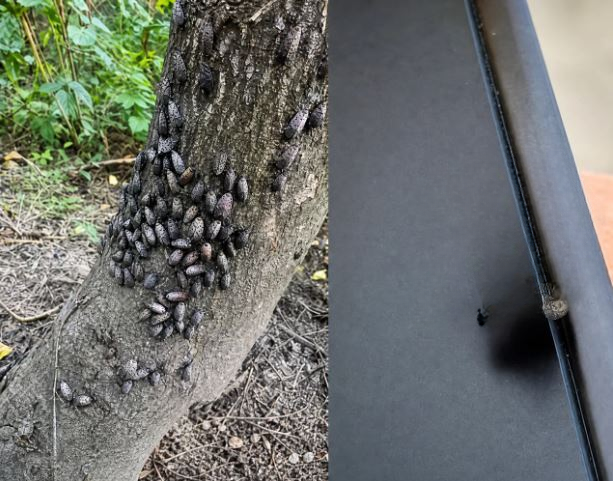
At first, the signs may seem unrelated.
Perhaps you notice a sticky residue on your patio furniture after it’s been sitting beneath a tree. Maybe your car feels unusually tacky after parking outside, or you spot dark patches developing on tree trunks or outdoor surfaces.
At first glance, these small changes might not seem connected.
However, in some regions, they can be associated with the presence of an invasive insect known as the spotted lanternfly.
Although this insect is visually striking with its gray wings and bright red hind wings, it has attracted attention because of its potential impact on certain plants, trees, and agricultural crops in areas where it has become established.
If you’ve heard about the spotted lanternfly but aren’t sure why it’s receiving so much attention, here’s a closer look at what it is, why it matters, and what homeowners should know.
What Is the Spotted Lanternfly?
The spotted lanternfly (Lycorma delicatula) is an invasive planthopper native to parts of Asia.
It was first detected in the United States in 2014 and has since spread to several states despite ongoing management efforts.
Adult insects are about an inch (2.5 cm) long and have:
- Gray forewings with black spots
- Bright red hind wings with black and white markings
- Black legs
- A yellow abdomen with dark bands
When resting, much of the bright red coloration remains hidden, making the insect appear less colorful than it does in flight.
Despite the name, spotted lanternflies are not true flies. They belong to a different group of insects known as planthoppers.
Why Are They a Concern?
Unlike insects that chew leaves, spotted lanternflies feed by inserting specialized mouthparts into plants and drinking sap.
They feed on a wide variety of plants, including some trees, ornamental plants, and agricultural crops.
Heavy infestations may place stress on affected plants, particularly when large numbers of insects feed on the same host.
Researchers and agricultural agencies continue to monitor their spread because of potential impacts on industries such as grape production, orchards, and some hardwood trees.
The Sticky Residue You May Notice
One of the most common signs associated with spotted lanternflies is a sticky substance known as honeydew.
As these insects feed, they excrete excess sugary liquid that can coat:
- Leaves
- Outdoor furniture
- Vehicles
- Decks
- Sidewalks
- Patio surfaces
The sticky coating itself isn’t harmful to people, but it can become messy and attract other insects.
Why Black Mold Sometimes Appears
Honeydew may also encourage the growth of a dark fungus commonly called sooty mold.
This fungus grows on the sugary residue rather than directly attacking the plant.
Although sooty mold is usually more of a surface issue than a plant disease, heavy buildup can interfere with sunlight reaching leaves and affect the appearance of outdoor surfaces.
Cleaning affected furniture or equipment often requires removing both the sticky residue and the mold.
What Plants Can They Feed On?
Spotted lanternflies have been observed feeding on many different plant species.
Examples include:
- Grapevines
- Maple trees
- Walnut trees
- Fruit trees
- Willow
- Birch
- Certain ornamental plants
One plant frequently associated with the insect is the tree-of-heaven (Ailanthus altissima), which is itself an invasive tree in many regions.
However, lanternflies are not limited to that species.
Recognizing Different Life Stages
The insect changes appearance as it develops.
Egg Masses
Egg masses are often covered with a gray, mud-like coating and may be found on:
- Tree trunks
- Outdoor furniture
- Stone
- Vehicles
- Firewood
- Recreational equipment
Young Nymphs
Early-stage nymphs are black with white spots.
Older Nymphs
As they mature, they develop bright red coloration while retaining white spots.
Adults
Fully grown adults display the distinctive gray wings and vivid red hind wings.
Recognizing these stages may help people identify the insect more accurately.
Can They Spread Easily?
Yes.
Although adult spotted lanternflies can jump and glide, one reason they spread efficiently is that egg masses may be transported accidentally on:
- Vehicles
- Trailers
- Camping equipment
- Outdoor furniture
- Firewood
- Shipping materials
This is one reason transportation awareness has become part of management efforts in some affected regions.
What Should Homeowners Do?
Recommendations vary depending on where you live.
If you believe you’ve found a spotted lanternfly, it’s a good idea to check guidance from your local agricultural or environmental authorities. Some regions ask residents to report sightings, especially where the insect is newly detected.
Management recommendations differ because the insect’s distribution is not the same everywhere.
Always follow advice provided by local officials and avoid using pesticides unless they are appropriate for your situation and used according to the product label.
Preventing Accidental Spread
If you live in or travel through an area where spotted lanternflies are present, simple precautions may help reduce accidental transport.
Before traveling, inspect:
- Vehicles
- Roof racks
- Trailers
- Outdoor equipment
- Lawn furniture
- Firewood
- Camping gear
Checking for egg masses or insects can help avoid moving them to new locations.
Why Early Awareness Matters
Like many invasive species, spotted lanternflies are generally easier to manage before populations become well established.
Early identification allows local agencies and landowners to respond more effectively where appropriate.
That doesn’t mean every homeowner will encounter them, but learning to recognize the insect can be helpful in areas where it has been reported.
Frequently Asked Questions
Do spotted lanternflies bite people?
They are not known for biting people or pets. Their primary interest is feeding on plant sap.
Are they dangerous to pets?
Current information indicates they are primarily plant-feeding insects rather than pests that target animals. However, if a pet ingests insects or any unfamiliar material, consult your veterinarian if you have concerns.
Can they fly?
Adults can glide and make short flights, but they often move by hopping and climbing.
Should every sighting be reported?
Reporting recommendations vary by location. Check with your state’s agriculture department, local extension service, or other relevant authorities for current guidance.
The Bottom Line
The spotted lanternfly is a colorful insect that has become an important topic in regions where it has established populations. While its appearance may be eye-catching, its feeding habits and ability to spread have made it a concern for certain trees, vineyards, and agricultural crops.
If you notice unusual insects, sticky honeydew on outdoor surfaces, or egg masses on vehicles or equipment, take a closer look and consult trusted local resources if needed.
Being informed is one of the best ways to help protect gardens, landscapes, and local ecosystems. By learning to recognize this invasive species and following guidance from agricultural authorities in your area, homeowners can play a helpful role in limiting its spread and supporting healthy outdoor spaces.