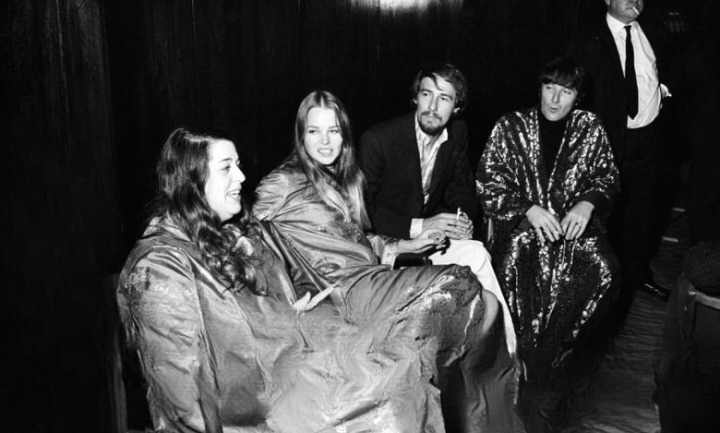
California Dreamin’: The Timeless Story Behind The Mamas & The Papas’ Legendary Song
Some songs capture a particular moment in history. Others become so deeply connected to a feeling, a place, or an entire generation that they continue to resonate long after the era that produced them has passed.
“California Dreamin’” by The Mamas & The Papas belongs to the second category.
Released in 1965, the song became one of the defining recordings of the 1960s. Its memorable melody, rich vocal harmonies, and unmistakable atmosphere helped transform a simple feeling of homesickness into a musical experience recognized around the world.
For many listeners, the song immediately brings to mind images of California: sunshine, palm trees, open roads, beautiful landscapes, and the promise of a different kind of life. Yet the story behind its creation began far away from the sunny West Coast.
It started in the cold streets of New York City, where John and Michelle Phillips were experiencing a very different environment from the one Michelle had known growing up in California.
The contrast between the two places eventually inspired a song that would become an international musical landmark.
What makes “California Dreamin’” particularly interesting is that its success was not simply the result of an attractive melody or clever songwriting. It also reflected a period of cultural change in American society, when young people were questioning traditional expectations, exploring new artistic identities, and imagining different ways of living.
The song captured that atmosphere with remarkable simplicity.
Its story involves a young married couple, a talented group of musicians, an influential record producer, and a recording that helped establish the distinctive sound of West Coast folk-pop.
More than half a century later, the song remains an important part of popular music history.
In this article, we explore the origins of “California Dreamin’,” the musicians who brought it to life, the recording process, its rise to popularity, and the reasons it continues to attract new generations of listeners.
A Song Born Far Away From California
The story of “California Dreamin’” begins in the early 1960s.
At the time, John and Michelle Phillips were living in New York City while pursuing their musical ambitions.
John had already developed considerable experience as a musician and songwriter. He had been involved in the folk music scene and performed with groups that explored traditional folk influences and close vocal harmonies.
Michelle, who grew up in California, was experiencing life on the East Coast from a very different perspective.
New York offered opportunities for creative people, particularly those interested in music, theater, and the arts. Greenwich Village had become an important meeting place for folk musicians, writers, performers, and people interested in emerging cultural movements.
However, the city also had a climate that Michelle found unfamiliar.
Coming from a warmer part of the country, she was not accustomed to the cold temperatures and winter conditions of the northeastern United States.
The contrast between her memories of California and her new surroundings became an important source of inspiration.
The idea of returning to a warmer, more familiar environment eventually developed into the central theme of a song.
This is one of the most interesting aspects of the recording: although it is closely associated with California, its emotional foundation comes from the experience of being somewhere else.
The song transforms an ordinary feeling of homesickness into something much larger.
Instead of simply describing a desire to return home, it evokes a longing for comfort, familiarity, warmth, and a sense of belonging.
That emotional combination is one reason listeners from different countries and generations can connect with it.
John and Michelle Phillips: The Creative Partnership Behind the Song
The creative partnership between John and Michelle Phillips played a central role in the development of The Mamas & The Papas.
John Phillips was an experienced musician with a strong interest in folk music, vocal arrangements, and songwriting.
He had previously performed with the Journeymen, a folk group that helped establish his reputation within the New York music community.
Michelle Phillips, born Holly Michelle Gilliam, brought a different background and perspective to their musical partnership.
Her California upbringing later became closely associated with the inspiration behind the group’s most recognizable recording.
The two married in 1962 and continued working toward their musical ambitions.
Their experiences during this period influenced the material John was developing as a songwriter.
The composition of “California Dreamin’” is generally dated to 1963, before the group became widely known.
At that stage, there was no guarantee that the song would become a major commercial success.
It was simply one of several musical ideas emerging from the creative environment surrounding the couple.
John’s songwriting combined folk influences with strong melodies and carefully constructed arrangements.
Michelle’s contribution to the song’s origins was also significant, and both are credited as its writers.
The result was a composition that could communicate a personal experience while also appealing to a much wider audience.
The emotional theme was easy to understand, even for listeners who had never visited California.
Almost everyone has experienced a moment when they wished they were somewhere else.
For some, that place might be a childhood home, a favorite city, or a location associated with happier memories.
The song gave that universal feeling a distinctive musical identity.
The Early Musical Journey of The Mamas & The Papas
Before becoming one of the best-known vocal groups of the 1960s, the future members of The Mamas & The Papas followed separate musical paths.
Their different experiences helped create the unusual vocal combination that later became their trademark.
The four principal members were:
- John Phillips: Songwriter, guitarist, vocalist, and one of the group’s creative leaders.
- Michelle Phillips: Singer and songwriter whose California background contributed to the group’s identity.
- Denny Doherty: A Canadian singer whose expressive voice became an important part of the group’s sound.
- Cass Elliot: A powerful and distinctive vocalist whose personality and musical abilities helped define the quartet.
Each member brought something different to the group.
John’s songwriting and arrangement skills provided an important foundation.
Michelle contributed a distinctive vocal presence and visual identity.
Denny brought a strong tenor voice that worked particularly well within the group’s layered harmonies.
Cass Elliot, widely known as Mama Cass, possessed a remarkable voice with warmth, depth, and character.
The combination created something different from the traditional folk groups that had influenced several of the members.
Their music blended folk songwriting, pop melodies, and sophisticated vocal arrangements.
The group developed its identity during a period when American popular music was changing rapidly.
The success of British bands had transformed the international music industry, while American musicians were experimenting with new approaches to songwriting and recording.
The Mamas & The Papas emerged as part of this creative transformation.
From the New York Folk Scene to the California Music Industry
The move from New York toward California represented an important turning point for the musicians.
The group had connections to the folk music community, but the California music scene offered opportunities to explore a different sound.
Los Angeles was becoming an increasingly important center for popular music production.
Record producers, session musicians, songwriters, and performers were working together to create recordings that combined different musical influences.
The developing West Coast sound included elements of folk, pop, rock, and carefully arranged vocal music.
The Mamas & The Papas found an environment that suited their musical ambitions.
Their association with producer Lou Adler became especially important.
Adler had experience working with successful recording artists and understood how to bring different musical elements together.
The group eventually signed with Dunhill Records.
At this point, the musicians had the opportunity to develop their material into professional recordings.
Their debut album, If You Can Believe Your Eyes and Ears, would become one of the most recognizable releases associated with the group.
However, one particular song would soon attract attention far beyond what anyone might have expected.
That song was “California Dreamin’.”
The Recording That Helped Change Everything
One fascinating detail about the recording’s history is that “California Dreamin’” was initially associated with another musician.
Before The Mamas & The Papas released their version, Barry McGuire recorded the composition.
McGuire was already connected to the California music industry and had achieved considerable attention through his recording of the socially conscious song “Eve of Destruction.”
His association with producer Lou Adler helped bring the Phillips composition into a professional recording environment.
Members of The Mamas & The Papas were involved in the recording session as backing vocalists.
The group’s harmonies attracted attention, and the recording eventually developed into the version that would become their signature hit.
This history demonstrates how music production often involves unexpected creative decisions.
A song may begin as a composition written for one purpose and later develop into something entirely different.
In this case, the vocal contribution of the quartet became central to the song’s identity.
The arrangement highlighted the contrast between the individual voices while allowing them to blend into a unified sound.
The finished recording had a distinctive atmosphere that separated it from many other popular songs of the period.
Its sound was recognizable without relying on an elaborate musical production.
Instead, the combination of melody, rhythm, instrumentation, and vocal harmonies created a recording that felt both intimate and expansive.
The Musicians Behind the Sound
Although the four singers are the most visible figures associated with the recording, the work of professional studio musicians also contributed significantly to its character.
The Los Angeles recording industry during the 1960s depended heavily on talented session musicians.
These professionals frequently worked on recordings for different artists, providing instrumental performances that helped bring musical arrangements to life.
Several musicians associated with the famous Los Angeles session community contributed to the recording.
Among them were:
- P.F. Sloan: Guitarist and songwriter whose musical contribution became part of the recording’s distinctive sound.
- Hal Blaine: Highly respected drummer associated with numerous important popular music recordings.
- Joe Osborn: Bassist whose work helped establish the rhythmic foundation of many classic recordings.
- Larry Knechtel: Keyboardist and accomplished session musician.
- Bud Shank: Jazz musician whose flute performance added a memorable instrumental element.
The production was led by Lou Adler, while Bones Howe served as the recording engineer.
The involvement of these musicians illustrates how collaborative the recording process could be.
A successful song was not necessarily the work of the performers whose names appeared on the record alone.
Behind the scenes, arrangers, producers, engineers, and session players all contributed to the final result.
Their combined work helped create a recording that continues to sound distinctive decades later.
Why the Vocal Harmonies Were So Important
One of the most recognizable characteristics of “California Dreamin’” is its vocal arrangement.
The Mamas & The Papas developed a sound built around the interaction of four voices.
Rather than having every singer perform the same melody in exactly the same way, the group used different vocal parts to create a richer musical texture.
The voices complemented one another.
Some sections emphasized the lead vocal, while others used overlapping harmonies to create a fuller sound.
This approach gave the song a sense of movement and emotional depth.
The Role of Cass Elliot
Cass Elliot’s contribution deserves particular attention.
Her powerful voice became one of the defining elements of the group’s overall identity.
She had an unusual ability to combine strength with warmth, making her performances memorable even within complex vocal arrangements.
Her personality also became an important part of the group’s public image.
Although all four members contributed to the group’s sound, Cass Elliot became one of its most recognizable figures.
The Contribution of Denny Doherty
Denny Doherty brought an expressive vocal quality that helped balance the other singers.
His voice worked particularly well with John Phillips’ arrangements.
The combination created a sound that was more complex than a conventional two-part harmony.
Michelle Phillips and John Phillips
Michelle’s vocal presence helped establish the group’s distinctive blend.
John’s role extended beyond singing.
His understanding of musical structure and arrangement was important in shaping the way the four voices interacted.
Together, the quartet created a recognizable style that became closely associated with the emerging California pop sound.
The Meaning Behind the Song: Homesickness, Weather, and the Search for Belonging
The central idea behind “California Dreamin’” is surprisingly simple.
It describes the emotional contrast between an uncomfortable present environment and the memory of a more desirable place.
However, the song’s meaning reaches beyond its geographical setting.
California represents more than a destination.
It becomes a symbol of warmth, comfort, possibility, and emotional escape.
The winter setting creates a strong contrast with the imagined California environment.
This contrast makes the song particularly effective.
The listener can understand the emotional situation without needing a detailed explanation.
The Feeling of Being Somewhere Else
Many people have experienced the feeling of being physically present in one place while emotionally wishing they were somewhere different.
It may happen during a difficult winter, a stressful period, or a time of personal uncertainty.
A familiar memory can suddenly become especially powerful.
The song captures that experience in a way that feels personal but remains widely relatable.
California as a Symbol
During the 1960s, California had an increasingly important place in American popular culture.
It was associated with entertainment, surfing, new music, changing lifestyles, and the possibility of starting over.
For many young people, moving west represented an opportunity to escape established expectations.
The song became part of that wider cultural imagination.
Its appeal extended beyond people who actually wanted to relocate.
It offered an attractive musical picture of a place associated with hope and possibility.
The Release of “California Dreamin’” and Its Rise to Popularity
The Mamas & The Papas released their recording in December 1965 through Dunhill Records.
The song initially required time to gain momentum.
Its eventual success demonstrated how radio exposure and audience response could transform a recording into a major hit.
During early 1966, the song gained increasing attention and climbed the American music charts.
It ultimately reached No. 4 on the Billboard Hot 100.
Its popularity helped introduce The Mamas & The Papas to a much larger audience.
The success also contributed to the popularity of their debut album, If You Can Believe Your Eyes and Ears, released in 1966.
The album became a major commercial success and helped establish the group as one of the leading American vocal acts of the decade.
The song’s popularity was not limited to the United States.
It also reached international audiences, becoming recognizable to listeners who were interested in the growing American pop and folk-rock movements.
The recording helped establish the group’s identity and created a foundation for further successful releases.
A Defining Moment in 1960s Popular Music
The middle of the 1960s was a period of extraordinary change in music.
Rock and roll was developing into a more diverse artistic form.
Folk music was attracting younger audiences, and popular musicians were increasingly exploring subjects beyond conventional romantic themes.
The Mamas & The Papas were part of this transformation.
Their music combined accessible pop songwriting with the musical sophistication of folk and vocal-group traditions.
“California Dreamin’” reflected the era without being limited to it.
Its subject was personal rather than explicitly political.
Yet its atmosphere connected with the wider feeling of