What Color Is Snow Really? Discover the Fascinating Science Behind Its Beautiful White Appearance
Snow is one of nature’s most beautiful sights. When winter arrives and fresh snow begins to fall, rooftops, trees, mountains, and roads can quickly become covered in a bright white blanket. The landscape often looks completely different, creating a peaceful scene that people around the world associate with winter.
But have you ever stopped to ask a simple question: What color is snow really?
Most people would immediately answer white. After all, that is exactly how snow appears when we look at it on a cold winter morning. However, the scientific explanation behind its familiar appearance is much more interesting than it might seem.
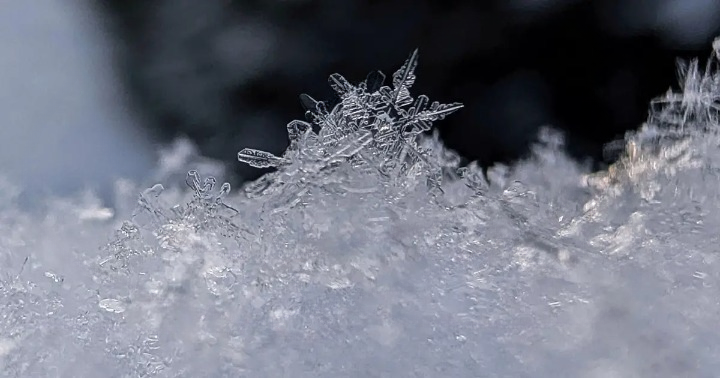
Snow is made of frozen water, and individual ice crystals are generally transparent or translucent rather than naturally white. So why does a large collection of these tiny crystals appear bright white when sunlight shines on it?
The answer involves light, reflection, refraction, scattering, and the remarkable structure of snowflakes.
Unlike a painted surface, snow does not produce its white appearance because it contains a white coloring substance. Instead, its appearance is the result of how sunlight interacts with countless tiny ice crystals and the air spaces between them.
This fascinating natural process explains why snow can look brilliantly white in daylight, blue in deep shadows, pink during sunrise, or even orange under certain lighting conditions.
Understanding the science behind snow’s appearance reveals how something as ordinary as frozen water can create one of the most recognizable sights in nature.
In this article, we will explore what snow is made of, why it looks white, how sunlight interacts with ice crystals, why snow sometimes appears blue, and what makes its appearance change throughout the day.
Is Snow Naturally White or Transparent?
To understand why snow looks white, it helps to begin with the material from which it is made.
Snow forms when water vapor in the atmosphere freezes into ice crystals. These crystals develop in clouds under suitable temperature and moisture conditions.
As they grow, ice crystals can develop different shapes, including plates, columns, needles, and more elaborate branching structures.
Individual ice crystals are generally transparent or translucent.
This means that light can enter them rather than being completely absorbed or reflected at their surfaces.
A single clear ice crystal does not look like a tiny piece of white paint.
In fact, large pieces of relatively pure ice can appear transparent or slightly blue, depending on their thickness, lighting, and the amount of light absorbed.
Snow, however, is not made from one solid piece of ice.
It consists of countless individual ice crystals packed together, with many tiny spaces containing air.
This complex structure changes how light travels through the material.
When sunlight reaches a snowy surface, it encounters countless ice-air boundaries. Light is repeatedly redirected as it passes through and between the crystals.
Because visible wavelengths are scattered relatively evenly by fresh snow, the combined light reaching our eyes appears white.
This is the key to understanding the color of snow.
Snow looks white not because individual snowflakes are white, but because a large collection of ice crystals scatters visible light in a way that produces a white appearance.
Why Does Snow Look White? The Science Explained
Sunlight appears white to human eyes, but it is actually made up of different colors of visible light.
These colors include:
- Red
- Orange
- Yellow
- Green
- Blue
- Indigo
- Violet
Together, they make up the visible portion of the electromagnetic spectrum.
When sunlight reaches an object, several things can happen.
The object may absorb some wavelengths, reflect others, transmit light, or scatter it in different directions.
The colors we see depend on the wavelengths that eventually reach our eyes.
For example, a green leaf appears green because its structure absorbs much of the red and blue light while reflecting a greater proportion of green light.
Snow behaves differently.
Its many tiny ice crystals and air spaces repeatedly redirect incoming sunlight.
Because the visible wavelengths are not strongly separated in the scattering process, much of the incoming visible light is returned toward the observer.
The combined result is a bright white appearance.
1. Sunlight Contains Many Colors
Although sunlight often appears white, it contains all the colors that make up the visible spectrum.
You can see this when sunlight passes through a prism.
The prism separates white light into different colors because different wavelengths travel through the material differently.
A rainbow demonstrates a similar principle.
Water droplets in the atmosphere can separate sunlight into its component colors through refraction, internal reflection, and dispersion.
Snow does not normally separate sunlight into a rainbow because its structure produces a different optical effect.
Instead, its many crystals redirect a broad range of visible wavelengths toward our eyes.
2. Ice Crystals Redirect Light
When light encounters an ice crystal, it can be reflected or refracted at the boundary between ice and air.
Refraction occurs when light changes direction as it moves between materials with different optical properties.
Snow contains an enormous number of these boundaries.
As light travels into the snow, it may encounter several crystals before eventually emerging.
Each interaction can change its direction.
This repeated redirection helps distribute visible light throughout the snow and creates the bright appearance we recognize.
3. Air Spaces Play an Important Role
One of the most interesting features of snow is that it contains a considerable amount of air.
Freshly fallen snow is not a solid block of ice.
Instead, it is a loose arrangement of crystals separated by small spaces.
These spaces create additional boundaries between ice and air.
Every boundary can contribute to the scattering of light.
This is one reason fresh, fluffy snow can look especially bright.
As snow becomes compacted, melts, and refreezes, its structure changes.
The amount and arrangement of air spaces also change, which can affect how light interacts with the snow.
What Is Light Scattering?
Light scattering is the process in which light changes direction when it interacts with particles, structures, or irregularities in a material.
It occurs throughout nature.
The blue appearance of the daytime sky is one familiar example.
Air molecules scatter shorter wavelengths of sunlight more effectively than longer wavelengths. This process, known as Rayleigh scattering, contributes to the sky’s blue appearance.
Snow involves a different and more complicated scattering process.
The individual ice crystals and the spaces between them are much larger than air molecules.
As a result, the scattering of visible light by snow is generally described using the broader concept of multiple scattering, with Mie theory providing useful approximations for certain particle sizes and conditions.
Why Multiple Scattering Matters
Imagine shining a flashlight into a thick layer of fresh snow.
The light does not simply travel in a straight line through the material.
Instead, it encounters numerous ice-air boundaries and is redirected repeatedly.
Some light travels deeper into the snow.
Some returns toward the surface.
Some is absorbed by impurities or by the ice itself.
The light that eventually emerges contains a broad mixture of visible wavelengths.
This is why snow can appear white even though the individual ice crystals are transparent.
The more clearly you understand this process, the easier it becomes to appreciate why snow has such a distinctive appearance.
Why Does Fresh Snow Look So Bright?
Anyone who has walked outside shortly after a snowfall may have noticed how bright the landscape can become.
Fresh snow often looks much brighter than older snow.
There are several reasons for this.
Small, Separate Ice Crystals
Freshly fallen snow often contains individual crystals with relatively open spaces between them.
These structures provide numerous ice-air boundaries that interact with incoming light.
The resulting scattering can return a large proportion of visible sunlight toward the observer.
High Reflectivity
Fresh snow can reflect a very large proportion of incoming sunlight.
This property is known as albedo.
Albedo describes how much incoming radiation a surface reflects compared with how much it receives.
Fresh, clean snow often has a very high albedo, although the exact value depends on factors such as grain size, surface condition, impurities, and the angle of sunlight.
This high reflectivity explains why snowy landscapes can appear exceptionally bright during sunny winter days.
Clean Snow Contains Fewer Impurities
Fresh snow is often relatively clean compared with snow that has been exposed to traffic, soil, dust, or other materials.
As snow ages, particles and debris may accumulate on its surface.
These materials can absorb additional sunlight and make the snow appear gray, brown, or dirty.
This is another reason newly fallen snow often looks so much brighter.
Why Can Snow Sometimes Look Blue?
Although snow is usually described as white, it can sometimes appear blue.
This is not unusual, particularly in deep snow, shaded areas, or places where light travels through a substantial thickness of ice.
The explanation involves the way ice absorbs different wavelengths of visible light.
The Natural Blue Appearance of Deep Ice
Pure ice absorbs longer visible wavelengths, such as red light, slightly more strongly than shorter visible wavelengths.
Over a sufficiently long optical path, this difference becomes noticeable.
As a result, light emerging from deep or thick ice can contain a relatively greater proportion of blue wavelengths.
This is why glaciers and deep crevasses sometimes display beautiful blue colors.
Snow is usually made of relatively small ice grains, so its appearance is dominated by scattering rather than the strong color effects seen in thick ice.
However, light can travel through multiple grains and penetrate into deeper layers before emerging.
Under suitable conditions, some of the longer wavelengths may be absorbed more strongly, producing a blue appearance.
Shadows Can Make Snow Look Blue
Snow in shaded areas may also appear blue because the light illuminating it is different from direct sunlight.
On a clear day, shadows receive more light from the blue sky than from the direct sun.
This changes the color of the illumination.
As a result, white snow may appear pale blue or bluish gray.
The effect is particularly noticeable in photographs taken in mountainous areas.