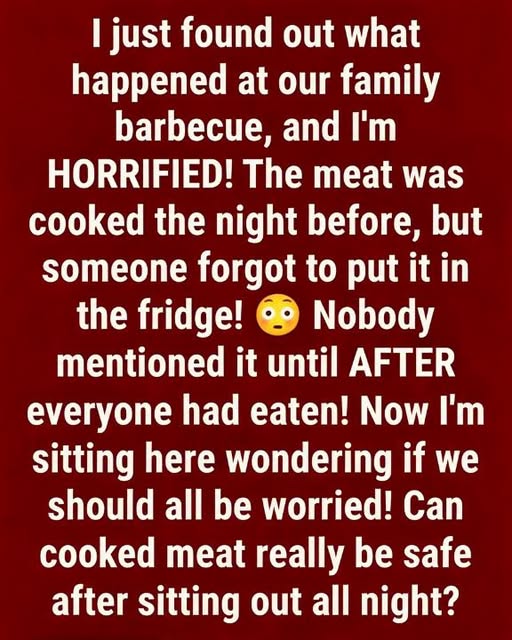
Can You Eat Chicken or Beef Left Out Overnight? Food Safety Rules You Should Know
Imagine opening your refrigerator late at night or walking into your kitchen the following morning and suddenly remembering something important.
The chicken or beef you prepared for dinner is still sitting on the kitchen counter.
Perhaps you finished eating, became distracted by household responsibilities, or simply forgot to put the leftovers away. Whatever the reason, the situation is surprisingly common.
At first, you might wonder whether the food is still acceptable to eat. It may look perfectly normal, have no unpleasant smell, and seem just as appetizing as it did the night before.
Throwing away an entire meal can also feel wasteful, especially when groceries are expensive and you were planning to use the leftovers for another meal.
However, food safety is not something that should be determined by appearance alone.
Chicken, beef, and other perishable foods can become unsafe when they remain at room temperature for too long. Harmful bacteria may multiply even when there are no obvious changes in color, smell, or texture.
So, can you eat chicken or beef that has been left out overnight?
The safest answer is no.
According to food-safety guidance from the United States Department of Agriculture (USDA), perishable foods should generally not remain at room temperature for more than two hours. If the surrounding temperature is above 90°F (32°C), that recommended period decreases to one hour.
Food left on a kitchen counter throughout the night has generally exceeded these limits by a considerable amount.
In this guide, we will explain why overnight storage at room temperature is risky, how different types of meat should be handled, and what you can do to prevent similar situations in the future.
The Short Answer: Should You Eat Meat Left Out Overnight?
If cooked chicken, beef, pork, or another perishable meat product has been sitting on the kitchen counter overnight, it should be discarded.
Reheating it does not reliably make it safe.
This advice applies even if:
- The meat still looks fresh.
- There is no unpleasant smell.
- The texture appears unchanged.
- The food was fully cooked before being left out.
- The kitchen did not feel particularly warm.
- You plan to heat it thoroughly before eating.
The reason is that harmful bacteria can multiply under favorable conditions without producing noticeable changes in the food.
Some bacteria can also produce toxins that may remain dangerous even after the food is reheated.
Although throwing away food is frustrating, the potential health consequences of eating improperly stored meat make discarding it the safer decision.
Understanding the Two-Hour Food Safety Rule
One of the most important guidelines in food safety is the two-hour rule.
The USDA recommends refrigerating perishable foods within two hours of cooking or removing them from refrigeration.
This includes:
- Cooked chicken.
- Cooked beef.
- Ground meat.
- Fish and seafood.
- Meat-based casseroles.
- Soups and stews containing meat.
- Dairy-based dishes.
- Other foods that require refrigeration.
The two-hour recommendation helps prevent harmful microorganisms from multiplying to dangerous levels.
However, there is an important exception.
When the surrounding temperature is above 90°F (32°C), such as during a hot summer day or in a particularly warm outdoor environment, perishable food should not remain unrefrigerated for more than one hour.
This shorter period is important because bacteria can multiply more rapidly in warmer conditions.
The rule applies whether food is sitting on a dining table, kitchen counter, picnic table, or another location without appropriate temperature control.
What Is the Food Temperature Danger Zone?
Food-safety experts commonly refer to a temperature range known as the danger zone.
According to USDA guidance, this range is between 40°F and 140°F (4°C and 60°C).
Within this temperature range, many harmful bacteria can multiply more rapidly.
Refrigeration slows bacterial growth, while sufficiently high cooking temperatures can destroy many harmful microorganisms.
The danger zone is particularly relevant to cooked meat because food often cools gradually after being removed from the oven, stove, or grill.
For example, imagine preparing a chicken dinner at 6 p.m.
After everyone finishes eating, the remaining chicken is placed on the kitchen counter.
During the evening, its temperature gradually decreases.
If it remains within the danger zone for an extended period, bacteria may multiply.
By the following morning, the food may no longer be safe to consume.
This can happen even if the chicken looks exactly as it did when dinner ended.
Why Chicken Left Out Overnight Is Especially Concerning
Chicken is a nutritious and versatile food, but it requires careful handling.
Raw and cooked chicken can carry harmful bacteria, including Salmonella and Campylobacter.
These microorganisms can cause foodborne illness if contaminated food is consumed.
Proper cooking is essential because it helps destroy harmful bacteria present in raw poultry.
However, cooking does not provide unlimited protection against contamination afterward.
Once chicken has been cooked, it can become contaminated again through contact with unclean surfaces, utensils, or hands.
Improper storage also creates opportunities for bacteria to multiply.
If cooked chicken remains on the counter overnight, it should not be considered safe simply because it was thoroughly cooked before being left out.
The same principle applies to chicken that has been roasted, grilled, fried, boiled, or prepared in a slow cooker.
The cooking method does not eliminate the need for proper refrigeration afterward.
Is Beef Left Out Overnight Any Safer?
Some people assume beef is less likely to cause food-safety problems than chicken.
This belief can lead to confusion, especially when discussing steaks, roasts, burgers, and other beef dishes.
However, cooked beef is also a perishable food.
Whether it is a grilled steak, roast beef, meatloaf, or hamburger, it should be refrigerated within the recommended time.
Beef can contain or become contaminated with harmful microorganisms.
Ground beef deserves particular attention because grinding distributes bacteria that may be present on the surface throughout the product.
For this reason, ground beef must be cooked thoroughly.
But even properly cooked ground beef can become unsafe if it is left at room temperature for too long.
The same two-hour rule applies.
If beef has remained on the counter overnight, the safest choice is to throw it away.
What About Meat That Was Fully Cooked?
This is one of the most common misunderstandings about food safety.
Some people believe that once meat has been cooked, it cannot become dangerous.
Unfortunately, that is not true.
Cooking destroys many harmful microorganisms when the appropriate temperatures are reached.
However, cooked food can still become contaminated during handling or storage.
Bacteria may also multiply if the food remains at temperatures that support their growth.
For example, cooked meat may be exposed to microorganisms through:
- Unwashed hands.
- Contaminated kitchen utensils.
- Dirty countertops.
- Unclean food containers.
- Contact with raw meat.
- Improper storage conditions.
This is why food safety continues after cooking.
A meal that was perfectly safe when it came out of the oven can become unsafe if it is left unrefrigerated for an extended period.
Can Reheating Meat Make It Safe Again?
It may seem reasonable to put overnight leftovers in the microwave or oven and heat them until they are steaming hot.
Unfortunately, reheating is not a reliable way to make meat that has been left out overnight safe.
Heat can destroy many bacteria, but certain bacteria may produce toxins that are not eliminated by ordinary reheating.
One example is Staphylococcus aureus.
This bacterium can produce toxins in food under favorable conditions.
Some of these toxins are heat-resistant, meaning that reheating may not destroy them.
Another organism of concern is Bacillus cereus, which is associated with certain foodborne illnesses and can produce toxins under particular conditions.
The important lesson is that reheating should never be used to rescue food that has already been left at unsafe temperatures for too long.
If chicken or beef has been sitting out overnight, discard it rather than trying to make it safe through additional cooking.
Why Meat Can Look and Smell Normal Even When It Is Unsafe
One of the most misleading aspects of foodborne illness is that contaminated food does not always look spoiled.
People sometimes rely on three simple observations:
- Does it look normal?
- Does it smell normal?
- Does it feel normal?
Unfortunately, these are not reliable ways to determine whether meat is safe.
Harmful microorganisms are often invisible.
They may not change the food’s color, texture, or smell.
A piece of chicken can appear perfectly fresh while containing bacteria that could cause illness.
Similarly, cooked beef may look and smell normal despite having been left in unsafe conditions.
This is why food-safety recommendations are based on time and temperature rather than appearance alone.
If the meat has exceeded the recommended room-temperature storage period, it should be discarded.
What If the Meat Was Left Out for Only Three or Four Hours?
The answer depends partly on the surrounding temperature and the total time the food spent outside safe temperature control.
Under standard conditions, the USDA recommends a maximum of two hours at room temperature.
Therefore, meat left out for three or four hours generally exceeds the recommended limit.
In a hot environment above 90°F (32°C), the recommended limit is only one hour.
It is important not to assume that food is safe simply because it has not been left out overnight.
Even a few hours can be enough to create a food-safety concern.
If you are uncertain how long the meat has been sitting out, the safest decision is to avoid eating it.
Does the Type of Beef Make a Difference?
Different cuts of beef have different characteristics, but they still require appropriate storage.
For example:
Steak
A cooked steak should be refrigerated promptly.
Whether it is rare, medium, or well-done, it should not remain at room temperature overnight.
Ground Beef
Ground beef requires particularly careful handling because grinding can distribute bacteria throughout the meat.
Cooked hamburgers and meatballs should also be refrigerated within the recommended period.
Roast Beef
Large pieces of cooked beef may cool more slowly than smaller portions.
Cutting a roast into smaller portions before refrigeration can help it cool more quickly.
Beef Stew
Stews and dishes containing beef should be divided into smaller, shallow containers before refrigeration.
This allows heat to escape more efficiently.
Regardless of the type of beef, overnight room-temperature storage is not recommended.
How Long Can Cooked Chicken and Beef Stay in the Refrigerator?
Proper refrigeration helps slow bacterial growth and allows leftovers to be stored for a limited period.
According to USDA food-storage guidance, most cooked meat and poultry leftovers can generally be refrigerated for three to four days when kept at 40°F (4°C) or below.
This includes:
- Roasted chicken.
- Grilled chicken.
- Cooked beef.
- Meatloaf.
- Beef stew.
- Cooked ground meat.
- Leftover casseroles containing meat.
The refrigerator should remain at or below 40°F (4°C).
It is also important to store leftovers in covered containers.
Avoid leaving large quantities of hot food in deep containers because the center may cool slowly.
Instead, divide the food into smaller portions.
This helps it cool more efficiently and makes it easier to reheat only the amount needed for the next meal.
Can You Leave Hot Food on the Counter Before Refrigerating It?
Another common concern is whether hot food must cool completely before it goes into the refrigerator.
Some people believe that placing warm leftovers directly in the refrigerator will damage the appliance or make other foods unsafe.
As a result, they leave large pots of soup, meat, or casserole dishes on the counter for several hours.
However, food-safety guidance recommends refrigerating perishable leftovers promptly rather than waiting for them to reach room temperature.
Large portions can be divided into smaller, shallow containers to help them cool more quickly.
There is no need to leave cooked meat sitting on the counter until it feels completely cold.
The important thing is to prevent it from remaining in the temperature danger zone for too long.
What About Meat Left in a Slow Cooker?
Slow cookers can make meal preparation easier, particularly for families with busy schedules.
Some models include a warming setting that is designed to keep cooked food hot after the cooking cycle finishes.
However, not every warming setting or appliance performs identically.
Food should only be held hot when the appliance can maintain it at a safe temperature of at least 140°F (60°C).
If the appliance has been switched off and the meat has cooled to room temperature, the usual time limits apply.
For example, if you prepare a beef roast in the morning and leave it inside a switched-off slow cooker overnight, it should not automatically be considered safe.
The fact that it remained covered does not prevent bacterial growth.
Likewise, keeping the lid on a slow cooker does not replace proper temperature control.
Always follow the manufacturer’s instructions and use a food thermometer when necessary.
What About Meat Left Out During a Party or Family Dinner?
Family gatherings, holidays, and celebrations often involve food sitting on tables for extended periods.
Large dishes of roasted chicken, beef, barbecue, and other foods may remain available for guests throughout an event.
This creates additional food-safety challenges.
When perishable food is served buffet-style, it should be kept either properly hot or properly cold.
Hot foods should generally be maintained at 140°F (60°C) or above.
Cold foods should be kept at 40°F (4°C) or below.
If food is left on the table without temperature control, the two-hour rule applies.
During particularly hot conditions, the one-hour limit should be followed.
For longer gatherings, consider serving smaller portions and replacing dishes as needed rather than leaving the entire meal out for hours.
This can help reduce waste while maintaining better food-safety practices.
How to Store Leftover Chicken and Beef Properly
A few simple habits can make leftover storage much easier.
1. Divide Large Portions
Cut large roasts and casseroles into smaller portions.
Smaller portions generally cool more quickly than large quantities of food.
2. Use Shallow Containers
Place leftovers in shallow, food-safe containers.
This allows heat to escape more efficiently.
3. Refrigerate Promptly
Do not leave food on the counter while waiting for it to cool completely.
Refrigerate perishable leftovers within two hours, or one hour when the surrounding temperature is above 90°F (32°C).
4. Keep Your Refrigerator at the Correct Temperature
Use an appliance thermometer to check that your refrigerator stays at or below 40°F (4°C).
5. Label Your Containers
Write the date on containers so you know when the food was prepared or stored.
This makes it easier to use leftovers within the recommended period.
6. Reheat Only What You Need
Reheating the entire container repeatedly can affect food quality and make portion control more difficult.
Take out the amount you plan to eat.
7. Reheat Leftovers Thoroughly
USDA guidance recommends reheating leftovers to an internal temperature of 165°F (74°C).
Use a food thermometer to verify the temperature, particularly when reheating thick dishes or large portions.
Remember that reheating applies to food that was stored safely in the first place. It does not make overnight leftovers safe.
What Are the Symptoms of Food Poisoning?
Foodborne illness can occur when someone consumes food contaminated with harmful microorganisms or their toxins.
Symptoms vary depending on the cause, the amount consumed, and the person’s overall health.
Common symptoms include:
- Nausea.
- Vomiting.
- Diarrhea.
- Abdominal cramps.
- Fever.
- General weakness.
Symptoms may begin within hours or take several days to appear, depending on the organism involved.
Some people recover without medical treatment, while others may experience more serious complications.
Dehydration is one of the concerns associated with vomiting and diarrhea.
People should seek medical advice if they experience severe symptoms, bloody diarrhea, persistent vomiting, high fever, signs of dehydration, or symptoms that do not improve.
Pregnant individuals, young children, older adults, and people with weakened immune systems may be at greater risk of serious complications from foodborne illness.
If you believe you have become ill after eating improperly stored meat, contact a healthcare professional.
Who Is Most Vulnerable to Foodborne Illness?
Although anyone can experience food poisoning, certain groups face a higher risk of serious complications.
These include:
Young Children
Children have developing immune systems and may become dehydrated more quickly when experiencing vomiting or diarrhea.
Older Adults
The immune system can become less effective with age, making some infections more serious.
Pregnant Individuals
Certain foodborne infections can create additional risks during pregnancy.
People With Weakened Immune Systems
Individuals receiving certain medical treatments or living with conditions that affect immune function may be more vulnerable.
For these groups, following food-safety recommendations is especially important.
Avoiding improperly stored leftovers is a simple but important precaution.
Is It Ever Safe to Eat Meat Left Out Overnight?
In ordinary household circumstances, no.
There are situations where food can be held outside a refrigerator safely, but they require appropriate temperature control.
For example, cooked meat can be kept hot in suitable equipment that maintains a temperature of at least 140°F (60°C).
It can also be kept cold using appropriate refrigeration or properly managed cold-holding arrangements.
However, meat that has simply been sitting on a kitchen counter throughout the night has not been maintained under these conditions.
Unless you have reliable evidence that it remained at a safe holding temperature, it should be discarded.
Do not rely on the room feeling cool or the food remaining covered.
Practical Ways to Avoid Forgetting Leftovers
Forgetting food on the counter can happen to anyone.
Fortunately, a few simple routines can make it less likely.
Set a Kitchen Reminder
Set a phone reminder after dinner to check the food and refrigerate leftovers.
Put Containers Away Before Cleaning
Rather than waiting until the kitchen is completely cleaned, make storing the leftovers one of the first tasks after eating.
Use Smaller Serving Dishes
Avoid placing the entire meal on the table if you do not expect everyone to eat it.
Keep additional portions refrigerated until needed.
Make Food Storage Part of Your Routine
After dinner, clear the table, divide leftovers, and place them in the refrigerator.
Repeating the same routine makes it easier to remember.
Keep Storage Containers Accessible
Having clean, appropriately sized containers available can make storing leftovers quicker and more convenient.
What Should You Do If You Already Ate Meat Left Out Overnight?
If you have already eaten chicken or beef that was left at room temperature overnight, try not to panic.
Eating questionable food does not guarantee that you will become ill.
However, you should be aware of possible symptoms and seek medical advice if they develop.
Do not eat any remaining portions of the questionable food.
Pay attention to nausea, vomiting, diarrhea, abdominal pain, and fever.
If symptoms are severe or you belong to a higher-risk group, contact a healthcare professional promptly.
It is also important to maintain hydration if you experience mild vomiting or diarrhea.
If you have difficulty keeping fluids down, notice signs of dehydration, or develop concerning symptoms, seek medical attention.
Do not attempt to treat serious foodborne illness using home remedies alone.
Common Questions About Meat Left Out Overnight
Can I eat cooked chicken that was left out for eight hours?
No. Eight hours is well beyond the recommended two-hour room-temperature limit. The chicken should be discarded.
Can I eat beef that was left out overnight if I reheat it?
No. Reheating does not reliably eliminate all hazards associated with food that has been left at unsafe temperatures.
Does covering meat protect it from bacteria?
A lid or cover can help protect food from some forms of outside contamination, but it does not stop bacteria already present from multiplying when temperatures are unsafe.
Can I eat meat that smells normal after being left out overnight?
No. Normal smell and appearance do not prove that food is safe.
What if the kitchen was cold overnight?
A cool-feeling kitchen is not a substitute for proper refrigeration. Unless the meat was reliably maintained at or below 40°F (4°C), it should not be considered safely stored.
Can I put hot chicken directly into the refrigerator?
Yes. Perishable food should be refrigerated promptly. Divide large portions into smaller, shallow containers to help them cool efficiently.
How long can cooked chicken remain refrigerated?
Generally, three to four days when properly refrigerated at 40°F (4°C) or below.
What temperature should leftovers reach when reheated?
USDA guidance recommends reheating leftovers to 165°F (74°C), measured with a food thermometer.
Final Thoughts: When in Doubt, Choose Food Safety
Discovering that chicken or beef has been left on the kitchen counter overnight can be frustrating.
You may have planned to use the leftovers for lunch, prepare another family meal, or save money by avoiding food waste.
Nevertheless, protecting your health should always come first.
The two-hour rule provides a practical guideline for handling perishable food at room temperature. In warmer conditions above 90°F (32°C), that period decreases to just one hour.
Chicken and beef that have remained on the counter overnight should be discarded, even if they look, smell, and feel normal.
Reheating cannot reliably reverse the risks associated with prolonged improper storage.
Fortunately, preventing this problem is relatively simple.
Divide large portions into shallow containers, refrigerate leftovers promptly, keep your refrigerator at or below 40°F (4°C), and label stored food with the date.
These small habits can help reduce food waste while making everyday meals safer.
The next time you finish dinner, remember that proper food storage is just as important as proper cooking.
A few minutes spent putting leftovers away can make a meaningful difference in protecting everyone at the table.