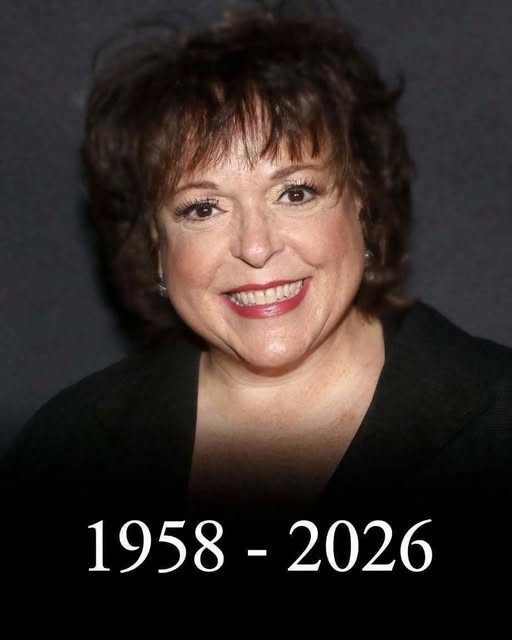
Broadway Actress Gina Ferrall Dies at 67: Remembering Her Remarkable Theater Legacy
The Broadway community has lost a talented performer whose dedication to the stage helped make her a familiar face in some of the theater world’s most memorable productions. Gina Ferrall, an accomplished American actress whose career included appearances in celebrated musicals and dramatic productions, died on June 9, 2026, at the age of 67.
Her passing followed a brief battle with uterine sarcoma, a rare form of cancer. News of her death was shared by her husband, Broadway musician and percussionist Kory Grossman.
For audiences who watched her perform, Ferrall was more than another name in a theater program. She was part of a generation of professional stage performers who helped bring musical theater and dramatic storytelling to life night after night.
Throughout her career, she appeared in productions including Les Misérables, Mamma Mia!, Beauty and the Beast, Jane Eyre, The Sound of Music, and Leopoldstadt. She also toured nationally with major theatrical productions, including Wicked and Les Misérables.
Her work extended beyond the stage. Ferrall also appeared in several television productions, demonstrating her versatility as a performer.
Although she may not have been a household name outside theater circles, her professional journey represents an important part of the Broadway community: the dedicated performers whose contributions help make major productions successful.
Her death has prompted renewed attention to her extensive career, her theatrical achievements, and the lasting impression she made on colleagues and audiences.
As friends, fellow performers, and theater enthusiasts remember her, her professional legacy offers an opportunity to celebrate a life devoted to performance, creativity, and storytelling.
Who Was Gina Ferrall?
Gina Ferrall was an American stage actress recognized for her work in Broadway productions, national theater tours, and television appearances.
Born on September 6, 1958, she developed a career that connected her with several important productions in American musical theater.
Her professional experience included both musical and dramatic performances, allowing her to work across different theatrical styles.
She became particularly associated with productions such as Les Misérables and Mamma Mia!, where she contributed to the ensemble of performers responsible for bringing familiar characters and stories to life.
Her career also included work in Beauty and the Beast, The Sound of Music, Jane Eyre, Big River, and She Loves Me.
One of her later theatrical appearances came in Tom Stoppard’s Leopoldstadt, a major dramatic production that explored family history, identity, and the devastating consequences of antisemitism in Europe.
Ferrall’s professional experience was not limited to New York.
She also participated in national touring productions, bringing theater to audiences in different parts of the United States.
Her role as Madame Morrible in the national touring production of Wicked was another notable part of her career.
For professional theater performers, working in different productions and touring companies requires adaptability, preparation, and a strong commitment to the craft.
Ferrall’s extensive list of credits reflects the variety of opportunities she pursued throughout her working life.
The News of Her Death at 67
The news of Gina Ferrall’s death was reported by theater publications on June 9 and June 10, 2026.
According to reporting by Playbill, her husband, Kory Grossman, confirmed her passing following a brief battle with uterine sarcoma.
She was 67 years old.
Her death was particularly significant for people familiar with her work because she had maintained a long association with professional theater.
Theater careers often involve years of rehearsals, performances, touring schedules, and collaboration with different creative teams.
Unlike performers whose work is primarily associated with film or television, stage actors regularly build their professional reputations through live performances.
Their work takes place in front of audiences, often requiring them to deliver consistent performances throughout long production runs.
Ferrall’s career included several such experiences.
Her passing represents the loss of an experienced performer whose professional journey connected her with numerous productions and fellow artists.
The announcement also brought attention to a rare illness that is not widely discussed outside medical and cancer-awareness communities.
While her theatrical achievements remain the focus of her professional legacy, her passing has also highlighted the importance of awareness and research surrounding uncommon cancers.
Understanding Her Broadway Career
Broadway is widely regarded as one of the most important centers of professional musical theater.
Performers who appear in Broadway productions work in a demanding environment that combines acting, music, choreography, and storytelling.
The industry includes leading performers, supporting actors, understudies, replacement cast members, and ensemble artists.
Every role contributes to the overall production.
Ferrall worked in this environment for many years and became involved in several well-known productions.
Her Broadway credits demonstrate an impressive range of theatrical experience.
Rather than being associated with only one type of performance, she worked in different musicals and dramatic productions.
This variety allowed her to participate in stories with different themes, characters, and artistic approaches.
For example, Les Misérables is a large-scale musical built around themes of justice, sacrifice, redemption, and human suffering.
Mamma Mia! offers a very different theatrical experience, combining comedy, family relationships, romance, and familiar music.
Meanwhile, Leopoldstadt is a serious dramatic work exploring generations of a family against the historical background of European antisemitism.
Working across productions with such different approaches demonstrates the variety of opportunities that shaped Ferrall’s professional career.
Her Work in Les Misérables
<escape></escape>
One of the important productions associated with Gina Ferrall’s career was Les Misérables.
Based on Victor Hugo’s celebrated novel, the musical has become one of the most recognizable theatrical productions in the world.
Its story explores poverty, injustice, love, forgiveness, and the possibility of personal redemption.
The musical features several memorable characters and emotionally demanding performances.
Ferrall appeared in the original Broadway production as Madame Thénardier, joining a production that became an important part of modern musical theater history.
Madame Thénardier is a complicated character whose behavior combines humor, selfishness, and opportunism.
The role requires a performer who can contribute to the musical’s comic moments while supporting its broader dramatic atmosphere.
Ferrall also toured extensively with Les Misérables, again portraying Madame Thénardier.
National touring productions allow major theatrical works to reach audiences who may not have the opportunity to visit Broadway.
They also require performers to adapt to different theaters, schedules, technical environments, and production conditions.
For an actor, touring can be a demanding experience.
Performances take place in different cities, and cast members must maintain consistency despite changes in their surroundings.
Ferrall’s involvement in touring productions reflects her experience and commitment to professional theater.
Her association with Les Misérables remains one of the most recognizable parts of her theatrical career.
A Memorable Chapter With Mamma Mia!
Another major production in Ferrall’s career was Mamma Mia!.
The musical became internationally popular through its use of songs by the Swedish pop group ABBA.
Its story follows a young woman preparing for her wedding while trying to discover the identity of her father.
The production combines comedy, romance, family relationships, and music that has remained popular across generations.
Ferrall performed as Rosie in the original Broadway production.
Rosie is one of the central supporting characters and part of the close friendship shared by Donna and Tanya.
The character brings humor and warmth to the story.
Her friendship with Donna provides some of the musical’s most entertaining interactions, while also contributing to its themes of loyalty and growing older.
Performing in Mamma Mia! placed Ferrall within a production that attracted a broad audience.
The musical appealed to longtime musical theater enthusiasts as well as people who were primarily familiar with ABBA’s music.
Its popularity helped introduce theatrical performances to many new audiences.
Ferrall’s participation in the original Broadway production became an important part of her professional record.
The show also demonstrates how musical theater can bring together familiar music, character-driven storytelling, and live performance.
Her Contributions to Beauty and the Beast
Ferrall also appeared in the Broadway production of Beauty and the Beast.
Based on the familiar fairy tale, the musical tells the story of Belle, a young woman who becomes involved in the life of an enchanted prince.
The production explores themes of kindness, acceptance, compassion, and the importance of looking beyond appearances.
Ferrall performed as Madame de la Grande Bouche, a character associated with the enchanted castle.
The role is part of the production’s colorful supporting cast.
Beauty and the Beast became an important Broadway musical after its debut and attracted audiences through its combination of memorable songs, theatrical effects, and familiar storytelling.
Its success also demonstrated the ability of family-oriented productions to appeal to audiences of different ages.
For performers, participating in a major musical such as this offers an opportunity to contribute to a production with a distinctive visual and musical identity.
Ferrall’s involvement in the show added another major title to her growing list of theatrical credits.
A Role in Jane Eyre
Another production in which Ferrall appeared was Jane Eyre, the musical adaptation of Charlotte Brontë’s classic novel.
The original literary work follows Jane, an orphan who experiences hardship, personal growth, and complicated relationships throughout her life.
Its themes include independence, emotional resilience, social expectations, and personal identity.
The musical adaptation brought the story to the theatrical stage through music and dramatic performance.
Ferrall appeared as Mrs. Reed, a character from Jane’s early life.
Mrs. Reed is important to the opening chapters of the original story because of her treatment of the young Jane.
The character contributes to the circumstances that shape Jane’s childhood.
Ferrall’s involvement in this production demonstrated her experience with literary adaptations and dramatic musical theater.
It also added another classic story to her professional repertoire.
Performing in The Sound of Music
Ferrall’s Broadway experience also included the 1998 revival of The Sound of Music.
The musical is one of the best-known productions in American theater history.
Its story follows Maria, a young woman who becomes a governess for the von Trapp family.
Set against the historical background of Austria before the Second World War, the musical explores family, music, courage, and the importance of personal convictions.
Ferrall performed as Sister Berthe in the revival.
The production brought a familiar story to a new generation of theater audiences while maintaining the musical’s recognizable themes and songs.
Performing in a revival can present different challenges from participating in a completely new production.
Audiences may already have expectations about familiar characters and musical numbers.
Actors must respect the established material while bringing their own interpretation to the performance.
Ferrall’s participation in The Sound of Music added another respected title to her career.
Her Work in Other Broadway Productions
Beyond her best-known credits, Ferrall participated in several additional Broadway productions.
These included A Funny Thing Happened on the Way to the Forum, Big River, She Loves Me, and It Shoulda Been You.
Each production offered a different theatrical experience.
A Funny Thing Happened on the Way to the Forum is a musical comedy inspired by ancient Roman theatrical traditions.
It is known for its fast-moving humor, mistaken identities, and exaggerated characters.
Ferrall appeared as Domina in the 1996 Broadway revival.
Big River, based on Mark Twain’s Adventures of Huckleberry Finn, explores friendship, freedom, and life along the Mississippi River.
Ferrall played Widow Douglas in the 2003 revival.
She also appeared in the 2016 revival of She Loves Me, a romantic musical comedy known for its charming storytelling and memorable score.
In addition, she worked on It Shoulda Been You, serving as a standby for several roles.
A standby performer is prepared to take over a role when the regularly scheduled performer cannot appear.
This responsibility requires extensive preparation because the performer must be ready to step into the production when needed.
Such roles are an important part of the theater industry.
Although audiences may not always know the names of standby performers, their work helps productions continue when unexpected changes occur.
Ferrall’s participation in these productions illustrates the breadth of her experience.
Her Appearance in Leopoldstadt
<escape></escape>
One of the later productions in Ferrall’s career was Tom Stoppard’s Leopoldstadt.
The play opened on Broadway in 2022 and became an important theatrical work because of its exploration of family history and the consequences of historical persecution.
The story follows several generations of a Jewish family in Vienna.
It examines identity, memory, belonging, and the effects of antisemitism across different historical periods.
The production moves through decades of family life, illustrating how political and social changes can affect individuals and future generations.
Ferrall played Poldi and understudied the role of Grandma Emilia.
Poldi is a member of the household whose presence contributes to the wider family story.
The play requires a large cast because its narrative moves across generations.
Its characters help demonstrate how personal lives are connected to historical events.
Ferrall’s involvement in Leopoldstadt was among her final Broadway credits.
The production offered a very different experience from the musical comedies and large-scale musicals that had formed other parts of her career.
It also demonstrated her continued participation in serious dramatic theater.
Her Experience With Wicked
Ferrall’s theatrical career also included a national touring production of Wicked.
The musical tells a story connected to the world of The Wizard of Oz, focusing on the lives and relationship of two witches.
Rather than presenting a simple division between good and evil, the production explores friendship, prejudice, identity, and the ways in which people become misunderstood.
Ferrall portrayed Madame Morrible in the fifth national touring production.
Madame Morrible is an important character whose political influence and decisions contribute to the events of the musical.
The role requires a performer capable of presenting authority and dramatic presence.
It is worth distinguishing this credit from her Broadway appearances: Ferrall performed the role in a national tour, rather than in the original Broadway production.
National tours allow successful musicals to reach audiences throughout the country.
They also provide performers with opportunities to participate in major productions beyond New York.
Ferrall’s work with Wicked therefore represents another important aspect of her professional theater experience.
Her Television Career
Although Ferrall was particularly associated with theater, she also worked in television.
Her screen credits included appearances in well-known American television programs.
These included Law & Order, Law & Order: Special Victims Unit, Blue Bloods, FBI, The Good Cop, and Lipstick Jungle.
She also appeared in The Sound of Music Live!.
For theater actors, television work can provide opportunities to explore different styles of performance.
Stage acting generally requires performers to project their voices and physical expressions across a theater.
Television acting often involves more subtle expressions and performances designed for close-up camera work.
Actors moving between the two environments must adapt to different technical and creative requirements.
Ferrall’s television appearances added another dimension to her professional experience.
They also demonstrate that her career extended beyond the Broadway stage.
Her Early Theater Experience and American Conservatory Theater
An important part of Ferrall’s professional development was her association with the American Conservatory Theater, commonly known as A.C.T.
The theater company is based in San Francisco and has played an important role in American professional theater.
Ferrall was a company member from 1986 through 1990.
During this period, she participated in productions that helped develop her experience as a stage performer.
Archival theater materials also document her involvement in productions such as Side by Side by Sondheim and other theatrical works.
Professional theater companies provide performers with opportunities to work alongside directors, designers, musicians, and fellow actors.
They also help artists develop their understanding of different dramatic traditions.
For an actor building a long-term career, this experience can be particularly valuable.
It creates opportunities to work on both established theatrical works and less familiar productions.
Ferrall’s early association with A.C.T. forms an important part of the background to her later Broadway career.
The Demands of a Long Career in Professional Theater
A career in theater requires a level of commitment that audiences do not always see.
A typical performance may last several hours, but the work behind it begins long before the curtain rises.
Actors must learn their lines, understand their characters, attend rehearsals, and coordinate their performances with other members of the cast.
Musical theater adds further responsibilities.
Performers may need to sing, dance, and act while maintaining the physical and emotional demands of a production.
They must also remain consistent across repeated performances.
A Broadway production may run for months or years.
The cast may change during that period, meaning performers must adapt to new colleagues and different interpretations.
Touring productions introduce additional challenges.
Actors travel between cities, perform in different theaters, and adjust to changing schedules.
Maintaining a professional standard under these circumstances requires discipline.
Ferrall’s extensive list of productions reflects a career spent navigating these different demands.
Her work demonstrates the importance of performers who remain dedicated to their craft over many years.
The Importance of Supporting Actors in Broadway Productions
When audiences think about Broadway, they often remember the leading actors.
However, every successful production depends on a much larger group of performers.
Supporting actors, ensemble members, understudies, and standbys all contribute to the overall experience.
They help establish the atmosphere of a production and make its fictional world feel believable.
In musical theater, ensemble performers may appear in numerous scenes, participate in major musical numbers, and help move the story forward.
Supporting characters can also provide humor, emotional depth, and important narrative information.
A character who appears for only a short period may still play a significant role in the overall production.
Ferrall’s career included many such responsibilities.
Her performances in productions with different styles and stories demonstrate the value of experienced supporting