California Dreamin’: The Story Behind The Mamas & The Papas’ Timeless Song and Its Lasting Influence
Posted on May 20, 2026 | Music & Entertainment
Some songs have a remarkable ability to transport listeners to another time and place. Just a few notes can bring back memories, awaken emotions, and create images of distant landscapes. Few songs capture that feeling quite like “California Dreamin'” by The Mamas & The Papas.
Released in 1965, the song became one of the defining recordings of the 1960s. Its memorable melody, beautiful harmonies, and nostalgic lyrics helped establish the group as one of the most recognizable musical acts of the era.
Even decades after its release, “California Dreamin'” continues to attract new listeners. It appears in films, television programs, radio playlists, and music collections around the world.
But behind its familiar melody is a fascinating story about two songwriters, a longing for home, and a musical journey that helped shape an important chapter in popular music.
The Beginning of a Song Inspired by Homesickness
The story of “California Dreamin'” begins in the early 1960s, when John and Michelle Phillips were living in New York City.
At the time, the couple was navigating the challenges of building a musical career while adjusting to life on the East Coast.
Michelle Phillips had grown up in California, where the climate and surroundings were very different from the colder atmosphere of New York.
During one particularly chilly period, she found herself missing the sunshine, familiar landscapes, and relaxed atmosphere of her home state.
For someone accustomed to California’s warmer weather, the winter environment of New York could feel especially unfamiliar.
That sense of homesickness became the starting point for a song.
John Phillips began developing the musical idea, drawing inspiration from their experiences and Michelle’s longing for California.
The result was a composition that expressed more than a simple desire to travel.
It captured the emotional experience of remembering a familiar place while feeling far away from it.
Rather than describing California as a geographical destination alone, the song presented it as a symbol of warmth, comfort, freedom, and belonging.
That emotional connection would eventually become one of the reasons the recording resonated with so many people.
How The Mamas & The Papas Came Together
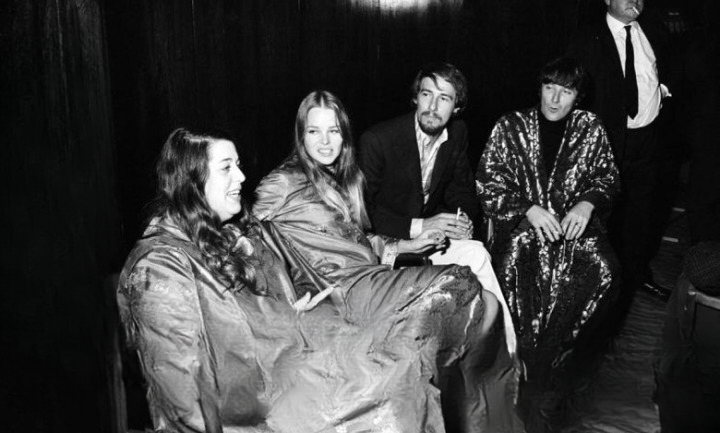
Before “California Dreamin'” became a major success, John and Michelle Phillips were developing their musical identity alongside fellow performers Denny Doherty and Cass Elliot.
Together, they formed The Mamas & The Papas.
The group had a distinctive sound that combined folk influences, pop melodies, and carefully arranged vocal harmonies.
Each member brought a different personality and musical quality to the group.
John Phillips contributed songwriting and musical direction.
Michelle Phillips brought a distinctive vocal presence.
Denny Doherty added a memorable voice that became particularly important to the group’s recordings.
Cass Elliot contributed a powerful and expressive singing style that helped give the harmonies their richness.
Their voices blended in a way that made the group immediately recognizable.
Instead of relying on a single dominant vocalist, they created arrangements in which different voices complemented one another.
This approach became an important part of their musical identity.
The group’s sound reflected the changing musical landscape of the 1960s, when audiences were increasingly interested in music that combined traditional influences with new arrangements and production techniques.
Recording a Song That Would Become a Classic
“California Dreamin'” was recorded in 1965 and released as a single by Dunhill Records.
The recording featured several musicians who contributed to its distinctive arrangement.
One particularly recognizable element is the opening flute passage, which gives the song an atmospheric introduction before the vocals begin.
The arrangement combines acoustic guitar, percussion, bass, and layered singing.
Rather than overwhelming the melody with complicated instrumentation, the production allows the voices to remain at the center of the recording.
One of the most memorable aspects is the contrast between the song’s bright musical arrangement and its lyrics about cold weather and longing.
The melody feels warm and inviting, while the words describe someone wishing to escape an uncomfortable winter environment.
That contrast gives the song an emotional quality that listeners can interpret in different ways.
Some hear it as a celebration of California.
Others hear a more universal story about missing home, remembering happier times, or wishing to be somewhere else.
The recording succeeds because it leaves room for those personal interpretations.
The Meaning Behind the Lyrics
At first glance, “California Dreamin'” might seem like a straightforward song about wanting to leave a cold city and return to a sunny destination.
However, its appeal goes beyond the weather.
The song explores a familiar human experience: wanting to be somewhere that feels more comfortable than the place where you currently are.
Almost everyone has experienced a moment when they missed a familiar environment.
It could be a childhood home, a favorite vacation destination, a familiar neighborhood, or simply a place associated with happier memories.
The song captures that feeling through simple imagery and an unforgettable melody.
Its central theme is not complicated, which may help explain why it has remained accessible to different generations.
Listeners do not need to know the history of John and Michelle Phillips to understand the emotion behind the recording.
They simply need to recognize the feeling of longing for somewhere they love.
That emotional simplicity is one of the qualities that makes great popular songs memorable.
The Musical Elements That Made It Stand Out
The success of “California Dreamin'” was not based on its lyrics alone.
Its arrangement played an equally important role.
The vocal harmonies are among the recording’s most distinctive features.
The four members of The Mamas & The Papas had different vocal characteristics, and the arrangement used those differences to create a layered sound.
The result was neither a traditional folk performance nor a conventional pop recording.
It combined elements of both.
The instrumental introduction also helped establish the song’s atmosphere.
The flute melody is particularly recognizable and gives the recording an almost reflective quality.
The guitar provides a steady musical foundation, while the percussion helps maintain the song’s rhythm.
Everything works together without distracting from the central melody.
This balance between simplicity and careful arrangement helped the recording stand out during a period when popular music was changing rapidly.
From a Song About California to an International Success
When “California Dreamin'” was first released, it gradually attracted attention from radio audiences.
Its popularity increased as more listeners discovered the recording.
The song eventually became one of The Mamas & The Papas’ signature hits.
It reached No. 4 on the Billboard Hot 100 in 1966, helping establish the group as an important presence in American popular music.
Its success also contributed to the wider popularity of folk-rock during the decade.
The recording became closely associated with the emerging California music scene, even though the original inspiration came from the couple’s experiences in New York.
This interesting contrast became part of the song’s identity.
It was created from a feeling of being far away from California, yet it eventually became one of the recordings most closely associated with the state’s musical image.
For many listeners, the opening notes became almost synonymous with the atmosphere of the 1960s.
The Connection to the 1960s Music Scene
The 1960s were a period of significant change in popular music.
Rock and roll continued developing, folk music influenced new songwriting styles, and artists experimented with vocal arrangements and recording techniques.
Groups such as The Byrds, The Beach Boys, and The Mamas & The Papas helped create a musical environment in which harmony-driven pop and folk-rock became increasingly popular.
The Mamas & The Papas occupied an interesting position within this movement.
Their music combined the storytelling qualities of folk with the accessibility of pop.
They also developed a distinctive visual and cultural identity that reflected the changing attitudes of the decade.
“California Dreamin'” became one of the recordings that helped define this musical period.
Its success demonstrated that audiences were interested in songs that combined memorable melodies with emotional storytelling.
The recording also helped strengthen the association between California and the creative energy of the era.
The Legacy of The Mamas & The Papas
Although The Mamas & The Papas did not remain together indefinitely, their influence on popular music continued long after their original recordings.
Their catalog includes several recognizable songs, including “Monday, Monday,” “Dedicated to the One I Love,” and “Creeque Alley.”
Each recording demonstrates a different aspect of the group’s musical personality.
“Monday, Monday” became another major commercial success, while “Dedicated to the One I Love” showcased their ability to reinterpret an existing composition through rich vocal harmonies.
Their music remains an important part of discussions about 1960s pop and folk-rock.
The group was inducted into the Rock and Roll Hall of Fame in 1998, recognizing its contribution to the history of popular music.
Their recordings continue to be discovered by younger audiences, while longtime fans return to them for the memories they represent.
Why California Dreamin’ Still Resonates Today
There are many popular songs from the 1960s that are remembered mainly because of nostalgia.
“California Dreamin'” has managed to remain relevant for additional reasons.
Its musical arrangement is immediately recognizable.
Its central theme is universal.
And its emotional atmosphere is easy to connect with, regardless of when someone first hears it.
Modern listeners may not share the same experiences as the original audience, but they can still understand the feeling of wanting to escape an uncomfortable situation.
The song also has a timeless quality because it does not depend heavily on references to specific events or trends.
Instead, it focuses on a simple emotional experience.
That makes it suitable for different contexts and generations.
A person hearing it for the first time today can enjoy the melody without knowing anything about the original recording sessions.
Someone who remembers hearing it decades ago may associate it with a particular period of life.