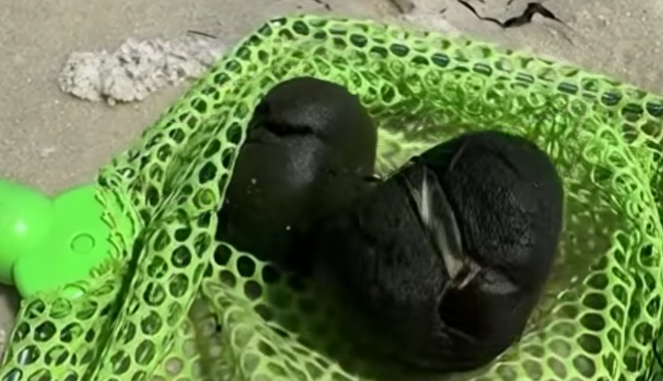
Mysterious Beach Discoveries Lead to a Fascinating Natural Explanation: What the Ocean Leaves Behind
A day at the beach is usually filled with simple pleasures. The sound of waves rolling toward the shore, the warmth of sunlight, and the feeling of soft sand beneath your feet create an atmosphere that encourages people to slow down and enjoy nature.
For children, a visit to the beach can be even more exciting. Every walk along the shoreline becomes an opportunity to discover something new. A colorful shell, an unusual stone, a piece of seaweed, or a strange object washed ashore can quickly become the highlight of the day.
But sometimes, the ocean leaves behind something so unusual that even adults stop to take a closer look.
Coastal beaches are constantly changing. Waves, tides, currents, wind, and marine life work together to transport materials from one location to another. As a result, objects that were once hidden beneath the water can suddenly appear on the sand.
Some discoveries are beautiful, some are mysterious, and others reveal fascinating details about the natural world.
What looks unusual at first may actually have a perfectly reasonable scientific explanation.
Understanding these discoveries can turn an ordinary beach visit into an educational adventure. It also helps us appreciate how much activity takes place beneath the ocean’s surface, even when the water appears calm.
In this article, we explore some of the most interesting natural objects people encounter along coastlines, explain how they arrive on beaches, and share useful tips for exploring the shoreline safely.
1. Why Do Unusual Objects Appear on Beaches?
The ocean is constantly moving.
Even on a sunny afternoon when the water looks peaceful, currents beneath the surface may be transporting sand, shells, plants, and other materials over considerable distances.
Waves carry these objects toward the coastline, while changing tides determine which areas become exposed.
This process is one of the main reasons beaches can look different from one day to the next.
After a storm, for example, a shoreline may contain objects that were previously buried beneath sand or located farther offshore.
Strong waves can move larger pieces of natural material, while gentle water movements gradually collect smaller objects in certain areas.
Several natural processes contribute to these discoveries:
- Tides: Changing water levels expose different parts of the shoreline.
- Ocean currents: Moving water transports floating and suspended materials.
- Storms: Strong waves can uncover objects buried beneath sand.
- Wind: Air movement carries lightweight materials along beaches.
- Erosion: Natural coastal processes expose buried rocks, shells, and geological features.
- Marine activity: Organisms such as shellfish, crabs, and other sea creatures leave behind recognizable remains.
These processes happen continuously, although their effects may become especially noticeable after unusual weather conditions.
2. Beautiful Shells That Tell a Story
One of the most familiar beach discoveries is a seashell.
Children often enjoy collecting shells because they come in different shapes, sizes, patterns, and colors.
Some are smooth and rounded, while others have ridges, spirals, or intricate markings.
But shells are more than attractive objects.
They are the protective structures produced by certain marine animals, particularly mollusks such as snails and clams.
As these animals grow, their shells develop distinctive shapes and patterns.
When the animal dies or leaves an empty shell behind, waves and currents may carry it toward the shore.
Over time, movement through sand and water can smooth the shell’s surface.
This explains why some beach shells have rounded edges while others retain sharp details.
The condition of a shell can also provide clues about how long it has been exposed to coastal conditions.
Freshly washed-up shells may retain their original colors, while older specimens may appear faded or worn.
However, an empty shell should not automatically be assumed to be abandoned. Some living marine animals use shells for protection.
A good rule is to observe rather than remove anything that may still be occupied.
3. Strange Seaweed Formations Along the Shore
Another common discovery is a large collection of seaweed deposited along the waterline.
After strong winds or storms, beaches may contain thick layers of marine plants.
For someone unfamiliar with coastal ecosystems, these formations may appear unusual or even mysterious.
In reality, seaweed plays an important role in marine environments.
Many types of seaweed grow attached to rocks or other underwater surfaces.
When sections become detached, waves and currents can transport them across the water.
Eventually, some of this material washes ashore.
Seaweed deposits provide food and shelter for various small coastal organisms.
They can also help contribute organic material to beach ecosystems.
However, large accumulations may sometimes create unpleasant smells as the material decomposes.
The amount of seaweed found on a beach can vary considerably depending on the season, water conditions, and local marine environment.
Some coastlines experience predictable seasonal increases in seaweed, while others receive larger deposits after storms.
Although seaweed may look messy, it is part of a natural coastal cycle.
4. Unusual Stones and Rocks Hidden Beneath the Sand
Not every interesting beach discovery comes from marine life.
Sometimes, the most fascinating objects are geological formations.
Beaches contain rocks that have traveled through rivers, streams, glaciers, and ocean environments over long periods.
Some stones begin their journey far inland before eventually reaching the sea.
As they move through water, rocks may collide with other materials.
This gradual process can smooth rough edges and create rounded shapes.
Different minerals produce different colors and textures.
For example:
- Quartz may appear white, transparent, or pink.
- Basalt is often dark gray or black.
- Sandstone may display shades of red, brown, or yellow.
- Granite can contain several contrasting mineral colors.
- Jasper may show attractive reddish, green, or brown patterns.
Some stones develop unusual shapes because of differences in hardness and erosion.
A rock that appears almost perfectly rounded may have been shaped by years of movement through water.
Other unusual formations may result from natural fractures, mineral deposits, or weathering.
These discoveries provide a wonderful opportunity to introduce children to geology.
Instead of simply collecting every interesting stone, families can compare colors, textures, and shapes and try to understand how the rocks formed.
5. Could That Strange Object Be a Piece of Coral?
In tropical and subtropical coastal regions, visitors may occasionally encounter coral fragments along the beach.
Coral is produced by tiny marine animals called coral polyps.
Over time, these organisms build hard calcium carbonate structures that form coral colonies and reefs.
When sections become damaged by waves, storms, or natural processes, fragments may become detached.
Currents can transport these pieces toward the shoreline.
Coral fragments often have intricate patterns and porous structures.
Some resemble small branches, while others look like unusual stones.
Their appearance can make them particularly interesting to beach visitors.
However, coral reefs are important ecosystems, and living coral should never be disturbed.
In many locations, collecting coral or removing marine material is restricted or prohibited.
Even dead coral fragments may be protected under local environmental regulations.
The best approach is to photograph unusual specimens and leave them where they are unless local rules clearly permit collection.
6. The Fascinating World of Sea Glass
One of the most beautiful objects found along certain beaches is sea glass.
Unlike natural shells or rocks, sea glass usually begins as discarded glass that has entered the marine environment.
Over time, waves, sand, and other materials gradually wear away its sharp edges.
The glass becomes smoother and develops a frosted appearance.
Common colors include green, brown, and clear, although blue, turquoise, and other shades are also possible.
The color often depends on the original glass product.
For example, green and brown pieces may come from certain bottles, while other colors may originate from older decorative or household glass.
Sea glass is a fascinating example of how environmental processes can transform discarded material.
However, it is important to remember that it originally came from pollution.
Rather than viewing glass litter as harmless, beach visitors should support responsible waste disposal and coastal cleanup efforts.
If you find broken glass that is sharp or dangerous, do not handle it with bare hands.
Report hazardous litter to the appropriate beach-management authority.
7. Strange Jelly-Like Objects on the Sand
Occasionally, beach visitors encounter transparent or jelly-like objects that look unfamiliar.
Some may be jellyfish, while others could be marine organisms or gelatinous remains transported by currents.
Jellyfish are soft-bodied marine animals that spend much of their lives drifting through the water.
Some species have tentacles containing specialized cells that can deliver stings.
When jellyfish wash ashore, they may appear harmless because they are no longer swimming.
However, some species can still cause painful reactions even after being stranded.
This is why children should never touch unfamiliar jelly-like objects.
Not every transparent marine object is a jellyfish, and identification can be difficult.
The safest approach is to observe from a distance.
If a beach has posted warnings about jellyfish, follow the instructions provided by local authorities.
8. Why Do Beaches Sometimes Contain Hundreds of Tiny Shells?
A beach covered in tiny shells can be a remarkable sight.
These small objects may belong to different species of mollusks and other marine organisms.
Waves gradually sort materials according to their size, weight, and shape.
Smaller shells may collect in narrow bands along the waterline.
Heavier shells and stones may remain in different areas.
This sorting process can create distinctive patterns in the sand.
After storms, large collections of shells may appear almost overnight.
The phenomenon is particularly interesting because each shell represents a small part of the coastal ecosystem.
Looking closely, visitors may notice that the shells are not all identical.
Some have spiral structures.
Others are flat and rounded.
Some display delicate ridges, while others have smooth surfaces.
These differences reflect the remarkable diversity of marine life.
9. The Role of Storms in Revealing Hidden Beach Treasures
Storms can dramatically change the appearance of a coastline.
Strong waves move sand, uncover buried materials, and transport objects from offshore areas.
A beach that looked ordinary the previous afternoon may appear completely different after severe weather.
This happens because storms increase wave energy and can significantly alter sediment movement.
Some beaches lose sand during storms, while others receive deposits from nearby areas.
The effects depend on local geography, underwater formations, wave direction, and weather conditions.
Storms may expose:
- Buried rocks.
- Old shells.
- Natural wood fragments.
- Seaweed deposits.
- Fossil-bearing sediment.
- Unusual geological formations.
However, beach exploration after severe weather requires caution.
Strong currents, unstable sand, damaged structures, and unexpected waves can create dangerous conditions.
Visitors should wait until authorities declare an area safe.
The most interesting discovery is never worth risking personal safety.
10. Could an Unusual Beach Discovery Be a Fossil?
Some coastlines contain rocks and sediment that preserve evidence of ancient life.
Fossils are the preserved remains, impressions, or traces of organisms from the past.
They may include shells, bones, plant impressions, or other biological structures.
Over geological time, sediment can accumulate around remains.
Under suitable conditions, these materials may become preserved within rock.
Coastal erosion can gradually expose fossil-bearing layers.
As waves remove surrounding sediment, previously hidden fossils may become visible.
Some discoveries are small and difficult to recognize.
Others display clear patterns that resemble shells, leaves, or animal structures.
If you encounter something that might be a fossil, avoid damaging it.
Photograph the object and note its location.
In areas where collecting is restricted, leave the specimen untouched.
A local museum, geological society, or university department may be able to help with identification.
Fossils are valuable because they provide evidence about Earth’s history and the organisms that lived millions of years ago.
11. How Ocean Currents Move Objects Across the World
One of the most fascinating aspects of beach discoveries is that an object found on one coastline may have traveled a considerable distance.
Ocean currents are large-scale movements of seawater driven by several factors, including wind, temperature differences, salinity, and Earth’s rotation.
These currents help distribute heat around the planet and influence marine ecosystems.
They also transport floating materials.
For example, naturally occurring driftwood may travel along a coastline before reaching a distant beach.
Certain floating seeds can also move across oceans.
Some plant species have seeds adapted to survive periods in seawater.
This allows them to disperse over long distances.
However, ocean currents also transport human-made waste, including plastic bottles, fishing equipment, and other debris.
These materials can accumulate in coastal environments and create serious problems for marine animals.
Understanding ocean currents helps explain why beaches contain such a diverse mixture of natural and human-made objects.
It also highlights the importance of reducing plastic pollution.
12. Driftwood: Nature’s Sculptures
Driftwood is another common and visually interesting beach discovery.
It consists of wood that has been transported by rivers, tides, waves, or ocean currents.
Over time, exposure to water, sunlight, sand, and weather gradually changes its appearance.
The surface may become smooth and pale.
Branches may develop unusual shapes.
Large pieces can resemble sculptures created by an artist.
Driftwood can provide shelter for small coastal organisms and contribute to the natural structure of certain beach environments.
In some locations, it also plays a role in reducing erosion by helping trap sand.
Although driftwood may look like an attractive souvenir, collecting it is not always permitted.
Some protected beaches rely on natural wood deposits as part of their ecosystem.
Before taking anything home, check local regulations.
Photographing an unusual piece of driftwood is often the best way to preserve the memory without disturbing the environment.
13. What Beach Discoveries Teach Children About Nature
A walk along the shoreline can become an excellent learning experience.
Children naturally enjoy asking questions about unfamiliar objects.
Why is this shell shaped like a spiral?
How did that stone become so smooth?
Why is the seaweed lying in long lines?
Where did that piece of wood come from?
These questions create opportunities to introduce scientific ideas in a simple and enjoyable way.
Parents can encourage children to observe patterns and compare different materials.
For example, they can discuss