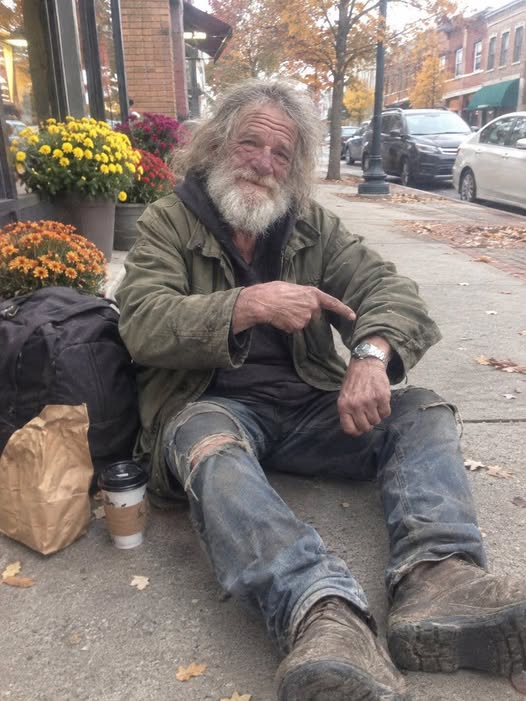
My name is Ray Medina, and I am fifty-two years old.
Twenty years ago, I was a young man working long hours washing dishes in a small restaurant. I earned just six dollars an hour, came home exhausted, and often wondered whether I would ever have the opportunity to build something of my own.
Today, I own a restaurant called Dolly’s.
I named it after my late mother, a woman who dedicated thirty-eight years of her life to working as a waitress. She taught me that a restaurant should be more than a place where people purchase food. It should be somewhere everyone feels welcome, regardless of their financial situation or background.
For many years, that was exactly what Dolly’s represented.
Customers returned because they enjoyed the food, recognized the employees, and appreciated the friendly atmosphere.
But recently, something had changed.
Longtime customers were disappearing, complaints were increasing, and the welcoming atmosphere my mother had worked so hard to create seemed to be fading.
I initially thought it was a temporary business problem.
I was wrong.
The Complaints That Made Me Question My Own Restaurant
Over several months, I began receiving unusual comments from people who had been visiting Dolly’s for years.
Some said employees had become unfriendly.
Others complained about uncomfortable interactions when asking simple questions about the menu or prices.
A few longtime customers told me they no longer felt comfortable bringing their families.
Nobody described one major incident.
Instead, they spoke about several small experiences that had gradually changed their opinion of the restaurant.
I was concerned.
Dolly’s had been built around the idea that every customer deserved respect.
I remembered my mother’s words whenever I faced a difficult business decision.
She always said that people might forget the food they ate, but they would remember how they were treated.
I wanted to understand what was happening.
Then, one evening, Hector, one of our longest-serving cooks, approached me.
“Ray, there’s something you need to see.”
I looked at him.
“What do you mean?”
He hesitated before answering.
“You need to come in when nobody recognizes you. See how people are treated when they don’t look like they can afford an expensive meal.”
His words stayed with me throughout the night.
The following morning, I decided to investigate personally.
Preparing for an Unusual Visit
On Thursday, I visited a nearby thrift store.
I purchased an old jacket with a damaged pocket, faded jeans, and a pair of worn shoes.
I left my expensive watch at home and avoided wearing anything that might identify me as the owner of Dolly’s.
I also brought four dollars in loose change.
I wanted to experience the restaurant from the perspective of someone who might not have much money to spend.
I was not interested in creating an argument or embarrassing anyone.
I simply wanted to see whether my employees treated every visitor with the same courtesy.
Shortly after noon, I approached the familiar glass entrance.
The small bell above the door rang.
I had installed that bell myself eleven years earlier.
For a moment, I remembered my mother standing behind the counter, greeting customers with her familiar smile.
Then I stepped inside.
The First Employee Who Refused to Help
At the hostess station stood a young employee named Brittany.
She was looking at her phone when I approached.
“Excuse me,” I said politely. “Would it be possible to get a glass of water and perhaps a little soup? I only have four dollars.”
She looked up.
Her eyes moved from my jacket to my shoes.
Her expression changed almost immediately.
“Sorry. We’re completely booked.”
I glanced toward the dining room.
Several tables were empty.
I politely asked whether those seats were reserved.
Brittany responded sharply.
“You should try somewhere cheaper.”
I stood quietly for a moment.
I couldn’t believe what I was hearing.
This was the restaurant I had spent years building.
My mother’s photograph was hanging only a few feet away.
Yet an employee I had personally hired was making someone feel unwelcome simply because of his appearance.
I was preparing to leave when another voice interrupted.
The Young Waitress Who Remembered What Kindness Meant
“Sir, please wait.”
I turned around.
A young waitress named Josie had stepped out of the kitchen.
She looked at me and smiled.
“Are you hungry?”
I nodded.
“Yes, ma’am.”
“Then come with me. There’s a nice table by the window.”
Brittany immediately objected.
“Josie, those seats are reserved!”
Josie glanced at the empty dining area.
“Then perhaps you can show me who reserved them.”
Brittany didn’t respond.
Josie guided me to a comfortable table near the window.
A few minutes later, she returned with a generous bowl of chicken-and-dumpling soup, fresh bread, and a cup of coffee.
She carefully placed everything in front of me.
“Here you go, sir. Enjoy your lunch.”
I reached into my pocket and placed my four dollars on the table.
Josie gently pushed the money back.
“Please keep it. Today’s meal is on me.”
I looked at her.
“But I don’t have enough to pay for all this.”
She smiled.
“That’s all right. Someone helped me when I was struggling, and I promised myself I would do the same for another person someday.”
Her words touched me deeply.
My mother had spent almost four decades serving people.
She believed that a warm meal could mean much more to someone than the price printed on a menu.
Watching Josie show that same kindness reminded me why I had named the restaurant after her.
For a moment, I felt proud.
Unfortunately, that moment didn’t last long.
The General Manager Who Turned a Simple Lunch Into a Confrontation
The kitchen door suddenly opened.
Trevor Hollister, our general manager, walked quickly toward my table.
Brittany was following behind him.
Trevor looked at the food in front of me and then turned toward Josie.
“What exactly is going on here?”
Josie explained that I had come in looking for something to eat and that she had offered me a meal.
Trevor immediately asked whether I had paid.
Josie explained that she intended to cover the cost herself.
He shook his head.
“Josie, how many times do I have to explain this? We’re running a restaurant, not a charity.”
“It’s just one meal,” she replied.
Trevor looked irritated.
“One meal today, another tomorrow. We have customers to think about.”
Several diners turned toward our table.
I lowered my head and tried to keep the situation calm.
“Sir, I’m not causing any trouble. I only wanted something warm to eat.”
Trevor stepped closer.
“Then you came to the wrong place.”
Before I could respond, he took hold of my arm and told me to leave.
I tried to explain that there was no reason to make a scene.
But he continued guiding me toward the entrance.
Josie protested.
“Trevor, please stop. He hasn’t done anything wrong.”
He ignored her.
I stumbled slightly as my worn shoe caught the edge of the carpet.
And that was when I noticed something unusual happening at the hostess counter.
The Strange Activity Behind the Payment Counter
An elderly woman was standing near the register.
She was one of the customers I recognized from previous years.
Brittany was helping her complete a payment.
The woman handed over her credit card.
Rather than immediately processing the transaction through the usual payment terminal, Brittany briefly moved the card beneath the counter.
I noticed a small black electronic device partially hidden from view.
She appeared to use it before completing the customer’s payment through the regular system.
The entire movement lasted only a moment.
I couldn’t determine exactly what the device was or what it was being used for.
However, the way the transaction was handled raised serious concerns.
I had spent years working in the restaurant business.
I understood that payment procedures needed to be transparent and that customers’ financial information had to be protected.
I watched Brittany finish the transaction.
Then I noticed Trevor looking toward her.
His expression changed.
For a brief moment, the confidence he had displayed earlier disappeared.
He looked concerned.
That reaction made me pay even closer attention.
Was the device part of an approved payment system?
Was there an explanation for why it was hidden?
Or had I just witnessed something that required a closer investigation?
I didn’t know yet.
But I knew I couldn’t ignore what I had seen.
The Moment I Realized the Problem Might Be Bigger
Trevor continued insisting that I leave.
He eventually pushed the door open and directed me outside.
I stepped onto the sidewalk and regained my balance.
Behind me, I could hear him laughing.
“Don’t bother coming back!”
I didn’t respond.
Instead, I looked through the restaurant window.
Josie was still standing near the dining area.
Brittany had returned to her station.
Trevor was speaking to someone near the kitchen.
Suddenly, several earlier complaints began making sense.
The longtime customers who had stopped visiting.
The people who had mentioned uncomfortable payment experiences.
The elderly regulars who no longer trusted the restaurant.
I had entered Dolly’s expecting to discover that certain employees were treating less fortunate customers unfairly.
Instead, I had witnessed something that raised questions about the way financial transactions were being handled.
I could not make accusations without evidence.
But I knew that the situation deserved immediate attention.
A Decision to Protect the Customers and the Restaurant
I reached inside my jacket and touched my cellphone.
I considered calling Hector first, but I decided that the situation required a more careful approach.
My priority was to protect customers and preserve any information that could help establish what had happened.
I made notes about the time of the incident, the people involved, and what I had personally observed.
I also decided that the restaurant’s payment records and procedures needed an independent review.
If the device was legitimate, the investigation would establish that.
If something improper was happening, I wanted the facts documented and handled through the proper authorities.
I had built Dolly’s over twenty years.
I had worked too hard to allow dishonest practices or disrespectful treatment to damage the reputation my mother had inspired me to create.
But there was another person I was thinking about.
Josie.
She had been the only employee who treated me with genuine kindness.
I wondered whether she had experienced pressure for helping customers who could not afford a full meal.
I also wondered whether other employees had noticed the unusual activity at the register.
There were questions that needed answers.
What I Planned to Do Next
Before returning to the restaurant, I contacted my legal adviser and explained what I had witnessed.
I also discussed the situation with the appropriate authorities so that the unusual payment activity could be assessed properly.
I wanted to avoid confronting anyone without understanding the facts.
A business owner has a responsibility to protect customers, employees, and the integrity of the company.
That responsibility becomes even more important when vulnerable customers may be involved.
I planned to review the restaurant’s financial records, examine its payment procedures, and speak privately with employees who might have useful information.
I also wanted to make sure Josie was not treated unfairly for showing compassion to someone who needed help.
My mother’s photograph still hung near the entrance.
I remembered the promise I had made when I first opened Dolly’s.
I had wanted to create a place where people could enjoy a meal without worrying about being judged by their appearance or financial circumstances.
That promise still mattered.
Final Thoughts: A Restaurant Is About More Than the Food It Serves
Running a successful restaurant requires more than good recipes, attractive surroundings, and satisfied customers.
It requires trust.
Customers should feel comfortable knowing that their money and personal information are being handled responsibly.
Employees should understand that kindness and professionalism are just as important as efficiency.
And people who are experiencing financial difficulties should never be treated as though they have less dignity than anyone else.
My unexpected visit to Dolly’s taught me something important.
Sometimes, the biggest problems inside a business are not visible in its financial reports or daily sales figures.
They become visible when someone takes the time to observe what happens when management is not watching.
I entered my own restaurant hoping to understand why longtime customers had stopped coming.
I left with a much more serious set of questions.
And before I made another decision, I intended to find out exactly what was happening behind that counter.