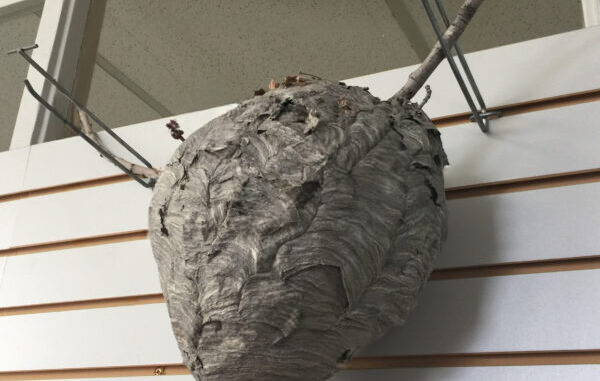
A Strange Rattling Sound in Our Wall Kept Us Awake—Until We Discovered What Was Causing It
For weeks, an unexplained noise disturbed the peace of our home. We checked the obvious places, listened from every room, and tried to convince ourselves it was nothing serious. But when we finally investigated the wall, we discovered a problem we could no longer ignore.
A Noise We Couldn’t Explain
It began on an ordinary evening.
My husband and I were sitting in the living room after dinner when we heard a faint rattling sound coming from somewhere behind the wall near the hallway.
At first, neither of us paid much attention.
Old houses make noises. Pipes expand and contract, wooden floors creak, and the wind sometimes finds its way into small gaps around windows and doors. We assumed the sound was simply another familiar quirk of the house.
Then it happened again.
Rattle. Pause. Rattle.
The noise was not particularly loud, but it was unusual enough to interrupt our conversation. It sounded as though something small were tapping against the inside of the wall.
My husband lowered the television volume.
“Did you hear that?”
I nodded.
We sat quietly for a few moments, waiting for the sound to return.
Nothing happened.
Eventually, we resumed our evening, although I found myself listening more carefully than before.
The following night, the rattling returned shortly after we went to bed.
This time, it seemed to come from the same section of wall, just outside our bedroom. The sound lasted several seconds, stopped, and then started again.
I turned toward my husband.
“That’s the same noise we heard yesterday.”
He sat up and listened.
“It sounds like a pipe,” he said. “I’ll check it tomorrow.”
His explanation seemed reasonable, so I tried to forget about it.
Unfortunately, the noise did not disappear.
Over the following days, it became a familiar part of our evenings. Sometimes we heard it while preparing dinner. Other times, it interrupted a quiet conversation or woke us just as we were drifting off to sleep.
The sound was never exactly the same.
Occasionally, it resembled a light metallic vibration. On other nights, it sounded like a series of quick taps followed by a longer scrape.
We began referring to it as the rattling wall.
It was a convenient name for something neither of us understood.
When the Sound Became Impossible to Ignore
After about a week, the noise started affecting our sleep.
I would lie in bed, staring into the darkness, waiting for the next rattle. Even when the house was silent, I found myself wondering whether I would hear it again.
My husband was less concerned, although his patience was beginning to wear thin.
“Tomorrow,” he promised one morning, “I’m going to find out what that sound is.”
That afternoon, he inspected the hallway.
He pressed his hand against the wall, checked the skirting boards, and looked for anything loose that might be vibrating. He even examined the nearby cupboard and moved a small cabinet away from the wall.
Nothing appeared unusual.
When he tapped the drywall with his knuckles, most of it sounded solid. A small section near the corner produced a slightly different tone, but he could not determine whether that meant anything.
“Could be something behind the plasterboard,” he said.
“Like what?”
“Pipes. Wiring. Maybe something loose.”
He suggested calling a contractor if the noise continued.
For the next two days, we heard nothing.
I began to hope the problem had resolved itself.
Then, late on Friday evening, the rattling returned.
It started with a faint click, followed by a rapid series of vibrations. The noise seemed to move from one part of the wall to another, although it was difficult to tell whether the source was actually moving or whether the sound was simply travelling through the structure.
My husband stood in the hallway and listened.
“There,” he said. “Right behind this section.”
He placed his ear near the wall.
The sound stopped.
We waited.
A few seconds later, it began again.
This time, there was no mistaking the fact that something required attention.
We decided to stop guessing and investigate the possible causes properly.
Our First Attempt to Find the Source
The next morning, my husband gathered a flashlight, a screwdriver, and a small inspection mirror.
Before doing anything invasive, we checked the area around the wall.
We inspected the nearby electrical outlets, examined the baseboards, and looked for signs of moisture, cracks, or damage. We also checked whether any furniture, loose fittings, or objects in the adjoining room could be vibrating.
Everything appeared normal.
The rattling seemed to come from within the wall rather than from something resting against its surface.
We then considered the plumbing.
The wall was close to a bathroom, and pipes can produce a variety of sounds when water is running or when pressure changes. We turned on the taps, flushed the toilet, and listened carefully.
Nothing happened.
We repeated the test later in the afternoon.
Again, the wall remained silent.
That did not completely rule out a plumbing problem, but it made the explanation less convincing.
My husband checked the heating system and listened near the vents. We also switched off a few ordinary household appliances to see whether an electrical device might be responsible.
The noise returned that evening, despite our efforts.
By then, I had begun to wonder whether we needed professional help.
I was less interested in solving a mystery than in making sure there was nothing dangerous hidden behind the wall.
The Detail We Had Overlooked
The following night, I woke shortly after midnight.
At first, I could not remember what had disturbed me. Then I heard it.
A soft, irregular scratching sound came from the hallway.
I sat up and listened.
There were several quick taps, followed by a brief pause. Then came another series of rattles.
I nudged my husband awake.
He listened for a moment before getting out of bed.
We walked into the hallway together.
The sound was clearer there, although it remained difficult to pinpoint. My husband crouched near the baseboard while I held a flashlight.
For a moment, the wall was silent.
Then something made a short, dry scraping noise.
My husband looked toward the corner where the wall met the floor.
“Did you hear that?”
“Yes.”
He moved the cabinet farther away, revealing a narrow gap that we had not examined closely before.
There was a small opening near the baseboard, partly hidden by the furniture.
We had noticed the gap months earlier but assumed it was an ordinary imperfection in the finish. It had never seemed large enough to matter.
Now we wondered whether it might be connected to the noise.
My husband shone the flashlight toward the opening.
He could not see far inside, and we were careful not to put our fingers into it. We had no idea what might be behind the wall, and reaching blindly into an enclosed space would have been unwise.
The rattling stopped.
We waited for several minutes, but it did not return.
Although we had found a possible clue, we still had no reliable explanation.
The next morning, we decided to contact a professional rather than risk damaging the wall ourselves.
A Professional Takes a Closer Look
The contractor arrived two days later.
We explained how long the noise had continued, when it usually occurred, and which section of the wall seemed to be involved.
He listened carefully and asked several questions.
Did the sound occur when water was running? Did it happen when the heating system switched on? Had we noticed any signs of moisture? Was there any evidence of rodents or insects?
We answered as accurately as we could.
He explained that rattling inside a wall can have several causes, including loose pipes, poorly secured ductwork, vibrating electrical components, or animals moving through an opening.
The sound alone was not enough to identify the source.
He began with a visual inspection of the accessible areas and checked the surrounding fittings. He also examined the small gap near the baseboard.
After a few minutes, he straightened up.
“This opening needs a closer look,” he said.
“Do you think something is living inside the wall?” I asked.
“It’s possible, but I wouldn’t assume that yet.”
He explained that the safest next step was to determine what was behind the opening before disturbing anything.
If the problem involved wiring, plumbing, or an animal, opening the wall without understanding the situation could make matters worse.
He recommended a more detailed inspection.
For the first time in weeks, we felt that we were moving toward a real answer.
We had spent so much time trying to interpret the sound that we had nearly forgotten the most important question: what was actually causing it?
What We Found Behind the Wall
The inspection took place the following morning.
After checking the area, the contractor used an inspection camera to examine the space behind the wall through an existing opening.
We stood nearby, waiting for him to explain what he could see.
At first, he said very little.
He adjusted the camera and looked at the display.
Then he turned toward us.
“I think we’ve found the source.”
My husband leaned closer.
“What is it?”
The contractor showed us the image.
Behind the wall was a narrow cavity containing a loose section of lightweight material. Near it, there were signs that a small animal had been moving through the space.
The contractor explained that the cavity connected to a gap near the exterior of the house. An animal could have entered through that opening and found shelter inside the wall.
The repeated scratching and rattling were consistent with movement in the confined space.
We looked at each other.
After weeks of wondering whether something was wrong with the plumbing or the electrical system, the explanation was both simpler and more surprising than we expected.
An animal appeared to have found its way into the wall cavity.
The contractor could not identify the animal from the initial inspection alone. He explained that different animals can produce similar noises, and he wanted to examine the entry point and any available signs before making a more specific identification.
He also warned us not to seal the opening immediately.
If an animal were still inside, closing the entrance could trap it. The appropriate response would depend on the species, whether young were present, and the layout of the cavity.
We agreed to let the professionals determine the safest way to resolve the problem.
Why Animals Sometimes Enter Houses
It may seem strange that an animal would choose a wall as a hiding place, but buildings can offer shelter from weather, predators, and temperature changes.
Small gaps around roofs, vents, foundations, and utility openings can provide access to spaces that people rarely inspect.
Depending on the location, animals may enter wall cavities, attics, crawl spaces, or areas beneath floors.
Some seek warmth during colder periods. Others may be looking for a sheltered place to rest or nest.
The resulting noises can vary.
Scratching may indicate movement across a rough surface. Light tapping can occur when an animal contacts pipes, timber, or other materials. A loose object may vibrate as the animal moves past it.
However, similar noises can also come from ordinary building systems.
Pipes can expand and contract. Ductwork may vibrate when air moves through it. Loose fittings can rattle when equipment operates.
That is why it is important not to assume that every unusual noise means an animal is present.
A careful inspection can help distinguish between these possibilities.
If there are signs of an animal, the appropriate response depends on the species and local regulations. Some wildlife may require specialist handling, and certain methods of removal may be unsafe or unlawful.
Professional advice can help prevent injury to people, unnecessary harm to animals, and damage to the property.
Solving the Problem Safely
Once the inspection was complete, the contractor explained the next steps.
First, the animal’s presence and the route it had used needed to be established. The entry point could then be addressed appropriately, after confirming that no animal remained inside.
Any damaged insulation or building material would need to be examined and repaired as necessary.
Finally, the opening would be secured to reduce the chance of another animal entering.
We followed the recommendations rather than attempting to handle the situation ourselves.
It was tempting to rush through the process simply because we wanted the noise to stop. But we understood that sealing the gap too early could create another problem.
The contractor also advised us to check other potential entry points around the building.
Small openings near pipes, vents, and exterior fittings can sometimes go unnoticed for years. A routine inspection can identify areas that may need maintenance.
We made a list of the locations that required attention and arranged to have them checked.
It was a practical solution, although we wished we had taken the problem seriously sooner.
For weeks, we had lost sleep while trying to interpret every sound. We could have arranged an inspection much earlier instead of repeatedly guessing at the cause.
Still, the experience taught us something useful.
When an unexplained household problem persists, a methodical inspection is usually more helpful than speculation.
The First Quiet Night in Weeks
Several days later, the work was complete.
The affected area had been inspected, the suspected entry route had been dealt with appropriately, and the damaged section was repaired.
That evening, we sat in the living room after dinner.
The television was playing softly. A lamp illuminated the corner of the room, and the house felt as familiar as it had before the rattling began.
I realized that I was listening for the noise.
For weeks, I had become accustomed to anticipating it. Every little click made me look toward the hallway, and every creak prompted me to pause whatever I was doing.
But nothing happened.
My husband glanced at me.
“It’s quiet.”
I smiled.
“Finally.”
We sat together for a while, enjoying the absence of the sound that had occupied so much of our attention.
Later, when we went to bed, I found that I could relax without waiting for the next interruption.
The following morning, I woke naturally, without having been disturbed during the night.
The house was not perfectly silent. No home ever is. The heating system hummed, the floor creaked when we walked across it, and the wind moved through the trees outside.
But the unexplained rattling was gone.
And that was enough.
What the Experience Taught Us
Looking back, the most frustrating part was not the noise itself.
It was the uncertainty.
A sound that lasted only a few seconds could occupy our thoughts for an entire evening. We imagined loose pipes, electrical problems, damaged insulation, and a dozen other explanations.
Each possibility seemed plausible, but none could be confirmed simply by listening.
The experience reminded us that houses are complex structures. Behind the walls are pipes, wires, framing, insulation, and spaces that can be difficult to inspect without the right equipment.
A small problem in one of those areas can produce a surprising amount of noise.
It also reminded us that unusual sounds should be approached with patience and care.
If a wall begins rattling repeatedly, it is sensible to note when the sound occurs and whether it appears connected to running water, heating equipment, ventilation, or movement elsewhere in the building.
A short recording can sometimes help a contractor understand the nature of the noise.
It is also wise to look for visible signs of damage, moisture, or animal activity