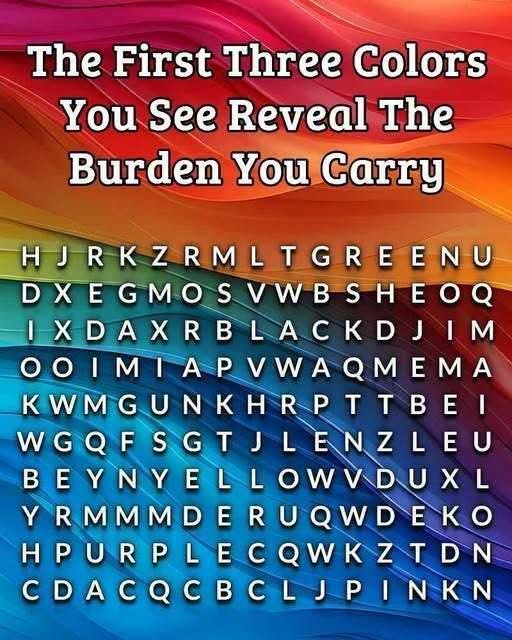
Have you ever noticed that certain colors seem to attract your attention before anything else? Perhaps your eyes immediately move toward a bright red object, a peaceful shade of blue, or a soft green landscape. Although these reactions may seem ordinary, they can offer an interesting opportunity to reflect on your preferences, memories, and emotional experiences.
Colors are part of our everyday lives. They appear in the clothes we wear, the rooms where we spend our time, the places we visit, and the images we encounter on our phones. Sometimes, a particular shade makes us feel energized. Another may remind us of a peaceful afternoon, a special person, or a difficult period we would rather leave behind.
This is one reason color-based personality quizzes have become popular online. They invite people to look at a set of colors, choose the first few that catch their attention, and consider what those choices might say about their inner world.
But there is an important distinction to understand: the first three colors you notice cannot reliably reveal your personality, diagnose an emotional problem, or prove that you are carrying a particular psychological burden. Your choices may depend on personal taste, lighting, cultural associations, recent experiences, or simply the way the colors are arranged.
Still, a color-selection exercise can be a useful starting point for self-reflection. Rather than treating it as a scientific test, think of it as an invitation to pause and ask yourself what you have been feeling lately.
Why Certain Colors Catch Our Attention
Color perception involves both our visual system and the way we interpret what we see. Brightness, contrast, surrounding objects, and individual preferences can all influence which colors stand out.
Our experiences can also shape the meanings we associate with particular shades.
For one person, blue may bring back memories of a relaxing holiday near the sea. For another, it might remind them of a school uniform or a place where they spent an important part of childhood.
Red might suggest celebration, romance, or determination to one individual, while someone else may associate it with warnings, pressure, or difficult memories.
These differences demonstrate why color meanings are not universal.
If you are curious about the first three colors you notice, consider the following descriptions as reflective prompts rather than fixed personality labels. You don’t have to agree with every interpretation. The most useful meaning is the one that genuinely connects with your own experience.
1. Red: Energy, Pressure, and the Desire to Move Forward
<AsyncImage query=”rich red abstract flowing fabric warm dramatic light” aspectRatio=”16:9″ width=”100%”/>
Red is a strong, attention-grabbing color. It appears in traffic signals, warning signs, sports uniforms, celebrations, and countless forms of art and design.
Because red is visually prominent, people often associate it with energy, passion, urgency, courage, or intensity.
If red is one of the first colors you notice, you might use that observation to reflect on the role of energy and pressure in your life.
Have you been trying to accomplish several things at once? Are you working toward an important goal? Perhaps you have been waiting for an opportunity to make a change but haven’t yet found the confidence or time to begin.
These are questions worth considering, but your preference for red does not establish that any of these situations applies to you.
Sometimes, the color simply appeals to you aesthetically.
As a reflection exercise, ask yourself whether your current pace of life feels sustainable. You may be enthusiastic about your goals but still need rest. You may feel motivated to take action while also recognizing that some decisions require patience.
A question to consider: Where would a little more confidence help you, and where might slowing down be the wiser choice?
The purpose is not to label yourself as an intense or ambitious person because you noticed red first. It is to use the association as a reminder to examine how you are managing your energy.
2. Blue: Calm, Reflection, and the Need for Breathing Room
<AsyncImage query=”serene deep blue ocean horizon soft morning light peaceful seascape” aspectRatio=”16:9″ width=”100%”/>
Blue is often associated with water, open skies, quiet spaces, and a sense of calm. Many people find blue pleasant because it reminds them of environments where they can pause and collect their thoughts.
However, the emotional meaning of blue varies from person to person. Some people associate it with peace and stability, while others connect it with sadness, distance, or loneliness.
If blue catches your attention, you might use it as an opportunity to consider how much space you have for rest and reflection in your daily routine.
Modern life can make it difficult to slow down. Messages arrive throughout the day, responsibilities compete for attention, and people often feel pressure to remain available to everyone around them.
Over time, this constant activity can make it harder to recognize what you need.
You might be balancing work, family commitments, friendships, and personal goals while postponing the activities that help you feel refreshed.
If that sounds familiar, consider whether you have enough time to relax without feeling guilty.
Rest does not have to mean taking an expensive holiday or changing your entire schedule. It can be as simple as enjoying a quiet meal, taking a walk, reading a book, or spending a few minutes away from your phone.
If blue reminds you of calmness, let that association encourage you to make room for more restorative moments.
A question to consider: When was the last time you gave yourself permission to rest without worrying about everything that still needed to be done?
Your answer may tell you more about your current needs than the color itself.
3. Green: Growth, Balance, and New Possibilities
<AsyncImage query=”lush green forest sunlight filtering through leaves tranquil nature path” aspectRatio=”16:9″ width=”100%”/>
Green is closely associated with plants, forests, gardens, and the natural world. It can bring to mind renewal, growth, balance, and fresh beginnings.
Many people enjoy spending time in green spaces because natural environments can provide opportunities for relaxation and physical activity.
If green is one of the first colors you notice, you might reflect on whether you feel satisfied with the balance in your life.
Perhaps you are entering a new stage, learning a skill, rebuilding a routine, or considering a change in your personal or professional life.
Growth often happens gradually. It may involve making small adjustments rather than taking dramatic steps.
For example, someone who feels overwhelmed at work might begin by setting clearer boundaries around their schedule. A person who wants stronger relationships might make more time for honest conversations. Someone who has neglected a personal interest might decide to return to it for an hour each week.
None of these possibilities can be inferred from a preference for green. Instead, they are examples of how the symbolism of growth can inspire useful questions.
A question to consider: What is one small change that could help you feel more balanced or more connected to the life you want to build?
You don’t need to transform everything at once. Sometimes, a sustainable improvement is more valuable than a dramatic decision that is difficult to maintain.
4. Yellow: Optimism, Curiosity, and Mental Stimulation
<AsyncImage query=”golden yellow wildflowers glowing in warm afternoon sunshine” aspectRatio=”16:9″ width=”100%”/>
Yellow often brings to mind sunlight, flowers, warmth, and bright summer days. In many settings, it is used to attract attention or create a cheerful visual impression.
For some people, yellow represents happiness and optimism. Others may find it overwhelming when used in large amounts or associate it with caution because of its use in signs and signals.
If yellow stands out to you, consider whether you have been making enough room for activities that spark your curiosity.
Daily responsibilities can make life feel repetitive. You may spend so much time meeting obligations that you rarely try something simply because it interests you.
A new hobby, a creative project, a conversation with someone whose perspective differs from yours, or a visit to an unfamiliar place can provide a welcome change of pace.
You do not have to feel cheerful every day to appreciate positive experiences. Difficult emotions and enjoyable moments can exist together.
A question to consider: What is something you would enjoy exploring if you gave yourself permission to be a beginner?
Allowing yourself to experiment can make everyday life feel more engaging, regardless of which color initially caught your attention.
5. Purple: Imagination, Individuality, and Personal Meaning
<AsyncImage query=”soft purple lavender flowers in a peaceful field at sunset” aspectRatio=”16:9″ width=”100%”/>
Purple has a long history of use in art, clothing, decoration, and cultural traditions. Depending on the setting, it may suggest creativity, elegance, mystery, spirituality, or individuality.
Its associations are shaped by history and culture rather than by a single universal psychological meaning.
If purple attracts your attention, you might reflect on how much room you have for creative expression.
Do you enjoy writing, painting, music, photography, cooking, or another activity that allows you to experiment with ideas? Have you recently put aside an interest because you felt you needed to focus on more practical responsibilities?
Creative activities can offer a way to explore thoughts and feelings without needing to explain everything in words.
They can also be enjoyable simply because they provide an opportunity to make something.
You don’t need to be talented or experienced to benefit from creative exploration. The process itself can be rewarding.
A question to consider: Is there a part of yourself that you would like to express more freely?
Your answer may help you identify an interest worth making time for.
6. Black: Boundaries, Simplicity, and the Desire for Privacy
<AsyncImage query=”minimalist black and charcoal interior with soft natural light elegant design” aspectRatio=”16:9″ width=”100%”/>
Black is used in many different contexts, from formal clothing and modern design to art and photography. It can communicate simplicity, sophistication, seriousness, or contrast.
Some people prefer black because it is versatile and easy to combine with other colors. Others appreciate the visual clarity of minimalist spaces.
If black is one of the first colors you notice, you could use it as a prompt to reflect on boundaries and privacy.
Perhaps you have been giving too much of your time to other people. Maybe you need to decide which commitments deserve your attention or create a more manageable schedule.
Setting boundaries does not mean rejecting everyone around you. It means recognizing your limits and communicating them respectfully.
You can care about people while also acknowledging that you cannot meet every request.
A question to consider: Where would a clearer boundary help you protect your time, energy, or peace of mind?
Remember that choosing black does not mean you are withdrawn, unhappy, or emotionally distant. It may simply be a color you enjoy.
7. White: Clarity, Simplicity, and a Fresh Perspective
<AsyncImage query=”bright white minimalist room soft morning sunlight peaceful clean interior” aspectRatio=”16:9″ width=”100%”/>
White is frequently associated with simplicity, openness, cleanliness, and new beginnings. It is commonly used in minimalist design because it can make spaces appear brighter and less visually crowded.
For some people, white suggests a fresh start. For others, it may feel plain or difficult to maintain in everyday environments.
If white catches your attention, consider whether there is an area of your life where you would appreciate greater clarity.
You might have several competing priorities or a decision that has remained unresolved for too long. Perhaps you have been holding on to commitments that no longer fit your circumstances.
Taking time to organize your thoughts can make a complicated situation easier to approach.
You could write down the decision you are facing, identify the information you still need, and separate what you can control from what you cannot.
You do not have to solve everything immediately.
A question to consider: What would become easier if you gave yourself time to step back and look at the situation more clearly?
A preference for white cannot predict a new beginning, but the symbolism may help you frame a useful reflection.
What Do Your First Three Colors Really Mean?
After considering these colors, think about the three that attracted your attention first.
Did you choose colors that reminded you of nature, warmth, energy, or quiet spaces? Did your choices bring back a memory? Did one shade make you think of a person or a period in your life?
These personal associations can make the exercise meaningful.
However, there is no established psychological rule that says a particular combination of three colors reveals a hidden burden. The order in which you notice colors cannot determine whether you are anxious, unhappy, confident, lonely, or emotionally exhausted.
If you are experiencing stress, the most useful approach is to examine your actual circumstances and feelings rather than relying on a color quiz.
You might ask yourself:
- What has been taking up most of my mental energy recently?
- Which responsibilities feel manageable, and which feel overwhelming?
- Have I been getting enough sleep, rest, and time with people I trust?
- Is there a conversation or decision I have been avoiding?
- What is one realistic step I could take to improve my situation?
You don’t need to answer every question at once. Even a few minutes of honest reflection can help you identify what deserves your attention.
If your emotional difficulties persist or begin interfering with daily life, consider speaking with a qualified mental health professional or another trusted healthcare provider.
A Final Thought: Your Feelings Deserve More Than a Color Test
Color-based quizzes can be entertaining and may encourage people to think about their preferences in a new way. They can also offer a simple starting point for conversations about emotions, personal experiences, and the things that matter to us.
But no color can tell your entire story.
Your experiences, relationships, choices, circumstances, and personal values are far more complex than three visual preferences. Two people can choose exactly the same colors and have completely different lives.
Rather than treating your selections as a prediction or diagnosis, use them as an invitation to check in with yourself.
If red reminds you of determination, consider where you want to direct your energy. If blue makes you think of calmness, consider whether you need more rest. If green brings to mind growth, think about the changes you would like to make.
You can take inspiration from these associations without believing they reveal a hidden truth about your personality.
The most important question isn’t which colors you noticed first.
It is what you learn when you take a moment to listen to yourself.
Sometimes, the most useful discovery begins with something simple: recognizing how you feel, understanding what you need, and deciding on one small step toward a more balanced life.