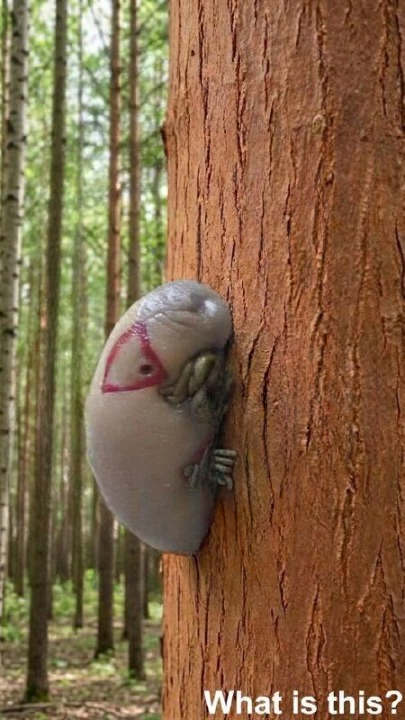
From Surprise to Understanding: How Unexpected Encounters with Wildlife Can Change Our View of Nature
Nature often surprises us at the most ordinary moments. It may happen while walking along a wooded trail, tending plants in the backyard, or stepping outside after a refreshing rain. Everything appears familiar until a small movement catches our attention. A strange shape rests beneath a leaf, an unfamiliar creature crosses a garden path, or something tiny moves through the damp grass.
Our first reaction may be curiosity, uncertainty, or even fear. When we encounter an animal we cannot immediately identify, our minds tend to fill in the gaps. We might wonder whether it is dangerous, whether it belongs in the area, or whether we should keep our distance. Yet these brief encounters can become opportunities to learn about the natural world rather than moments to fear it.
The more we understand the creatures living around us, the easier it becomes to recognize that even the smallest animals have a place in the environment. An unfamiliar insect, a shy amphibian, or a spider resting near a doorway may seem unusual at first, but each can offer a glimpse into the complex relationships that make ecosystems function.
The Unexpected Moments That Capture Our Attention
Many memorable encounters with nature begin without any intention of discovering something new. People do not always visit parks, gardens, or wooded areas expecting to observe wildlife. Sometimes, an animal simply appears where it was not expected.
A gardener might notice a cluster of tiny creatures beneath a flowerpot. Someone walking along a trail could see an unfamiliar insect resting on a fallen branch. After a storm, a family might discover small animals moving across a wet patio or gathering near the edge of a garden.
These moments can be surprising because people often develop a mental picture of what nature should look like. Butterflies, songbirds, squirrels, and familiar garden insects fit comfortably into that picture. Creatures with unusual shapes, unexpected colors, or unfamiliar movements may seem more mysterious.
However, unfamiliarity does not automatically indicate danger. Many animals have physical features and behaviors that appear strange to humans but serve ordinary purposes in their own lives.
A beetle’s unusual shell may help protect it. A spider’s body shape may be adapted to its hunting method. An insect’s coloring may help it blend into leaves or bark. What appears unusual from a human perspective can be an effective adaptation that has developed over many generations.
Taking a moment to observe rather than immediately react can transform a startling discovery into a fascinating learning experience.
Why Unfamiliar Creatures Can Make Us Feel Uneasy
People naturally pay attention to things they cannot easily recognize. This response can be especially strong when an animal moves quickly, has numerous legs, or appears in a place where we do not expect wildlife.
Our reactions are influenced by experience, culture, personal preferences, and the information we have encountered throughout our lives. Someone who grew up exploring forests may feel comfortable examining insects, while another person may find even a small spider unsettling.
Neither reaction is unusual. Fear of unfamiliar animals is common, and it does not necessarily reflect a lack of appreciation for nature.
Sometimes, uncertainty is the main reason an encounter feels uncomfortable. When we do not know what an animal is, it can be difficult to judge whether it poses any risk. The imagination may supply possibilities before reliable information becomes available.
This is one reason accurate identification matters.
Instead of relying on a frightening description or an alarming photograph shared online, observers can begin by collecting basic information. Where was the animal found? How large was it? What colors and markings did it have? Was it moving alone or in a group? Did it have wings, visible antennae, or a particular body shape?
These details can help narrow down the possibilities without requiring anyone to touch or disturb the creature.
Learning to pause before reaching a conclusion is useful not only for wildlife encounters but also for developing a more thoughtful relationship with the natural world.
The Remarkable Diversity Hidden in Ordinary Places
Wildlife is not limited to remote forests, mountain ranges, or protected nature reserves. Many species live close to human homes, often remaining unnoticed until something draws attention to them.
A typical backyard can support a surprising variety of life. Depending on the region, it may contain earthworms, beetles, ants, spiders, butterflies, moths, birds, frogs, and many other organisms.
Some creatures live in the soil. Others hide beneath stones, fallen leaves, or pieces of wood. Certain species are active mainly at night, while others appear during warm afternoons or after periods of rain.
Even a small patch of vegetation can provide food, shelter, and places to reproduce.
Leaves offer feeding opportunities for plant-eating insects. Flowers supply nectar and pollen to visiting pollinators. Fallen branches and decaying plant material create habitats for organisms involved in decomposition. Damp areas may attract animals that depend on moisture to survive.
Because these habitats are often small and easily overlooked, people may not realize how much activity takes place around them.
A closer look can reveal that a garden is not simply a collection of plants. It is a living community in which different organisms interact, compete, reproduce, and respond to changing conditions.
An unexpected animal encounter can therefore serve as an introduction to a much larger ecological story.
Every Creature Has Its Own Role
One of the most useful lessons from observing wildlife is that animals do not need to be attractive or familiar to have ecological value.
Spiders, for example, are important predators in many environments. They consume insects and other small invertebrates, contributing to the regulation of local populations. Although their appearance can make some people uncomfortable, most spiders do not pose a significant threat when left undisturbed.
Beetles are another diverse group with many ecological functions. Some feed on other insects, some visit flowers, and others help break down dead plant material. Certain species are associated with healthy soils, while others play important roles in forests and grasslands.
Earthworms help move and mix soil, creating channels that can improve its structure. Many insects serve as food for birds, amphibians, reptiles, and other animals. Pollinating insects help numerous flowering plants reproduce, supporting both natural habitats and agricultural systems.
Even organisms that appear inconvenient to humans may contribute to a wider ecological process.
This does not mean every species is beneficial in every setting. Some animals damage crops, enter buildings, or carry diseases. Invasive species can disrupt local ecosystems. The important distinction is that an animal’s role should be understood through evidence rather than judged entirely by its appearance.
When people recognize the different functions wildlife performs, they may become more willing to protect habitats and make informed decisions about managing unwanted encounters.
Learning to Observe Before Intervening
When an unfamiliar creature appears in a garden or near a home, the safest first step is usually to observe it from a comfortable distance.
Moving closer, picking it up, or attempting to frighten it away may create unnecessary risks for both the animal and the observer. Some species defend themselves when threatened, while others are delicate and can be injured by rough handling.
Observation offers a practical alternative.
Look at the animal’s general shape, color, markings, and behavior. Notice whether it is hiding, feeding, moving through vegetation, or remaining still. If a photograph can be taken safely, it may help with identification later.
There is rarely a need to disturb an animal simply to obtain a better view.
If the creature is inside a home, the appropriate response depends on what it is and where it has appeared. A harmless insect may be guided outdoors using a suitable container and a piece of stiff paper, provided it can be handled safely. If the animal may be venomous, dangerous, or difficult to identify, keeping people and pets away while seeking knowledgeable assistance is the more prudent choice.
Wildlife identification should never require someone to take unnecessary risks.
It is also important to remember that photographs can be misleading. Lighting, camera angles, image quality, and the animal’s stage of development can affect its appearance. Two different species may look similar, while individuals of the same species can vary in color or markings.
For that reason, a single image may not provide enough information for a confident identification.
How Rain Can Reveal Hidden Wildlife
Rain often changes the appearance and activity of outdoor environments. Water gathers on leaves, soil becomes softer, and small pools form in places that were previously dry. These changes can make certain animals easier to notice.
Earthworms may emerge from the soil, while some insects become more active around damp vegetation. Amphibians may move through suitable habitats during wet conditions, particularly when temperatures and seasonal patterns are favorable.
Rain can also uncover animals that normally remain concealed beneath rocks, logs, or layers of leaf litter.
For people who rarely pay close attention to small wildlife, the hours following rainfall can provide an opportunity to notice just how many organisms occupy familiar spaces.
However, not every creature appearing after rain is responding to the same environmental conditions. Different species have different moisture requirements, activity patterns, and life cycles. Temperature, season, habitat, and local weather all influence what may be observed.
A damp garden in one region may attract animals that are uncommon in a dry area elsewhere. Even nearby locations can support different species depending on vegetation, soil, water availability, and human activity.
This variety is one of the reasons local wildlife observation can be so rewarding. The natural world is not identical from one place to another, and every region has its own ecological characteristics.
The Value of Curiosity in Everyday Life
Curiosity can change the way people experience ordinary surroundings.
A person who once walked past a patch of grass without noticing anything may begin to see the insects moving between the blades. A child who discovers a snail after rain may start asking questions about its shell, movement, and diet. Someone tending a vegetable garden may become interested in identifying the insects visiting nearby flowers.
These experiences do not require expensive equipment or travel to distant destinations. They often begin with simple observation and a willingness to ask questions.
A notebook can be useful for recording discoveries. Observers might write down the date, location, weather conditions, and visible characteristics of an animal. Over time, these notes can reveal patterns, such as which insects appear during particular months or which birds regularly visit a certain tree.
Photographs can also create a record of observations, especially when the same location is revisited throughout the year.
The aim does not need to be identifying every creature. Sometimes, simply noticing a new behavior or recognizing a familiar species is enough to deepen one’s appreciation of the environment.
Curiosity also encourages patience. Wildlife does not always appear on demand, and animals may disappear before an observer has a chance to examine them closely. Accepting these limits is part of learning to appreciate nature on its own terms.
Teaching Children to Respect Wildlife
Unexpected animal encounters can be especially valuable for children because they provide opportunities to develop curiosity, patience, and respect for living things.
A child who discovers an unusual insect may initially respond with excitement or fear. Rather than immediately dismissing the reaction, an adult can encourage questions and explain why the animal should be observed carefully.
Children can learn to notice physical characteristics, compare different species, and understand that animals have needs of their own.
They can also learn important safety habits. Wildlife should not be touched unless an adult has established that doing so is safe and appropriate. Animals should not be chased, trapped, or deliberately frightened. Hands should be washed after outdoor activities, particularly after contact with soil or potentially contaminated surfaces.
These simple habits help children understand that curiosity and caution can exist together.
Adults can make the experience more engaging by using reliable field guides, educational books, or reputable wildlife resources. Local nature centers and museums may also offer information about species found in the area.
The most important lesson is that unfamiliarity is an invitation to learn, not a reason to harm an animal.
By encouraging thoughtful observation, families can help children develop a lifelong interest in the environment.
Identifying an Unfamiliar Animal Responsibly
Modern technology makes wildlife identification easier than it once was. Field guides, university resources, conservation organizations, and nature-identification applications can help observers compare an animal’s features with documented species.
However, identification tools vary in reliability. An automated application may suggest several possible matches, but its result should not always be treated as definitive.
A responsible identification process begins with clear observations.
Record the animal’s approximate size, shape, colors, visible markings, and location. Include information about its behavior and the surrounding habitat. If taking a photograph, capture the animal from a safe distance without moving it or disturbing its shelter.
Then compare the evidence with information from trusted sources. Government wildlife agencies, universities, natural history museums, and established conservation organizations are often useful starting points.
Local experts may be able to provide additional guidance when a species is difficult to distinguish from similar animals.
If the animal is potentially dangerous, do not attempt to capture it for identification. Keep children and pets away and contact an appropriate local professional if necessary.
This approach avoids a common mistake: assuming that an animal must be dangerous simply because it looks unfamiliar, or assuming that it must be harmless because it appears small.
Both conclusions can be unreliable without further information.
Accurate identification helps people respond proportionately, protecting themselves while avoiding unnecessary harm to wildlife.
Why Sensational Wildlife Stories Can Be Misleading
Unusual animal photographs often attract attention online. A strange shape, an unexpected color, or a cluster of tiny organisms may lead to dramatic descriptions that spread rapidly through social media.
Some posts present ordinary natural phenomena as dangerous discoveries. Others identify an animal without sufficient evidence or use alarming language to encourage readers to share the content.
Although these stories can be entertaining, they may also create confusion.
A photograph alone does not always reveal a species’ identity, behavior, or potential risk. An animal’s appearance may change as it develops, and similar-looking organisms may belong to entirely different groups.
Even a correct identification does not automatically establish that an animal is dangerous to people. Risk depends on factors such as species, behavior, location, and the circumstances of an encounter.
Readers should therefore be cautious about claims that rely on fear rather than evidence.
Before sharing a wildlife warning, it is worth checking whether the identification comes from a credible source. Look for specific information about the species, its range, and its documented behavior. If the claim cannot be verified, avoid presenting it as fact.
Responsible communication is particularly important when a post encourages people to destroy animals or use chemicals around their homes.
Misidentification can lead to the unnecessary killing of harmless species, while inappropriate pest-control methods can affect pets, children, beneficial insects, and other wildlife.
Reliable information makes it easier for communities to respond sensibly to unfamiliar creatures.
Creating a Garden That Supports Wildlife
People who become interested in local wildlife may decide to make their outdoor spaces more welcoming to beneficial organisms.
A wildlife-friendly garden does not need to be large or elaborate. Even a small area can offer useful resources when it includes appropriate plants, shelter, and access to water.
Native plants are often a good starting point because they are adapted to local conditions and may provide food or habitat for native insects and birds. A variety of flowering plants can support pollinators across different parts of the growing season.
Leaving some fallen leaves in suitable areas can provide shelter for small animals and habitat for decomposers. A few carefully placed logs or stones may create hiding places for invertebrates, depending on the local climate and garden conditions.
Reducing unnecessary pesticide use can also help protect organisms that contribute to natural ecological processes.
However, wildlife-friendly gardening should be balanced with practical household needs. Areas near entrances, play spaces, or food-growing beds may require different management than a quiet corner intended for habitat.
Water features should be maintained safely, and standing water should not be allowed to create mosquito problems. Plants should be selected with local conditions and household safety in mind.
The goal is not to invite every animal into every part of a property. It is to recognize that outdoor spaces can support biodiversity while still being managed responsibly.
Understanding the Difference Between Fear and Caution
Respecting nature does not mean ignoring genuine risks.
Some wildlife can injure people, transmit disease, damage property, or pose hazards to domestic animals. Certain insects and arachnids are venomous, while some mammals can carry infections. In some regions, contact with particular amphibians or caterpillars may also require caution.
The appropriate response is to understand the specific risk rather than assume that every unfamiliar creature is dangerous.
For example, a person who encounters an unidentified spider indoors should avoid handling it until its identity is reasonably clear. Someone who finds a snake in a yard should keep a safe distance and avoid attempting to catch or kill it. A wild animal that appears sick, unusually aggressive, or disoriented should not be approached.
Local guidance matters because wildlife species and associated risks differ by region.
It is equally important to recognize that many animals prefer to avoid people. They may bite, scratch, or use defensive behaviors when cornered, restrained, or handled. Giving them space can prevent many unnecessary encounters.
Caution is a practical safety measure. Fear, when based entirely on appearance or rumor, can make a situation harder to assess accurately.
Learning the difference helps people protect themselves without treating all wildlife as a threat.
How Small Discoveries Can Lead to Bigger Questions
An encounter with a single unfamiliar animal can inspire questions that extend far beyond the creature itself.
Why does it live in this particular environment? What does it eat? Which animals depend on it for food? How does it survive winter? Is its population changing? What happens when its habitat disappears?
These questions connect everyday observation with broader environmental issues.
Habitat loss, pollution, climate change, invasive species, and the use of pesticides can affect wildlife in different ways. Some species adapt to modified environments, while others depend on conditions that are becoming increasingly difficult to find.
Observing local wildlife cannot answer every ecological question, but it can help people recognize that environmental change affects real organisms living in familiar places.
A garden that once attracted numerous butterflies may become quieter if flowering plants disappear. A wet area that supports amphibians may change when drainage patterns shift. Birds may alter their movements when food availability changes.
Individual observations should not be mistaken for scientific proof of a larger trend. Weather, season, and ordinary population fluctuations can all influence what people see.
Nevertheless, careful records gathered over time can contribute to a better understanding o