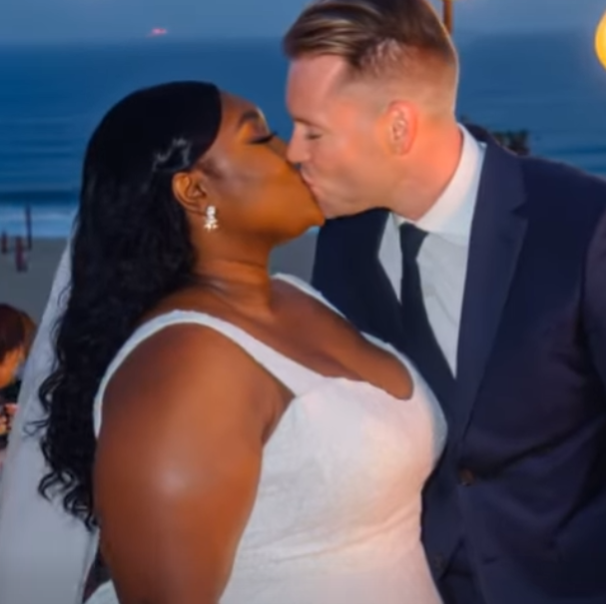
I had not seen Ryan in almost twenty years when fate brought us together again.
Back in high school, he was the last person I wanted to encounter in a hallway. He had a talent for making me feel small without raising his voice. A careless comment from him could turn an ordinary school day into something I dreaded remembering.
He knew exactly how to embarrass me in front of other students while making everything appear harmless to the adults around us.
Sometimes, he would make jokes about my clothes. Other times, he would imitate the way I spoke or encourage other students to laugh at something I had said. Whenever I tried to defend myself, he acted as though I had misunderstood the situation.
For years, I carried those memories with me.
I learned to avoid certain hallways, spent lunch breaks in the library, and became skilled at pretending that cruel remarks did not hurt. By the time graduation arrived, I wanted nothing more than to leave those years behind.
I never imagined that I would meet Ryan again, much less that I would eventually agree to marry him.
Yet life has a strange way of bringing people from our past back into our present.
And sometimes, the people we think we understand are hiding chapters of their lives we have never heard.
The Unexpected Reunion That Changed Everything
I was thirty-two when I encountered Ryan at a small coffee shop on a rainy afternoon.
At first, I did not recognize him immediately. He looked older, his face more mature, and the confidence I remembered seemed less obvious. But when he turned toward me and said my name, I knew exactly who he was.
My first instinct was to leave.
I had spent years building a life in which those school memories no longer controlled my decisions. The last thing I wanted was to revisit them over a cup of coffee.
But Ryan did something I never expected.
He apologized.
“I owe you an apology for the way I treated you,” he said quietly. “What I did was wrong, and you didn’t deserve any of it.”
I stared at him, unsure how to respond.
I had imagined many possible encounters with him over the years. In none of them had I pictured him sitting across from me, acknowledging his behavior without making excuses.
He did not blame his friends. He did not claim that I had been too sensitive. He did not laugh or attempt to turn the conversation into a joke.
He simply admitted that he had hurt me.
“I’ve thought about those years more than you probably realize,” he continued. “I can’t undo what happened, but I wanted you to know that I’m sorry.”
I thanked him for saying it, although I was not ready to forgive him completely.
An apology can be meaningful, but words alone cannot erase years of painful memories. I knew that if Ryan had genuinely changed, his actions would eventually have to support what he was telling me.
So I left the coffee shop with mixed feelings.
Part of me was relieved to hear him acknowledge the past. Another part wondered whether I had simply encountered a more polished version of the same person.
I decided not to make any assumptions.
The Man He Claimed to Have Become
Over the months that followed, Ryan and I occasionally crossed paths.
When we spoke, he never pressured me to forget the past. He did not demand forgiveness or insist that I recognize how much he had changed.
Instead, I gradually learned about his life.
He told me that he had spent years examining his behavior and working to understand why he had treated people badly when he was younger. He had attended therapy, maintained his sobriety for four years, and begun volunteering with teenagers who needed guidance and encouragement.
What impressed me most was that he rarely talked about these things as though they made him extraordinary.
He seemed to understand that personal growth was not a prize he could display in exchange for forgiveness.
Slowly, my initial suspicion gave way to cautious curiosity.
We began having longer conversations. Sometimes we discussed ordinary things, such as books, work, and our favorite places to eat. At other times, we talked about the past and the ways our experiences had shaped us.
I learned that Ryan regretted much of his behavior as a teenager. He also acknowledged that regret did not automatically repair the damage he had caused.
That distinction mattered to me.
I did not suddenly forget the girl I had been in high school. I remembered her embarrassment, her loneliness, and the days she had wondered why being herself seemed to invite ridicule.
But I also recognized that people can grow.
Eventually, our friendship became something more.
We began dating, and for the first time, I found myself wondering whether the person I had once feared could become someone I trusted.
It was a difficult question, and I did not answer it quickly.
The Proposal I Never Expected to Accept
Our relationship developed gradually.
Ryan was patient when I needed reassurance, and he listened when I explained why certain memories still bothered me. He did not always know the right thing to say, but he made an effort to understand.
There were moments when I questioned my own judgment.
Was I falling in love with the person he was now, or with the idea that the past could finally have a happier ending?
I knew those were not the same thing.
I spoke with people I trusted and gave myself time to consider what marriage would mean. I wanted a relationship built on respect rather than a desire to rewrite my teenage years.
Ryan never promised that he could make those years disappear.
Instead, he told me that he wanted to build something different with me.
Several years after our reunion, he proposed.
I remember looking at the ring in his hand and feeling an unexpected wave of uncertainty.
He noticed my hesitation.
“You don’t have to answer immediately,” he said.
I appreciated that he gave me room to think.
“I know I hurt you,” he continued. “I know saying I’ve changed doesn’t mean you have to trust me. All I can do is keep showing you who I am now.”
Those words stayed with me.
After many conversations and considerable reflection, I accepted his proposal.
Our wedding was small and peaceful. We invited family members and a few close friends. Warm lights decorated the room, flowers stood on the tables, and the people we loved gathered to celebrate our future.
As I walked toward Ryan, I felt nervous but hopeful.
For the first time, I allowed myself to imagine that my past did not have to determine every chapter of my life.
I believed we were beginning something honest.
I had no idea that the most difficult conversation of our relationship was still waiting for us.
The Strange Silence on Our Wedding Night
When we returned home that evening, the excitement of the wedding slowly gave way to quiet.
I changed out of my dress, removed my jewelry, and went to wash my face. I was tired in the way people become tired after an important day filled with emotions, conversations, and unexpected moments.
I remember smiling at my reflection.
I was married.
The thought felt almost unreal.
When I returned to the bedroom, however, something about the atmosphere immediately caught my attention.
Ryan was sitting on the edge of the bed, still wearing his dress shirt. His jacket had been placed over a chair, but his tie lay untouched beside him.
He was staring at the floor.
His hands were clasped so tightly that his knuckles had turned pale.
“Ryan?” I asked. “Is everything all right?”
He did not answer immediately.
I walked closer and sat beside him.
“You’re frightening me a little. What’s wrong?”
He finally lifted his head.
There was no smile on his face. He looked as though he had been preparing for this moment for a very long time.
Then he took a deep breath.
“There’s something I should have told you before today,” he said.
My stomach tightened.
“What do you mean?”
He rubbed his palms together and looked away again.
“I’ve wanted to tell you for years. Every time I thought about bringing it up, I convinced myself that I needed more time.”
I felt a sudden rush of confusion.
“Ryan, what are you talking about?”
He looked directly at me.
“Finally,” he whispered. “I’m ready to tell you the truth.”
For several seconds, I could not find my voice.
“The truth about what?” I asked.
He swallowed hard.
“About what happened back in high school. About why I treated you the way I did.”
My heart began to pound.
I had expected difficult conversations about our past. I had expected to discuss the things he regretted and the ways his behavior had affected me.
But his expression suggested that there was something else.
Something I had never heard before.
The Confession I Wasn’t Prepared to Hear
Ryan stood up and walked toward the window.
“I need you to understand something,” he began. “I’m not telling you this because I want you to feel sorry for me. And I’m not asking you to excuse what I did.”
I remained seated, trying to make sense of his words.
He continued.
“When we were teenagers, I made choices that hurt you. I knew what I was doing, even when I pretended it was harmless. I could see that you were upset, and instead of stopping, I kept going.”
I felt old memories returning with uncomfortable clarity.
“Why?” I asked. “Why did you choose me?”
He lowered his head.
“Because I was insecure, and because I wanted other people to think I was important. I thought making someone else feel small would make me look stronger.”
His honesty was painful to hear, but it was not entirely surprising.
Then he said something that changed the direction of the conversation.
“There was one particular incident,” he explained. “Something that happened during our final year. You always believed it was just another cruel joke. But there was more to it than that.”
I searched my memory.
There had been so many unpleasant moments that remembering every detail was difficult. I could recall the embarrassment, the laughter, and the feeling of wanting to disappear.
But which incident did he mean?
Ryan reached into the pocket of his trousers and removed a small envelope.
“I kept this for years,” he said. “I should have told you about it long ago.”
He placed it on the table between us.
I stared at the envelope without touching it.
“What’s inside?”
“A letter I wrote after graduation. I never sent it.”
My hands felt cold.
“Why are you showing it to me now?”
“Because I don’t want our marriage to begin with something important left unsaid.”
I wanted to believe that he was finally trying to be honest. At the same time, I wondered why he had waited until our wedding night.
It was not a small detail.
If the information mattered enough to affect our relationship, I deserved the opportunity to consider it before making a lifelong commitment.
I picked up the envelope.
Inside was a handwritten letter, its paper slightly yellowed with age.
The first lines described his behavior in school. He admitted that he had deliberately embarrassed me, that he had encouraged other students to join in, and that he had sometimes pretended not to understand the harm he was causing.
Then I reached the paragraph he had been afraid to share.
He explained that, near the end of our final year, he had realized that his behavior had become something he could no longer dismiss as childish teasing. He had seen me withdrawing from other students and understood that his actions were contributing to my unhappiness.
He had wanted to apologize even then.
But he had been afraid of losing his reputation among his friends.
So he remained silent.
The letter ended with a sentence that made me pause.
“I cannot ask you to forget what I did. I can only hope that one day I will become someone who would never treat another person that way again.”
I read the words twice.
Then I looked up at my husband.
“Is that the truth you were afraid to tell me?”
He hesitated before answering.
“That’s part of it.”
My heart sank again.
The Question That Mattered More Than the Letter
I placed the letter on the table.
“Ryan, I need you to understand something. I married you because I believed we had built our relationship on honesty. If there is something else, I need you to tell me now.”
He nodded slowly.
He explained that he had been ashamed of how long it had taken him to acknowledge his behavior. Even after he began changing his life, he had struggled with the fear that telling me everything about his past would cause me to walk away.
He admitted that he had sometimes confused being forgiven with being accepted.
He had wanted to believe that if he became a better person, the past would eventually stop mattering.
But he had finally realized that genuine change did not give him the right to control how I felt about what had happened.
“I should have told you before we got married,” he said. “You deserved that choice.”
For the first time that evening, I felt that he understood the real problem.
It was not simply that he had been cruel as a teenager. It was that he had allowed fear to influence a decision that affected both of us.
I needed time to process what I had learned.
I told him that I could not promise to feel differently by morning. I also told him that an apology, however sincere, did not remove my right to ask questions or establish boundaries.
He listened without interrupting.
That conversation lasted much longer than either of us had expected.
We talked about accountability, trust, and the difference between changing because you regret the consequences of your actions and changing because you understand why those actions were wrong.
We also talked about our future.
If we were going to remain married, we would have to create a relationship where difficult truths could be shared before they became secrets.
What I Learned About Forgiveness and Trust
The following weeks were not simple.
I continued thinking about our conversation, sometimes feeling disappointed that Ryan had waited so long to tell me about the letter. At other times, I recognized the effort it had taken for him to confront his younger self honestly.
Both feelings could exist at once.
I did not have to pretend that his confession had been painless in order to acknowledge that he was trying to take responsibility.
Eventually, we agreed to seek guidance from a marriage counselor so that we could discuss our concerns with support and structure.
The experience taught me that forgiveness is not the same as forgetting, and trust is not something that can be demanded simply because someone has apologized.
Trust grows through consistent actions, honest conversations, and respect for the other person’s freedom to make decisions.
It also taught me that a person’s past does not necessarily determine their future, but neither should a promise of change prevent us from asking reasonable questions.
People can learn from their mistakes. They can become more considerate, more responsible, and more aware of the impact they have on others.
But meaningful change must be demonstrated over time.
It cannot be established by one emotional speech, one letter, or one dramatic confession.
A New Beginning Built on Honesty
Ryan and I eventually began to understand that our relationship could not succeed simply because we wanted to prove that the past had been overcome.
We needed to build something healthier in the present.
That meant speaking openly when something frightened us, admitting when we were wrong, and recognizing that love did not require either person to ignore their own feelings.
I still remembered the girl I had been in high school.
I remembered how carefully she chose where to sit, how she sometimes avoided speaking in class, and how she had wished someone would recognize that the jokes were hurting her.
I no longer wanted to dismiss her experiences simply because the person who caused them had grown older.
Her feelings mattered then, and they still mattered now.
At the same time, I learned that I could acknowledge my past without allowing it to dictate every decision about my future.
Our wedding night had not unfolded the way I expected. Instead of ending the day with uncomplicated happiness, I found myself facing questions that required patience, honesty, and difficult conversations.
But perhaps that was the real beginning of our marriage.
Not the ceremony, the photographs, or the promises spoken before our guests.
The beginning came when we were finally willing to speak honestly about the things that frightened us.
Because a lasting relationship cannot be built on the hope that painful truths will eventually disappear.
It must be built on the willingness to face them together.
And I finally understood something I had spent years trying to learn: people may deserve the opportunity to change, but the people they have hurt deserve the freedom to decide what that change means for their own lives.